
Search Taxonomy Terms

We look at how apps are exposing peoples' activities and behaviours to Facebook.

After months of research, we filed complaints against seven of data broker companies: Acxiom, Criteo, Equifax, Experian, Oracle, Quantcast, and Tapad.

Effective competition is necessary for privacy and innovation. Increasingly the digital economy is characterised by a few companies in dominant positions. These companies are able to impose terms and conditions that exploit our data and violate our freedoms.

Privacy International filed an amicus brief to the United States Court of Appeals for the Ninth Circuit in a case challenging the use of Cisco technology for the persecution of the Falun Gong minority in China.
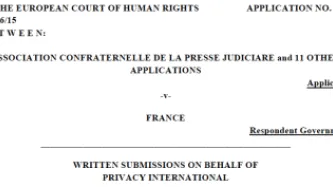
Challenging the use of surveillance technologies in the context of terrorism-related measures
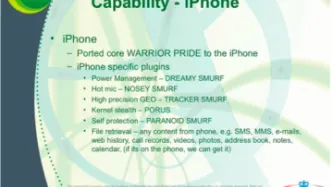
Our case at the European Court of Human Rights challenging UK intelligence agency conducting hacking operations outside of the UK.
A case that reached the Grand Chamber of the European Court of Human Rights analysing the UK’s mass interception program, first exposed by whistleblower Edward Snowden in 2013, relating to people’s rights to privacy and freedom of expression.

Creators who produce content for big online platforms, from video game livestreamers on Twitch to adult content producers on platforms like OnlyFans, often find themselves forced to share a lot of data, putting their privacy and security at risk while being given limited information as to how this data is being used.

The United Nations have initiated a process to negotiate an international treaty on cybercrime (more specifically, a comprehensive international convention on countering the use of information and communications technologies for criminal purposes). An open-ended, ad hoc intergovernmental committee of experts (Ad Hoc Committee) was established to conduct the negotiations which are expected to continue until at least the end of 2023. The Ad Hoc Committee shall convene at least six sessions, of 10 days each, to commence in January 2022, as well as a concluding session in New York, and conclude its work in order to provide a draft convention to the General Assembly at its seventy-eighth session (i.e. in 2024).
PI believes that cybercrime can pose a threat to the enjoyment of human rights. At the same time, we are concerned that cybercrime laws, policies and practices are currently being used to undermine human rights. This is why we are actively participating in the UN negotiations to ensure that any proposed cybercrime treaty includes human rights safeguards applicable to both its substantive and procedural provisions.