International Migrants Day 2025 - A Year in Review
As we mark International Migrants Day, we share how PI and our partners have advocated for the rights of migrants by safeguarding their privacy and protecting their data.
News & Analysis
Post date
17th December 2025
18th December is International Migrants Day. It’s a day designated by the United Nations, dedicated to recognising the “important contribution of migrants while highlighting the challenges they face.”
As we write this third edition of our annual post for International Migrants Day, in many ways the outlook for the rights of people on the move feels even bleaker than it did a year ago.
We have seen governments trying to “rewrite global refugee laws”, tightening restrictions on migrants’ rights, increasingly politicising of migration, and the persistently connecting migration and security. Together, these trends enabled governments to pursue agendas which create ever more hostile environments for people on the move.
It is particularly concerning that governments, often facilitated by companies, continue to abuse and exploit data and technology to enable and support these hostile practices and policies, an insidious practice PI has consistently exposed in our work.
This is not an isolated phenomenon. In the US we’ve seen ICE, the country’s immigration authority, resorting to mass surveillance tools, from mobile phone extraction to facial recognition and social media surveillance. In the UK, new legislation has granted powers for immigration officers to seize and extract information from electronic devices and to mainstream the practice of electronic monitoring of migrants.
But amidst the darkness, we also continue to see a glimmer of hope as we continue to find ways to resist and reclaim the dignity and human rights of migrants. One crucial way to do this is by safeguarding their privacy and protecting their data.
Below we share a few examples of how PI and our partners have continued to fight for the rights of people on the move.
Challenging the use of algorithmic tools
As PI and other organisations have reported, the use of AI in the context of immigration raises serious concerns for people on the move.
Building on an evidence gathering mission we started a couple of years ago, we to documented two algorithmic tools seemingly being used by the UK Home office for immigration decision-making, including in detention, deporting and GPS tagging as bail condition, among others, without sufficient or adequate safeguards to protect the right to privacy and meet data protection standards.

The UK Home Office’s large-scale processing of migrants’ personal data including special category data through these two algorithmic tools raised many questions.We took our concerns regarding the lack of transparency therein, the limited human involvement in their use, and the lack of coherent and comprehensive information provided to migrants subject to these tools, to the UK data protection authority, the Information Commissioner (ICO).
PI argues that The UK Home Office must be held accountable. Life-changing decisions such as those these tools are used to inform directly undermine the rights and dignity of migrants, and need to be closely scrutinised.
We hope the ICO will investigate these findings and assess the Home Office’s use of these algorithmic tools in light of relevant data protection laws.
If the ICO finds that the Home Office has once again breached its legal obligations by deploying such invasive technologies on migrants, it may request it to stop or at the very least to bring those processing activities into compliance.
Such measures would not only put pressure on the Home Office to reconsider its use, but it also sends an important message: migrants must be protected, and their situation of vulnerability must never be exploited to test invasive surveillance technologies.
We hope to be able to share some good news about our complaints with you very soon!
Promoting data protection law as avenue to seek redress
Identifiying the need for a response to the ‘datafication’ of immigration and asylum in the European Union (EU), Statewatch consulted with experts and trained over 300 people working in the migration sector from across the EU about how data protection law interacts with immigration and asylum proceedings. This effort has culminated in the publication of a handbook which presents their findings and shares avenues for redress offered by data protection law.
Watch this space for further resources to complement the work of Statewatch that PI is currently developing!
GPS tagging of migrants continues to be challenged
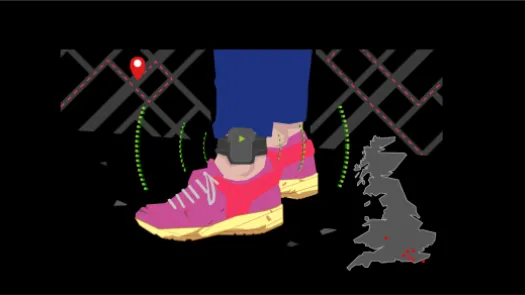
Despite evidence of the harms caused and how detrimental it is to people physical and mental well-being, the practice of GPS tagging in the immigration context has continued to spread with several countries exploring its use from New Zealand to Greece.
In the UK, the practice of GPS tagging migrants by the Home Office, the authority responsible for immigration enforcement and border management, has been the subject of various legal and regulatory challenges in the last few years, as well as scrutinity from international human rights mechanisms. All these concluding that the current practice of GPS tagging did not comply with data protection law nor international law. Yet despite these developments the UK just adopted a new law enabling the spread of this practice, and Serco, the company which holds the £200 million contract to provide GPS tagging services to the Home Office, has not reconsidered its contract and, as far as we know, as not changed its own practices and policies despite pressure from civil society.
Once again concerns have been raised as part of a recent inquiry by the Justice and Home Affairs Committee of the House of Lords into the purpose, ethics, and efficacy of electronic monitoring in immigration and criminal justice contexts.
The Committee highlighted several serious concerns with the Home Office’s widespread use of GPS tagging, including: the resources required to effectively carry out an electronic monitoring program; whether staff are being appropriately trained; whether tagging is being used as a stand-in for effective probation efforts; whether tagging is used in a discriminatory manner; and a lack of data about the long-term impacts of GPS tags.
For more details, read our analysis of their report alongside the submission we presented to the Committee as part of its inquiry.
We hope that this latest inquiry will provide further pressure on the UK government to review its practice of GPS tagging, and serve to inform other countries who may be considering resorting to this practice with regards to human rights concerns associated with it.
Preventing the expansion of Europol’s power and understanding the impacts of Border Externalisation
At the EU level, 2025 was filled with rhetoric to support increased police powers to cope with migration.
We continued to challenge the proposed expansion of powers of the European Union Agency for Law Enforcement Cooperation (Europol) in our work with the #ProtectNotSurveil Coalition.
As the EU determines whether to accept the proposal for reform of Europol which will massively expand its digital serveillance regime, we co-authored a position paper: Stop Europol’s expanding digital surveillance against migrants to advocate for its full rejection.
In our effort to understand and amplify the lived experiences of people on the move, we spoke to human rights defenders from the Border Violence Monitoring Network and Al Otro Lado about border externalisation and how it drives violence. Listen to this episode of the Technology Pill Podcast: 'Moving Stories: Border Violence and Surveillance' to hear from people who work directly with affected communities.
We will continue in our advocacy to urge the EU to move away from criminalisation and surveillance and toward protection of people most in need.
We refuse to accept the normalisation of the surveillance of people on the move
Regardless of their immigration status, people and their rights must be protected.
As long as governments continue to aspire for data exploitative and tech-enable hostile immigration policies and practice to track down, identify, and subject migrants to dehumanising treatment, we will keep advocating for the dignity of people on the move. We refused to accept the normalisation of such invasive and inhumane practices and policies in our society.
We should not be in a position where civil society and those advocating for the rights of migrants have to fight to challenge harmful government policies and practices. Instead we should be able to rely on governments to uphold migrants’ rights from the onset by default.Various challenges are in motion to hold governments to account and civil society organisations across the world are continue to expose the ways people are on the move are impacted by the deployement of tech, and we hope 2026 will bring better protections for people on the move so they can live in dignity.
Click here to find out more about our work in this area and sign up to our mailing list to follow our work.