
Search

Content type: Examples
Although the US rejected a "National Data Center" approach in 1966, eventually instead passing the 1974 Privacy Act, in 2018 the House of Representatives proposed a national database of all 40 million recipients of benefits under the Supplemental Nutrition Assistance Program (SNAP, formerly known as "food stamps"). The proposed legislation assigned the creation of the database to the Department of Agriculture, with help from private vendors and would collect Social Security numbers, birthdates…

Content type: News & Analysis
Taylor Swift may be tracking you, particularly if you were at her Rose Bowl show in May.
According to an article published by Vanity Fair, at Swift’s concert at the California stadium, fans were drawn to a kiosk where they could watch rehearsal clips. At the same time – and without their knowledge - facial-recognition cameras were scanning them, and the scans were then reportedly sent to a “command post” in Nashville, where they were compared to photos of people who are known…

Content type: Impact Case Study
What happenedStrong and effective data protection law is a necessary safeguard against industry and governments' quest to exploit our data. A once-in-a-generation moment arose to reform the global standard on data protection law when the European Union decided to create a new legal regime. PI had to fight to ensure it wasn't a moment where governments and industry would collude to reduce protections.In January 2012, the European Commission published a proposal to comprehensively reform the…
Content type: News & Analysis
This op-ed originally appeared in the Huffington Post.
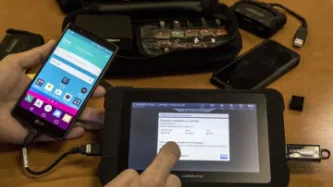
As technologies used by the police race ahead of outdated legislation, we are left vulnerable to potential for misuse and abuse of our data
The vast quantities of data we generate every minute of the day and how it can be exploited is challenging democratic and societal norms. The use by UK police forces of technologies that provide access to data on our phones, which document everything we do, everywhere we go, everyone we interact with…
Content type: Press release
Key points:
Privacy International have today published a report entitled 'Digital Stop and search: how the UK police can secretly download everything from your mobile phone', based on Freedom of Information requests to 47 police forces across the UK about their use of 'mobile phone extraction' technologies, which enable them to download all the content and data from a mobile phone.
Police forces across the UK are secretly downloading data from the smartphones of people across…

Content type: Report
The ‘Digital stop and search’ report examines the use of ‘mobile phone extraction’ tools by the UK police, enabling them to download all of the content and data from people’s phones.
Privacy International have exposed a potentially unlawful regime operating with UK police forces, who are confused about the legal basis for the technology they are using. The police are acting without clear safeguards for the public, and no independent oversight to identify abuse and misuse of sensitive personal…