
Search

Content type: Advocacy
This report is presented by TEDIC (Technology and Community Association) and Privacy International (PI). TEDIC is a non-governmental, non-profit organization, based in Asunción, that promotes and defends human rights on the Internet and extends its networking to Latin America. PI is a London based human rights organization that works globally at the intersection of modern technologies and rights.
TEDIC and PI wish to express some concerns about the protection and promotion of the right to…

Content type: Impact Case Study
PI and our global partners have been at the forefront of challenging communications data retention for over a decade.
What is the problem
Communications data, also known as metadata, tells a story about your digital activity and answers the who, when, what, and how of a specific communication. While communications data doesn't include the contents of a message, all of the other information about the message can be very revealing about people, their habits, thoughts, health and personal…

Content type: News & Analysis
El 10 de mayo de 2018, en el marco del 30º período de sesiones del Examen Periódico Universal (EPU) en el Consejo de Derechos Humanos de las Naciones Unidas, toca la revisión de Colombia, lo que es una oportunidad Colombia y otros Estados para declarar qué acciones han tomado para mejorar la situación de derechos humanos en sus propios países, para cumplir sus obligaciones internacionales en la materia.
Colombia se encuentra actualmente en un punto de inflexión, debido al proceso de transición…

Content type: Long Read
To celebrate International Data Privacy Day (28 January), PI and its International Network have shared a full week of stories and research, exploring how countries are addressing data governance in light of innovations in technology and policy, and implications for the security and privacy of individuals.
Content type: Report
This report sheds light on the current state of affairs in data retention regulation across the EU post the Tele-2/Watson judgment. Privacy International has consulted with digital rights NGOs and industry from across the European Union to survey 21 national jurisdictions (Austria, Belgium, Bulgaria, Croatia, Cyprus, Czech Republic, France, Germany, Hungary, Ireland, Italy, Luxembourg, the Netherlands, Poland, Portugal, Romania, Slovakia, Slovenia, Spain, Sweden, and the United Kingdom).…

Content type: News & Analysis
All across the U.S. on 4 July, thousands of Americans gathered at Restore the Fourth rallies, in support of restoring the Fourth Amendment of the U.S. Constitution and to protest the recently-disclosed information regarding NSA spying on American citizens. Demonstrations took place in over 100 cities, calling on the U.S. government to respect the privacy rights of citizens in America and individuals around the world.
With all this talk of constitutional …
Content type: News & Analysis
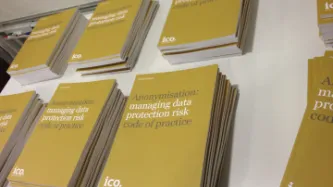
A full analysis of the UK Information Commissioner's "Anonymisation code of practice: managing data protection risk" will take time and working knowledge of how the code is used in practice.
At the launch, the ICO signalled that while they believed the code was now up to scratch, they were open to additions and clarifications given that it is the first document of its kind in the world. We applaud them for this; the code is likely to be copied internationally, so it is particularly…

Content type: News & Analysis
Privacy is internationally recognized as a fundamental right. Yet the confines of the right to privacy are subject to never-ending games of tug-of-war between individuals, governments and corporations. These games are rarely fair – individuals are often under-informed and lack the capacity to assert and protect their privacy, while those who seek to erode it are increasingly overbearing and secretive. This is particularly the case in developing countries, where the absence of adequate legal and…