
Search
Content type: Report
Over the past years, data retention regulation imposing generalised and indiscriminate data retention obligations to telecommunication companies and Internet service provides has been introduced in various jurisdictions across the world. As the data retention practices across the world have evolved this new report is an attempt to shed some light on the current state of affairs in data retention regulation across ten key jurisdictions. Privacy International has consulted with human…

Content type: Explainer
Following sustained reporting by researchers, journalists and activists around the world, including recent disclosures exposed by the PegasusProject, the surveillance industry is facing scrutiny like never before.
In the latest move, eighteen U.S. lawmakers have today demanded that the U.S. government imposes sanctions on four non-US surveillance companies for, as they mention in their letter, facilitating “disappearance, torture and murder of human rights activists and journalists”.
The move…

Content type: Long Read
The Grand Chamber of the European Court of Human Rights ruled that the UK government’s historical mass interception program violates the rights to privacy and freedom of expression. The Court held that the program “did not contain sufficient “end-to-end” safeguards to provide adequate and effective guarantees against arbitrariness and the risk of abuse.” As a result the Court ruled that UK law "did not meet the “quality of law” requirement and was therefore incapable of keeping the “…

Content type: News & Analysis
Today Advocate General (AG) Campos Sánchez-Bordona of the Court of Justice of the European Union (CJEU), issued his opinions (C-623/17, C-511/18 and C-512/18 and C-520/18) on how he believes the Court should rule on vital questions relating to the conditions under which security and intelligence agencies in the UK, France and Belgium could have access to communications data retained by telecommunications providers.
The AG addressed two major questions:
(1) When states seek to impose…

Content type: Long Read
Imagine that every time you want to attend a march, religious event, political meeting, protest, or public rally, you must share deeply personal information with police and intelligence agencies, even when they have no reason to suspect you of wrongdoing.
First, you need to go to the police to register; have your photo taken for a biometric database; share the contacts of your family, friends, and colleagues; disclose your finances, health records, lifestyle choices, relationship status, and…

Content type: Impact Case Study
What is the problem
For over two decades we have been documenting an alarming use and spread of surveillance. It is no longer just the wars on terror or drugs or migration that is driving this trend. The management of health crises and distribution of welfare regularly are among others being used to justify this turn to increasingly invasive forms of surveillance. From country to country we see the same ideas and the same profiteers expanding their reach.
When we first released our report on…
Content type: Long Read
European Court of Human Rights Intervention
On 15 September 2017, Privacy International filed an intervention to the European Court of Human Rights in Association Confraternelle de la Presse Judiciare and 11 Other Applications v. France. This case challenges various surveillance powers authorised under the French Intelligence Act of 24 July 2015 as incompatible with Articles 8 and 10 of the European Convention on Human Rights, which respectively protect the right to privacy…

Content type: News & Analysis
Today the Grand Chamber of the Court of Justice of the European Union ruled that mass surveillance is in violation of the right to privacy and that a legal system that provides no legal redress against interference with someone's privacy falls short of EU human rights standards.
The Court was seized following a complaint initiated by Mr Schrems to the Irish Data Protection Commissioner about the transfer of his Facebook data from Ireland to the US under the now defunct “…
Content type: News & Analysis
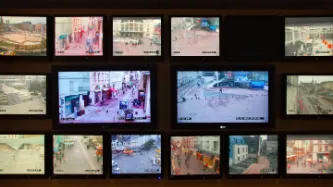
Today Privacy International together with other international human rights organisations call on the French parliament [PDF] to reject a bill on international surveillance, which, as it is currently worded, fails to protect and respect the right to privacy of individuals worldwide.
In June this year, the French parliament passed a law regulating the work of the intelligence services that will greatly undermine the privacy of French residents. Soon after, the French…

Content type: News & Analysis
The French Government unveiled a new Bill that aims at providing a legal framework to intelligence services last Friday. While Privacy International welcomes the positive step of placing powers that were until now poorly regulated under the law, we remain alarmed by many aspects of this Bill. Two months after the deadly terrorist attacks in Paris that targeted the satirical weekly Charlie Hebdo and a Kosher supermarket, the Government seeks to provide the intelligence services with a…
Content type: Press release
Privacy International, Reporters Without Borders, Digitale Gesellschaft, FIDH, and Human Rights Watch welcome news that the European Commission will move ahead and add specific forms of surveillance technology to the EU control list on dual use items, thus taking steps to finally hold companies to account who sell spy equipment and enable human rights abuses.
These important steps demonstrate that policymakers are beginning to wake up to the real harm that exists…

Content type: News & Analysis
With the launch of the "Eyes Wide Open" project, Privacy International has put together a fact sheet about the secretive Five Eyes alliance. Consider this a guide to the secret surveillance alliance that has infiltrated every aspect of the modern global communications system.
Beginning in 1946, an alliance of five English-speaking countries (the US, the UK, Australia, Canada and New Zealand) developed a series of bilateral agreements over more than a decade that became known as the UKUSA…

Content type: News & Analysis
Privacy International is pleased to announce the Surveillance Industry Index, the most comprehensive publicly available database on the private surveillance sector.
Over the last four years, Privacy International has been gathering information from various sources that details how the sector sells its technologies, what the technologies are capable of and in some cases, which governments a technology has been sold to. Through our collection of materials and brochures at surveillance trade…