
Search

Content type: News & Analysis
Privacy International is pleased to announce the Surveillance Industry Index, the most comprehensive publicly available database on the private surveillance sector.
Over the last four years, Privacy International has been gathering information from various sources that details how the sector sells its technologies, what the technologies are capable of and in some cases, which governments a technology has been sold to. Through our collection of materials and brochures at surveillance trade…
Content type: Report
Privacy International is grateful to the students and staff of the Hebrew University of Jerusalem Faculty of Law Clinical Legal Education Centre, for providing research assistance to this paper.
The advent of new technologies and the Internet have provided new challenges to long-standing human rights norms. By facilitating increased State surveillance and intervention into individuals’ private lives, the spread of digital technologies has created a serious need for States to update their…

Content type: News & Analysis
Privacy International today is proud to announce our new project, Aiding Privacy, which aims to promote the right to privacy and data protection in the development and humanitarian fields. Below is an outline of the issues addressed in our new report released today, Aiding Surveillance.
New technologies hold great potential for the developing world. The problem, however, is that there has been a systematic failure to critically contemplate the potential ill effects of deploying technologies in…
Content type: Press release
General Assembly Should Pass Strong Resolution on the Right to Privacy in the Digital Age
(New York, November 21, 2013) – The United Nations General Assembly should approve a new resolution and make clear that indiscriminate surveillance is never consistent with the right to privacy, five human rights organizations said in a November 21, 2013 letter to members of the United Nations General Assembly.
After heated negotiations, the draft resolution on digital…

Content type: News & Analysis
As anticipated, the Snowden revelations – first referred to in the opening session as the “elephant in the room” – soon became the central focus of many of the 150 workshops that took place during the 8th Internet Governance Forum (IGF) in Bali, and dominated the bilateral meetings that took place between governments, the private sector, the tech community, and civil society.
The various stakeholders arrived at the IGF ready to pursue their own agendas. The U.S. came to try and restore…

Content type: News & Analysis
Just search for the term "surveillance state" and you’ll pull up various uses of the term or news articles citing the phrase.
In some respects, this newfound concern can’t be a surprise; given vast new amounts of information in the public sphere since the Edward Snowden leaks began in June. However, it is critical to nail down the exact meaning of the term, so as the public and governments have the debate over State spying, we can actually know what we're talking about. Most importantly, this…

Content type: News & Analysis
For the first time since the Snowden revelations exposed the vast reach and scope of Britain's surveillance and intelligence activities, Parliament will openly debate the need for greater oversight of the intelligence and security services.
In the five months since the first of the Snowden leaks offered an insight into the government's mass surveillance capabilities, the political discourse has been disappointingly devoid of any serious discussion of the fundamental issues raised about the…

Content type: News & Analysis
http://www.spiegel.de/international/world/how-the-nsa-spies-on-international-bank-transactions-a-922430.html*Update: The European Parliament has voted to recommend suspension of its Terrorist Finance Tracking Program (TFTP) agreement with the US. The vote in favour of suspension only highlights how the NSA’s reported activities have undermined the agreement. Negotiations should immediately commence to strengthen the privacy and redress provisions, to ensure that governments…

Content type: News & Analysis
The Zimbabwean government extended its reach into the private lives of its citizens this week by promulgating a new law establishing a central database of information about all mobile telephone users in the country. The Statutory Instrument 142 of 2013 on Postal and Telecommunications (Subscriber Registration) Regulations 2013, gazetted last Friday, raises new challenges to the already embattled rights to privacy and free expression in Zimbabwe, increasing the potential that the…
Content type: Press release
Civil society organisations today called upon the members of the Human Rights Council to assess whether national surveillance laws and activities are in line with their international human rights obligations.
The Snowden revelations have confirmed that governments worldwide continue to expand their spying capabilities, at home and abroad. Widespread surveillance is being conducted in violation of individuals’ rights to privacy and free expression, and is seldom regulated by strong legal…

Content type: News & Analysis
For some time now, Gamma International has been criticised for exporting dangerous surveillance technologies from the UK to repressive regimes. Now, we are learning that the company is taking its show on the road, as recent reports have said that Gamma are now attempting to export its products, including the spyware FinFisher, out of Switzerland.
With sales premises registered at a site just outside the Swiss capital Bern, Gamma has now applied to the Swiss Secretariat for…

Content type: News & Analysis
Through our Big Brother Incorporated project, Privacy International over the past two years has been campaigning against the export of surveillance technologies by Western companies to repressive regimes. One of the seminal moments of this campaign was in 2011, when we partnered with Wikileaks to release the SpyFiles, which catalogued hundreds of brochures, presentations, marketing videos, and technical specifications exposing the inner workings of the international trade in…

Content type: News & Analysis
For some time now there has been a need to update understandings of existing human rights law to reflect modern surveillance technologies and techniques. Nothing could demonstrate the urgency of this situation more than the recent revelations confirming the mass surveillance of innocent individuals around the world.
To move toward that goal, we’re pleased to announce today the formal launch of the International Principles on the Application of Human Rights to…

Content type: News & Analysis
Following reports that the Mexican prosecution authority appears to be not only using FinFisher, but also to be involved in a corruption scandal surrounding the purchase of this intrusive surveillance technology, the Mexican Permanent Commission (composed of members of the Mexican Senate and Congress) has urged Mexico's Federal Institute for Access to Public Information and Data Protection (IFAI) to investigate the use of spyware in Mexico.
The corruption scandal, which entails the…

Content type: News & Analysis
All across the U.S. on 4 July, thousands of Americans gathered at Restore the Fourth rallies, in support of restoring the Fourth Amendment of the U.S. Constitution and to protest the recently-disclosed information regarding NSA spying on American citizens. Demonstrations took place in over 100 cities, calling on the U.S. government to respect the privacy rights of citizens in America and individuals around the world.
With all this talk of constitutional …

Content type: News & Analysis
Below is an excerpt of an article that recently appeared in Melbourne, Australia's The Age, written by Carly Nyst, Head of International Advocacy at Privacy International:
"Mass surveillance of a country's citizens by its government can no longer be said to be the preserve of authoritarian and dictatorial states.
The publication last week by The Guardian of classified National Security Agency documents has exposed the extent of surveillance by the US government, throwing into question…
Content type: Press release
In the wake of revelations that the UK Government is accessing wide-ranging intelligence information from the US and is conducting mass surveillance on citizens across the UK, Privacy International today commenced legal action against the Government, charging that the expansive spying regime is seemingly operated outside of the rule of law, lacks any accountability, and is neither necessary nor proportionate.
The claim, filed in the Investigatory Powers Tribunal (IPT), challenges the UK…

Content type: News & Analysis
In a landmark report, the United Nations today has broken its long-held silence about the threat that State surveillance poses to the enjoyment of the right to privacy.
The report is clear: State surveillance of communications is ubiquitous, and such surveillance severely undermines citizens’ ability to enjoy a private life, freely express themselves and enjoy their other fundamental human rights. Presented today at the UN Human Rights Council session in Geneva, the report marks…
Content type: News & Analysis
Out of concern for the potential international ramifications of the Communications Data Bill, fifteen of Privacy International's partner activists and organisations have signed a joint letter urging the UK to consider the detrimental impact this law will have around the world.
The letter reads:
Dear Editor,
The United Kingdom’s proposed Communications Data Bill is not only sinister in its intention to enable the UK government to monitor and control the internet, but it is ill-…
Content type: News & Analysis
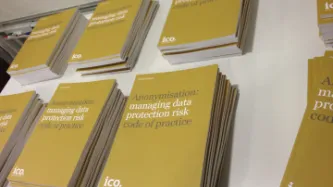
A full analysis of the UK Information Commissioner's "Anonymisation code of practice: managing data protection risk" will take time and working knowledge of how the code is used in practice.
At the launch, the ICO signalled that while they believed the code was now up to scratch, they were open to additions and clarifications given that it is the first document of its kind in the world. We applaud them for this; the code is likely to be copied internationally, so it is particularly…

Content type: News & Analysis
Today we launch the public consultation process for the International Principles on Communications Surveillance and Human Rights. From now until January 3rd, we are inviting comments and suggestions on the draft principles.
The rationale behind these principles is to provide civil society, industry and government with a framework against which to evaluate whether current or proposed surveillance laws and practices are consistent with human rights. Now more than ever, we need greater…

Content type: News & Analysis
One of the first things that strikes you about the chaotic East African metropolises of Kenya, Uganda and Zimbabwe is the blanket of adverts for mobile phone companies that covers them, from the walls of the immigration hall at Harare airport, to the rickety shacks that line the dusty streets of Kampala. Where official signage is unavailable, DIY versions are painted onto the roofs and walls of houses and small businesses. Stores selling mobile phones are rarely more than a few short steps away…

Content type: News & Analysis
Privacy International is proud to announce our new project, Eyes Wide Open, which aims to pry open the Five Eyes arrangement and bring it under the rule of law. Read our Special Report "Eyes Wide Open" and learn more about the project below.
For almost 70 years, a secret post-war alliance of five English-speaking countries has been building a global surveillance infrastructure to “master the internet” and spy on the worlds communications. This arrangement binds together the US, UK, Canada,…
Content type: News & Analysis
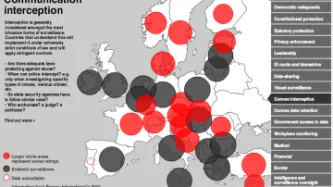
Communications surveillance is one of the most significant threats to personal privacy posed by the state. This is why many statements of fundamental rights across the world give special regard to the privacy of communications. For example, the Universal Declaration of Human Rights states in Article 12:
No one should be subjected to arbitrary interference with his privacy, family, home or correspondence, nor to attacks on his honour or reputation. Everyone has the right to the protection of…

Content type: News & Analysis
Last week the Rwandan government tightened its grip on citizens when the parliament's lower house adopted legislation that sanctions the widespread monitoring of email and telephone communications.1 The bill is now awaiting Senate approval.
The law, an amendment to the 2008 Law Relating to the Interception of Communications,2 will empower the police, army and intelligence services to listen to and read private communications, both online and offline, in order to protect "public…

Content type: News & Analysis
Governments have no automatic right of access to our communications. This will sound highly controversial to some, even downright radical. But the demands of national security and crime prevention do not, in fact, immediately trump every other right and responsibility in the complex relationship between citizen and state.
The recent Skype argument is a great example. Skype has always prided itself on being a secure method of communication. Businesses, government agencies, human…

Content type: News & Analysis
Privacy is internationally recognized as a fundamental right. Yet the confines of the right to privacy are subject to never-ending games of tug-of-war between individuals, governments and corporations. These games are rarely fair – individuals are often under-informed and lack the capacity to assert and protect their privacy, while those who seek to erode it are increasingly overbearing and secretive. This is particularly the case in developing countries, where the absence of adequate legal and…
Content type: News & Analysis
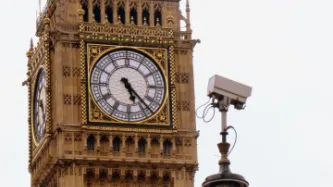
The Home Office has been planning a grab for new communications surveillance powers since 2006; today, the Draft Communications Data Bill established in legislative language their ambitions.
Yes, as they will point out, it isn't their the full scope of their ambitions. In 2008, under Labour, they proposed the idea of a vast centralised database of the nation's communications data. In 2009 they abandoned the idea of a central database. Since then, a new government has been elected,…
Content type: Press release
The government today published a draft version of a bill that, if signed into law in its current form, would force Internet Service Providers (ISPs) and mobile phone network providers in Britain to install 'black boxes' in order to collect and store information on everyone's internet and phone activity, and give the police the ability to self-authorise access to this information. However, the Home Office failed to explain whether or not companies like Facebook, Google and Twitter will be…

Content type: News & Analysis
The APEC Data Privacy Subgroup (DPS) commenced a new five year work programme at a meeting in Moscow in February 2012. This follows the commitment by APEC Leaders in late 2011 to the Cross Border Privacy Rules (CBPR) system as one way implementing the APEC Data Privacy Framework.
The Joint Oversight Panel was formed at the DPS meeting in Moscow and comprises members from the US (chair), Chinese Taipei and Mexico, with the chair of the DPS (from Canada) as alternate – who will…