
Search

Content type: Report
Technologies that have both military and civilian applications are known as "dual-use”. Drone start-ups, arms giants, and satellite manufacturers are among the tech companies which are increasingly marketing surveillance products for both military and civil applications, leading to a blurring of the lines between the two domains. This has serious implications for our freedoms, the militarisation of our societies, and the use of publicly-funded research, particularly from the European Union.…
Content type: Report
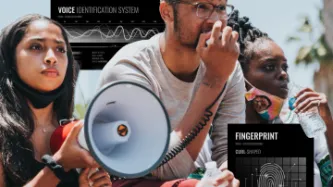
PI has been fighting against police using intrusive & disproportionate surveillance technologies at protests around the world for years. Unregulated surveillance and indiscriminate intrusions on our privacy have a chilling effect on the right to freedom of assembly.
We've fought to uncover the types of technologies that police secretly deploy at protests, and we have detailed how protesters around the world can try to protect their intimate and sensitive data from being captured by the…

Content type: News & Analysis
In the midst of the atrocious war currently being waged by Russia on Ukraine, on 14 March 2022 Reuters reported that Clearview AI, the infamous online surveillance company, had offered its services to the Ukrainian defense ministry. A day later in an interview for TechCrunch, Ukraine's vice prime minister and minister for Digital Transformation confirmed that the partnership with Clearview AI was "currently in very early development".
Clearview is an online surveillance company that collects…

Content type: Explainer
Following sustained reporting by researchers, journalists and activists around the world, including recent disclosures exposed by the PegasusProject, the surveillance industry is facing scrutiny like never before.
In the latest move, eighteen U.S. lawmakers have today demanded that the U.S. government imposes sanctions on four non-US surveillance companies for, as they mention in their letter, facilitating “disappearance, torture and murder of human rights activists and journalists”.
The move…

Content type: Advocacy
En mai 2021, nous avons fait une soumission pour la 132ème session du Comité des droits de l’homme qui a eu lieu entre le 28 juin 2021 et le 23 juillet 2021 en relation avec la conformité de la France avec le Pacte international relatif aux droits civils et politiques (PIDCP) avant l’adoption de la liste de points à traiter avant présentation de rapports (LoIPR).
Nous avons appelé le Comité des droits de l’homme de l’ONU à inclure dans la liste des questions au gouvernement français les points…
Content type: Advocacy
On May 2021, we made a submission for the 132nd Session of the Human Rights Committee that took place between 28 June 2021 and 23 July 2021 in relation to France’s compliance with the International Covenant on Civil and Political Rights (ICCPR) before the adoption of the List of issues prior to reporting (LoIPR).
We called the UN Human Rights Committee to include in the list of issues to the French government the following:
Emergency measures taken in response to the Covid-19 pandemic, and…

Content type: News & Analysis
In the last few weeks, the UK government has announced various new measures to ensure that crossings across the Channel were “inviable” including by appointing a new role of “clandestine Channel threat commander" and further plans to deploy the navy to stop migrants from crossing to the UK from France across the Channel. Premature plans it seems, as not only would such measures be contrary to the UK’s international obligations to allow individuals to seek asylum in the UK, but also since such…

Content type: News & Analysis
Today Advocate General (AG) Campos Sánchez-Bordona of the Court of Justice of the European Union (CJEU), issued his opinions (C-623/17, C-511/18 and C-512/18 and C-520/18) on how he believes the Court should rule on vital questions relating to the conditions under which security and intelligence agencies in the UK, France and Belgium could have access to communications data retained by telecommunications providers.
The AG addressed two major questions:
(1) When states seek to impose…
Content type: Long Read
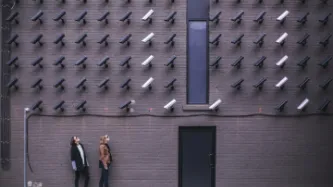
Imagine that every time you want to attend a march, religious event, political meeting, protest, or public rally, you must share deeply personal information with police and intelligence agencies, even when they have no reason to suspect you of wrongdoing.
First, you need to go to the police to register; have your photo taken for a biometric database; share the contacts of your family, friends, and colleagues; disclose your finances, health records, lifestyle choices, relationship status, and…