
Search

Content type: Long Read
The ongoing Facebook and Cambridge Analytica scandal is a wake-up call for UK policy-makers who too often encourage and promote digital industries over the protection people’s personal data. The scandal has shown that the public is concerned by companies’ exploitation of their data. The current lack of transparency into how companies are using people’s data is unacceptable and needs to be addressed.
Reform should not be limited to the behaviour of individual companies. Consumers are confronted…

Content type: Advocacy
At the core of data protection debates, there is a power play between empowering individuals to control their data and empowering those who use (or want to) use their data. By regulating data processing, it provides avenues for individuals to exercise their rights if there is any unlawful interference in this power play.
It is crucial for any regulatory framework to be centred around the protection of human rights, autonomy and dignity, and therefore essential to ensure that…

Content type: Advocacy
India has been leading at developing some of the most complex and intense data-intensive systems in the world as exemplified with their mass biometric identification system, known as Aadhaar, as well as in the development and design of new technologies. To find out more about the main privacy issues in India, check out the State of Privacy in India.
And yet, India does not have a comprehensive privacy legislation and only limited data protection standards can be found under section 43A and…

Content type: Long Read
To celebrate International Data Privacy Day (28 January), PI and its International Network have shared a full week of stories and research, exploring how countries are addressing data governance in light of innovations in technology and policy, and implications for the security and privacy of individuals.

Content type: News & Analysis
What we can achieve. What we are doing.
A week to discuss global privacy
Throughout these last days, in the context of the #dataprivacyweek, we have been talking about privacy from a global perspective, while showcasing the research done by Privacy International and the organisations who are part of its International Network.
The right to privacy is a particularly multifaceted human right, which manifests in diverse and nuanced ways. As we said when we set the tone for this week, privacy is…

Content type: Long Read
To celebrate International Data Privacy Day (28 January), PI and its International Network have shared a full week of stories and research, exploring how countries are addressing data governance in light of innovations in technology and policy, and implications for the security and privacy of individuals.
At the core of data protection debates, there is a power play between empowering individuals to control their data and empowering those who use (or want to) use their data.
By…

Content type: News & Analysis
It has been almost 40 years since the Council of Europe’s Convention 108 for the Protection of Individuals with regard to Automatic Processing of Personal Data was signed. The Convention was the first binding treaty dealing with privacy and data protection that recognised the necessity to “reconcile the fundamental values of the respect for privacy and the free flow of information between peoples” and is the reason why we celebrate Data Protection Day annually on 28 January.
It has since been…

Content type: News & Analysis
This post was written by Chair Emeritus of PI’s Board of Trustees, Anna Fielder.
The UK Data Protection Bill is currently making its way through the genteel debates of the House of Lords. We at Privacy International welcome its stated intent to provide a holistic regime for the protection of personal information and to set the “gold standard on data protection”. To make that promise a reality, one of the commitments in this government’s ‘statement of intent’ was to enhance…

Content type: News & Analysis
This post was written by PI Policy Officer Lucy Purdon.
In 1956, US Presidential hopeful Adlai Stevenson remarked that the hardest part of any political campaign is how to win without proving you are unworthy of winning. Political campaigning has always been a messy affair and now the online space is where elections are truly won and lost. Highly targeted campaign messages and adverts flood online searches and social media feeds. Click, share, repeat; this is what political engagement looks…

Content type: Press release
Press Release: New report shows how car rental companies are failing to protect drivers' information
A new report by Privacy International shows how car rental companies and car-share schemes are failing to protect drivers' personal information, such as their location, smart phone contents, and place of residence.
The report is here: https://privacyinternational.org/node/987
Key points
Privacy International (PI) rented a series of internet-connected cars and examined the information which was collected and retained on the rental cars' infotainment system*. Every car PI rented…

Content type: News & Analysis
7 July 2016
It has been said is that we pay for free services with our personal data. Now, the Privacy Shield exponentially expands this truth and we are paying for the cost of U.S. political dysfunction combined with EU complacency with our privacy. More than four months after the first EU-US Privacy Shield was published on 29 February 2016, a new version has been leaked. Remarkably, it is expected to be adopted.
Four months, two opinions by group of EU data protection…
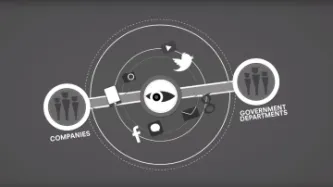
Content type: News & Analysis
This piece was written by PI Legal Office Millie Graham Wood.
“The UK is leading the way on modern data protection laws and we have worked closely with our EU partners to develop world leading data protection standards”[1] according to, Matt Hancock MP, Minister of State for Digital. However, the proposals in the UK Data Protection Bill continue and expand a highly secretive system which allows processing of personal data to be exempt from key safeguards and fundamental protections on…
Content type: Report
This report sheds light on the current state of affairs in data retention regulation across the EU post the Tele-2/Watson judgment. Privacy International has consulted with digital rights NGOs and industry from across the European Union to survey 21 national jurisdictions (Austria, Belgium, Bulgaria, Croatia, Cyprus, Czech Republic, France, Germany, Hungary, Ireland, Italy, Luxembourg, the Netherlands, Poland, Portugal, Romania, Slovakia, Slovenia, Spain, Sweden, and the United Kingdom).…
Content type: Press release
Key points
Privacy International surveyed 21 EU member states' legislation on data retention and examined their compliance with fundamental human rights standards
0 out of the 21 States examined by PI are currently in compliance with these standards (as interpreted in two landmark judgements by the Court of Justice of the European Union: Tele-2/Watson and Digital Rights Ireland)
Privacy International is calling for:
EU member states to review their legislation on data retention…

Content type: Press release
While welcoming the objective of the Bill, Privacy International has sent a briefing to the House of Lords and a letter to Minister of State for Digital, Matt Hancock MP, outlining key concerns and recommendations. The Bill's stated aim is “to create a clear and coherent data protection regime”, and to update the UK data protection law, including by bringing the EU General Data Protection Regulation (GDPR) and the Data Protection Law Enforcement Directive (DPLED) - into the UK domestic system.…

Content type: News & Analysis
We found this image here.
On 11 October, the LIBE Committee of the European Parliament votes on the draft e-privacy regulation. As the landscape of generation, collection, and other processing of data in the digital sphere evolves, the proposal seeks to update the rules on confidentiality and security of electronic communications and online activities.
Unsurprisingly, companies whose business models rely on tracking individuals online have been busy lobbying against the new regulation. The…
Content type: Press release
While welcoming the objective of the Bill, Privacy International has sent a briefing to the House of Lords and a letter to Minister of State for Digital, Matt Hancock MP, outlining key concerns and recommendations. The Bill's stated aim is “to create a clear and coherent data protection regime”, and to update the UK data protection law, including by bringing the EU General Data Protection Regulation (GDPR) and the Data Protection Law Enforcement Directive (DPLED) - into the UK domestic system.…

Content type: News & Analysis
What do Honduras, Pakistan, and Switzerland have in common? They are all bound to respect and protect the right to privacy under Article 17 of the International Covenant on Civil and Political Rights. And in July 2017, they all also happened to be under the scrutiny of the UN Human Rights Committee, which found the countries’ human rights record wanting in many respects, including the scope of their surveillance legislation.
Intelligence sharing
Reviewing Pakistan, the Committee…

Content type: Advocacy
This week, from 17th-20th October 2016, the Kingdom of Morocco will be hosting the 38th International Conference of Data Protection and Privacy Commissioners (ICDPPC).
And two scenarios could play out…
Scenario one — like many other occasions, this will be used as wonderfully strategic PR stunt, whereby participants will be whisked directly from the airport to their hotel to the conference venue, and will be enchanted by the genuinely warm Moroccan hospitality. But they will leave…
Content type: Advocacy
After the adoption of the EU General Data Protection Regulation, the Data Protection Directive for Law Enforcement Agencies, the EU-US Privacy Shield, your understandable EU privacy policy fatigue is excused.
But when a coalition of tech and telecom industries calls for a relatively obscure EU directive to be repealed, it may unintentionally trigger an atypical Streisand effect: if companies, which often so cavalier to individuals’ privacy, want to get rid of the EU e-privacy…
Content type: Press release
The committee of data protection regulators across Europe, the Working Party 29, announced today its opinion on the current “Privacy Shield”. The Opinion is expected shortly, and based on the statements made by the Working Party chair in a press conference, we understand that the Working Party, while noting improvements from the annulled “Safe Harbor” agreement, has serious concerns about a range of aspects of the current "Privacy Shield" agreement with the U.S.
Overall they note the…

Content type: News & Analysis
Should the European Union agree to legitimise trade with a country that refuses to adhere to European legal standards? This is the fundamental question that will be addressed at tomorrow’s meeting among European privacy regulators when they publish their opinion on the data-sharing agreement known as the ‘Privacy Shield’, the replacement to the failed ‘Safe Harbour’ agreement.
Background
Many of the world’s largest companies, such as Google and Facebook, store their customers’ data in…

Content type: News & Analysis
PI's full analysis can be read here
On 29 February 2016, the European Commission and the US government released the details of the proposed EU-U.S. “Privacy Shield”. The “Privacy Shield” replaces the now defunct so-called “Safe Harbor”.
The Privacy Shield is in fact a significant number of documents from various parts of the U.S. administration, which merely outline the existing, weak U.S. safeguards applicable to personal data of EU citizens. These documents are…

Content type: Advocacy
Introduction
On 29 February 2016, the European Commission and the US government released the details of the proposed EU-U.S. “Privacy Shield”. The “Privacy Shield” replaces the now defunct so-called “Safe Harbor”.
The Privacy Shield is in fact a significant number of documents from various parts of the U.S. administration, which merely outline the existing, weak U.S. safeguards applicable to personal data of EU citizens. These documents are meant to serve as the basis for an “adequacy”…

Content type: News & Analysis
The major overhaul of data protection laws in Europe is finally over, after three years of arduous and sustained political and lobbying activity by all those with a major stake and interest, including us at Privacy International (See our initial analysis of the two laws in 2012). We welcome this long overdue closure, but is this 91-articled, 200-paged piece of legislation been worth the enormous effort and no doubt millions of euros, dollars and pounds spent on it?
The legislative package…

Content type: Advocacy
Following today's Justice Ministers Council meeting in Luxembourg where an agreement was reached on the proposal for a General Data Protection Regulation (GDPR), Privacy International and European Digital Rights (EDRi) issued the following statement:
In January 2012, the European Commission, following extensive consultations, published a draft Regulation. The initiative had three priorities - modernisation of the legal framework for the protection of personal data,…

Content type: News & Analysis
Privacy laws around the world are under threat by ambitious governments and voracious industry. Sixty-six privacy, digital rights and consumer rights organisations from around the world have joined forces to push back against attempts to weaken European privacy legislation. The coalition today wrote to the President of the European Commission (the civil service of the European Union) to demand that high levels of privacy protections must be respected in Europe's ongoing revision of its data…

Content type: News & Analysis
To read Privacy International's take on the ruling, go here.
What does the decision actually say?
The primary question that the Court was asked to consider was whether Google Search has obligations under the Data Protection Directive 1995, the EU legal framework regulating how public bodies and businesses deal with individuals’ personal data.
There were three primary issues at hand: the first was whether Google Inc., the international entity which operates Google Search, was under the…

Content type: News & Analysis
Since the European Court of Justice in May ruled in the “right to be forgotten” case, there has been a dizzying amount of debate about the decision, and its implications for privacy and free expression.
A main thread within these discussions is an old story that US Industry loves to tell and has told for some time: Europeans love privacy law, and Americans love free speech, and the twain shall never meet.
The Google Search case at the European Court of Justice has fuelled this view…