
Search

Content type: Long Read
The fourth edition of PI’s Guide to International Law and Surveillance provides the most hard-hitting past and recent results on international human rights law that reinforce the core human rights principles and standards on surveillance. We hope that it will continue helping researchers, activists, journalists, policymakers, and anyone else working on these issues.The new edition includes, among others, entries on (extra)territorial jurisdiction in surveillance, surveillance of public…

Content type: Advocacy
BackgroundThe Snowden revelations and subsequent litigation have repeatedly identified unlawful state surveillance by UK agencies. In response, the UK Parliament passed the highly controversial Investigatory Powers Act 2016 (IPA), which authorised massive, suspicionless surveillance on a scale never seen before, with insufficient safeguards or independent oversight.Privacy International led legal challenges to this mass surveillance regime both before and after the Act became law. The Act…

Content type: Report
End-to-end encryption (E2EE) contributes significantly to security and privacy. For that reason, PI has long been in favour of the deployment of robust E2EE.Encryption is a way of securing digital communications using mathematical algorithms that protect the content of a communication while in transmission or storage. It has become essential to our modern digital communications, from personal emails to bank transactions. End-to-end encryption is a form of encryption that is even more private.…
Content type: Long Read
On 8 January 2021, the UK High Court issued a judgment in the case of Privacy International v. Investigatory Powers Tribunal. The Secretary of State for Foreign and Commonwealth Affairs and Government Communication Headquarters (GCHQ) appeared as interested parties to the case.
After our initial reaction, below we answer some of the main questions relating to the case.
NOTE: This post reflects our initial reaction to the judgment and may be updated.
What’s the ruling all about?
In…

Content type: Long Read
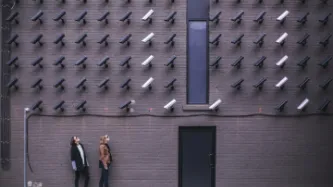
Miguel Morachimo, Executive Director of Hiperderecho. Hiperderecho is a non-profit Peruvian organisation dedicated to facilitating public understanding and promoting respect for rights and freedoms in digital environments.The original version of this article was published in Spanish on Hiperderecho's website.Where does our feeling of insecurity come from? As we walk around our cities, we are being observed by security cameras most of the time. Our daily movement, call logs, and internet…
Content type: Long Read
Imagine that every time you want to attend a march, religious event, political meeting, protest, or public rally, you must share deeply personal information with police and intelligence agencies, even when they have no reason to suspect you of wrongdoing.
First, you need to go to the police to register; have your photo taken for a biometric database; share the contacts of your family, friends, and colleagues; disclose your finances, health records, lifestyle choices, relationship status, and…

Content type: Impact Case Study
What is the problem
For over two decades we have been documenting an alarming use and spread of surveillance. It is no longer just the wars on terror or drugs or migration that is driving this trend. The management of health crises and distribution of welfare regularly are among others being used to justify this turn to increasingly invasive forms of surveillance. From country to country we see the same ideas and the same profiteers expanding their reach.
When we first released our report on…

Content type: News & Analysis
Despite Wednesday's publication of the Investigatory Powers Bill being trailed as world leading legislation that would balance security and privacy, what the Government is actually seeking is a mandate for mass surveillance. This is a new Snoopers' Charter and we must oppose many of its most virulent elements.
The true debate on surveillance can now begin. After years of downplaying, obscuring, and denying the Snowden revelations, the Government has finally joined the conversation about the…
Content type: Report
Privacy International's new report, For God and My President: State Surveillance in Uganda, exposes the secret surveillance operation and the government's attempts to buy further powerful surveillance tools, including a national communications monitoring centre and intrusion malware, in the absence of a rigorous legal framework governing communications surveillance
Content type: Press release
Privacy International welcomes the resolution introduced on Friday by Germany and Brazil to the UN General Assembly, affirming the international human right to privacy and its essential nature to the realization of other rights, and condemning mass State surveillance of individuals around the world.
Should the resolution be adopted, it will be the first major statement by a UN body on privacy in 25 years, since General Comment 16 in 1988 by the Human Rights Committee. It is also the first…
Content type: Press release
Civil society organisations today called upon the members of the Human Rights Council to assess whether national surveillance laws and activities are in line with their international human rights obligations.
The Snowden revelations have confirmed that governments worldwide continue to expand their spying capabilities, at home and abroad. Widespread surveillance is being conducted in violation of individuals’ rights to privacy and free expression, and is seldom regulated by strong legal…