
Search

Content type: Long Read
Table of contentsIntroductionWeighing the (potential) benefits with the risksPrivacy rights and the right to healthThe right to healthPrivacy, data-protection and health dataThe right to health in the digital contextWhy the drive for digitalImproved access to healthcarePatient empowerment and remote monitoringBut these same digital solutions carry magnified risks…More (and more connected) dataData leaks and breachesData sharing without informed consentProfiling and manipulationTools are not…

Content type: Long Read
IntroductionData about our health reveals some of the most sensitive, intimate - and potentially embarrassing - information about who we are. Confidentiality is, and has always been, at the very heart of medical ethics. People need to be able to trust their doctors, nurses and other healthcare providers so that they are not afraid to tell them something important about their health for fear of shame, judgement or social exclusion.It’s no surprise then that data protection regimes around…

Content type: Long Read
Image found here.
Founded in 1959, Bounty UK Limited markets itself as an information service for pregnant women and new mothers. Prior to the pandemic, it was best known for distributing “Bounty packs” of free samples of baby products to pregnant women at midwife appointments, to new mothers on maternity wards in the UK and through its digital presence via its website and app. Bounty representatives also sold new born photography packages to new mothers at the hospital bedside. Bounty entered…

Content type: Advocacy
On 6 August 2021, the World Health Organisation (WHO) published its technical specifications and implementation guidance for “Digital Documentation of COVID-19 Certificates: Vaccination Status” (DDCC:VS) following months of consultations. As governments around the world are deploying their own Covid-19 certificates, guidance from the global health agency was expected to set a global approach, and one that prioritises public health. As such, we would expect the WHO to identify what these…

Content type: Long Read
Covid Apps are on their way to a phone near you. Is it another case of tech-solutionism or a key tool in our healthcare response to the pandemic? It’s fair to say that nobody quite knows just yet.
We’ve been tracking these apps since the early days. We’ve been monitoring Apple and Google closely, have been involved in the UK’s app process, our partners in Chile and Peru have been tracking their governments’ apps, and more.
Of course privacy concerns arise. But only a simplistic analysis would…

Content type: Report
The changes discussed in this article are based on a second analysis performed in late November, 3 months after the original study Your Mental Health is for Sale and following the exact same methodology. All data collected can be found at the bottom of this page.
Change is possible
Back in September 2019 we published the report Your Mental Health is for Sale exposing how a majority of the top websites related to mental health in France, Germany and the UK share data for advertising purposes.…

Content type: Long Read
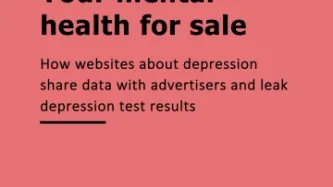
A new study by Privacy International reveals how popular websites about depression in France, Germany and the UK share user data with advertisers, data brokers and large tech companies, while some depression test websites leak answers and test results with third parties. The findings raise serious concerns about compliance with European data protection and privacy laws.
This article is part of a research led by Privacy International on mental health websites and tracking. Read our…
Content type: Report
The full report of Privacy International's study on how popular websites about depression in France, Germany and the UK share user data with advertisers, data brokers and large tech companies, while some depression test websites leak answers and test results with third parties. The findings raise serious concerns about compliance with European data protection and privacy laws.