
Search

Content type: Advocacy
On 18 October 2023, the Inter-American Court of Human Rights (IACtHR or Court) issued a historic judgment declaring the Republic of Colombia internationally responsible for human rights violations against several members of the human rights non-profit Colectivo de Abogados y Abogadas José Alvear Restrepo (CAJAR)and their relatives. This groundbreaking decision marks the first acknowledgment within the inter-American context of a state’s international responsibility for violating the right to…
Content type: Advocacy
Privacy International's response to the call of submissions of the UN Special Rapporteur on the rights to freedom of peaceful assembly and of association on the tools and guidelines which may assist law enforcement in promoting and protecting human rights in the context of peaceful protests. The Special Rapporteur's report will be presented at the 55th session of the UN Human Rights Council.While PI recognises the role of law enforcement can play in facilitating the enjoyment of freedom of…
Content type: Advocacy
Privacy International (PI), the European Center for Not-for-Profit Law (ECNL), International Network of Civil Liberties Organizations (INCLO), Agora, the Canadian Civil Liberties Association, Centro de Estudios Legales y Sociales in Argentina, the Irish Council for Civil Liberties, KontraS in Indonesia, the Legal Resources Center in South Africa, and Liberty in the UK welcome the opportunity to provide input to the global study of the UN Special Rapporteur on the promotion and protection of…

Content type: Report
End-to-end encryption (E2EE) contributes significantly to security and privacy. For that reason, PI has long been in favour of the deployment of robust E2EE.Encryption is a way of securing digital communications using mathematical algorithms that protect the content of a communication while in transmission or storage. It has become essential to our modern digital communications, from personal emails to bank transactions. End-to-end encryption is a form of encryption that is even more private.…
Content type: Examples
During the Black Lives Matter protests of summer 2020, US police took advantage of a lack of regulation and new technologies to expand the scope of people and platforms they monitor; details typically emerge through lawsuits, public records disclosures, and stories released by police department PR as crime prevention successes. A report from the Brennan Center for Justice highlights New York Police Department threats to privacy, freedom of expression, and due process and the use of a predator…

Content type: Long Read
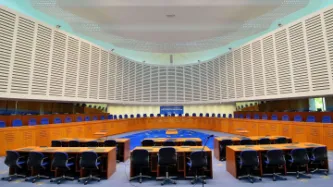
The Grand Chamber of the European Court of Human Rights ruled that the UK government’s historical mass interception program violates the rights to privacy and freedom of expression. The Court held that the program “did not contain sufficient “end-to-end” safeguards to provide adequate and effective guarantees against arbitrariness and the risk of abuse.” As a result the Court ruled that UK law "did not meet the “quality of law” requirement and was therefore incapable of keeping the “…
Content type: Press release
The Grand Chamber of the European Court of Human Rights has today ruled that UK mass surveillance laws violate the rights to privacy and freedom of expression.It found that:The UK’s historical bulk interception regime violated the right to privacy protected by Article 8 of the European Convention on Human Rights and freedom of expression, protected by Article 10. Particularly it found that:the absence of independent authorisation,the failure to include the categories of selectors in the…

Content type: Long Read
What’s the ruling all about?The Constitutional Court of South Africa in a historic judgment declared that bulk interception by the South African National Communications Centre is unlawful and invalid. Furthermore, the Constitutional Court found that the Regulation of Interception of Communications and Provision of Communication-Related Information Act (RICA) 1) was deficient in failing to provide at least a post-notification procedure for subjects of interception; 2) failed to ensure the…

Content type: News & Analysis
Today, the Constitutional Court of South Africa in a historic judgment declared that bulk interception by the South African National Communications Centre is unlawful and invalid.
The judgment is a confirmation of the High Court of South Africa in Pretoria’s powerful rejection of years of secret and unchecked surveillance by South African authorities against millions of people - irrespective of whether they reside in South Africa.
The case was brought by two applicants, the amaBhungane Centre…

Content type: Long Read
In December 2019, the Information Rights Tribunal issued two disappointing decisions refusing appeals brought by Privacy International (PI) against the UK Information Commissioner.
The appeals related to decisions by the Information Commissioner (IC), who is responsible for the UK’s Freedom of Information regime, concerning responses by the Police and Crime Commissioner for Warwickshire and the Commissioner of Police for the Metropolis (The Metropolitan Police) to PI’s freedom of information…

Content type: News & Analysis
On 29 May, Niger’s Congress voted on a law allowing for broad interception powers of certain electronic communications by the government. The bill makes it lawful for the government to approve the interception of communications without appropriate safeguards or oversight mechanisms.
The law passed with 104 votes – the Nigerien parliament has 171 members – without the participation of the opposition that boycotted the law. The opposition claimed that
the law will allow those, for…

Content type: News & Analysis
In mid-2019, MI5 admitted, during a case brought by Liberty, that personal data was being held in “ungoverned spaces”. Much about these ‘ungoverned spaces’, and how they would effectively be “governed” in the future, remained unclear. At the moment, they are understood to be a ‘technical environment’ where personal data of unknown numbers of individuals was being ‘handled’. The use of ‘technical environment’ suggests something more than simply a compilation of a few datasets or databases.
The…

Content type: Long Read
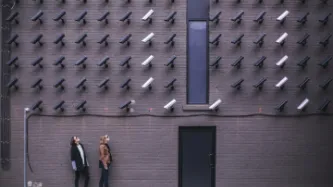
Miguel Morachimo, Executive Director of Hiperderecho. Hiperderecho is a non-profit Peruvian organisation dedicated to facilitating public understanding and promoting respect for rights and freedoms in digital environments.The original version of this article was published in Spanish on Hiperderecho's website.Where does our feeling of insecurity come from? As we walk around our cities, we are being observed by security cameras most of the time. Our daily movement, call logs, and internet…
Content type: Long Read
Imagine that every time you want to attend a march, religious event, political meeting, protest, or public rally, you must share deeply personal information with police and intelligence agencies, even when they have no reason to suspect you of wrongdoing.
First, you need to go to the police to register; have your photo taken for a biometric database; share the contacts of your family, friends, and colleagues; disclose your finances, health records, lifestyle choices, relationship status, and…

Content type: News & Analysis
On a hot day in Nairobi, our researcher is speaking to an officer of Kenya’s National Intelligence Service (NIS). The afternoon is wearing on and the conversation has turned to the presidential elections, taking place in August this year. He has just finished describing the NIS’ highly secret surveillance powers and the disturbing ways in which these powers are deployed.
“It is what you might call ‘acceptable deaths,’” he states about the misuse of communications surveillance powers. “People…