
Search
Content type: Long Read
The fourth edition of PI’s Guide to International Law and Surveillance provides the most hard-hitting past and recent results on international human rights law that reinforce the core human rights principles and standards on surveillance. We hope that it will continue helping researchers, activists, journalists, policymakers, and anyone else working on these issues.The new edition includes, among others, entries on (extra)territorial jurisdiction in surveillance, surveillance of public…

Content type: Advocacy
Dejusticia, Fundación Karisma, and Privacy International submitted a joint stakeholder report on Colombia to the 44th session of the Universal Periodic Review at the UN Human Rights Council.Our submission raised concerns regarding the protection of the rights to freedom of expression and opinion, to privacy, and to personal data protection; the shutdown of civil society spaces; protection of the right to protest; and protection of the rights of the Venezuelan migrant and refugee population.…
Content type: News & Analysis
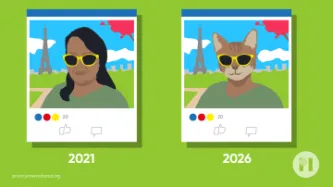
What if we told you that every photo of you, your family, and your friends posted on your social media or even your blog could be copied and saved indefinitely in a database with billions of images of other people, by a company you've never heard of? And what if we told you that this mass surveillance database was pitched to law enforcement and private companies across the world?
This is more or less the business model and aspiration of Clearview AI, a company that only received worldwide…
Content type: Examples
During the Black Lives Matter protests of summer 2020, US police took advantage of a lack of regulation and new technologies to expand the scope of people and platforms they monitor; details typically emerge through lawsuits, public records disclosures, and stories released by police department PR as crime prevention successes. A report from the Brennan Center for Justice highlights New York Police Department threats to privacy, freedom of expression, and due process and the use of a predator…
Content type: Long Read
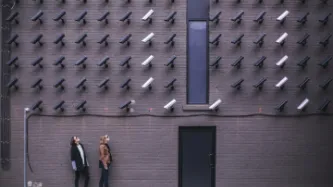
Imagine that every time you want to attend a march, religious event, political meeting, protest, or public rally, you must share deeply personal information with police and intelligence agencies, even when they have no reason to suspect you of wrongdoing.
First, you need to go to the police to register; have your photo taken for a biometric database; share the contacts of your family, friends, and colleagues; disclose your finances, health records, lifestyle choices, relationship status, and…
Content type: News & Analysis
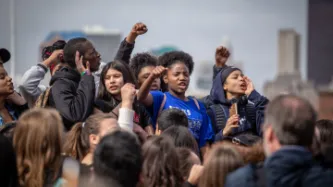
Planning and participating in peaceful protests against governments or non-state actors’ policies and practices requires the capacity of individuals to communicate confidentially without unlawful interference. From protests in support of LGBTI rights to protests against specific projects that undermine local communities’ wellbeing, these movements would not have been possible without the ability to exchange ideas and develop plans in private spaces.
Unlawful interference with…

Content type: News & Analysis
As of October 1st, it has become impossible for the public to see footage from North Carolina police body cameras as a result of new law HB 972. This should be of concern to anyone who cares about police accountability and the balance of power in the new digital surveillance era. Increasingly, we are seeing law enforcement use new technology to respond not only to unrest and crime but also to collect and monitor data about individuals who are not suspected of any criminal involvement, such as…