
Search

Content type: Report
Introduction
Several policy initiatives are in progress at the EU level. They seek to address the sustainability of connected devices such as smartphones, tablets and smart speakers. While initiatives to extend the useful life of hardware are important, software must not be ignored. Almost any digital device with which we interact today relies on software to function, which acts as a set of instructions that tells the hardware what to do. From smart thermostats to smart speakers, to our…
Content type: Press release
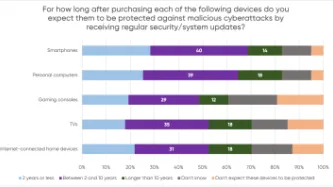
A YouGov survey commissioned by PI shows that consumers expect their smartphones, computers, smart TVs and gaming consoles to receive security updates for a much longer period than what several manufacturers actually provide, leaving consumers with expensive tech that is vulnerable to cyberattacks.
The majority of consumers in the survey assumed their devices would be protected beyond two years, but current industry practices fail to meet these expectations. PI investigated the software…

Content type: Advocacy
We, the undersigned civil society organizations and individuals, urge the World Bank and other international organizations to take immediate steps to cease activities that promote harmful models of digital identification systems (digital ID).
The signatories of this letter are located in different countries, work with diverse communities, and bring a wide range of expertise. Among this group, there are many shared concerns and similar experiences documenting the harmful impacts…

Content type: Advocacy
In our submission we outline our concerns with the industry as a result of extensive technical research and complaints taken to data protection authorities in Europe as a result.
Data brokers must specifically be included in "actors in scope."
We recommend that "data brokers" are specifically included in the list of "actors in scope". A data broker is a company that collects, buys and sells personal data and this is often how they earn their primary revenue. It is a term that is entering…

Content type: Report
Privacy International’s submissions for the Independent Chief Inspector of Borders and Immigration inspection of the Home Office Satellite Tracking Service Programme
The Home Office have introduced 24/7 electronic monitoring and collection of the location data of migrants via GPS ankle tags. This seismic change cannot be overstated. The use of GPS tags and intention to use location data, kept for six years after the tag is removed, in immigration decision-making goes far beyond the mere…

Content type: Long Read
Here are just 10 of our biggest achievements in 2021.
WE CHALLENGED COMPANIES TO CHANGE THEIR BUSINESS MODELS AND PRACTICES
In 2021 we effectively challenged big tech companies including Google, Facebook, Tecno, and smaller and equally urgent companies like Clearview AI, Web-IQ, Palantir etc. and achieved substantial impact including:
- Popular diet apps include better protections in their products
Many diet sites and apps ask you to take tests to create profiles of your body and eating…

Content type: News & Analysis
Background
Today judgment has been handed down in the landmark case of R (HM and MA and KH) v Secretary of State for the Home Department.
This is a Judicial Review decision concerning the UK Home Office’s secret and blanket policy of seizing mobile phones of all migrants who arrived to the UK by small boat between April 2020 and November 2020, and extracting data from all phones. PI was a third party intervener in the case.
The case revealed that migrants were searched on arrival at Tug Haven…

Content type: News & Analysis
In the midst of the atrocious war currently being waged by Russia on Ukraine, on 14 March 2022 Reuters reported that Clearview AI, the infamous online surveillance company, had offered its services to the Ukrainian defense ministry. A day later in an interview for TechCrunch, Ukraine's vice prime minister and minister for Digital Transformation confirmed that the partnership with Clearview AI was "currently in very early development".
Clearview is an online surveillance company that collects…

Content type: Video
Links
Teens and Facebook
Frances Haugen and Instagram
Facebook and Metaverse
Metaverse and Bandwidth
EFF on new Google replacement for cookies
Google's follow up plan to replace cookies
EV cars and the national grid
The gates of hell
South Africa, Omicron, and travel
Patent-free covid vaccine
Covid vaccine plastic bag shortage
James Webb telescope
Human trails for Elon Musks' brain chip

Content type: Video
Links
Our predictions from 2021
Clearview UK provisional fine
Clearview legal trouble in France
Clearview investments
TRIPS waiver
Travel podcast
Patent-free vaccine
Mental health podcast
Dr David works for the Mental Health Foundation
Google unionise
The 'Great Resignation'
PI has been working with two unions on our managed by bots campaign
Complicated history of plagues and workers
Indian National Education Plan
Ugandan Election
Crypto mining trouble
US commitment…

Content type: News & Analysis
The notorious Clearview AI first rose to prominence in January 2020, following a New York Times report. Put simply, Clearview AI is a facial recognition company that uses an “automated image scraper”, a tool that searches the web and collects any images that it detects as containing human faces. All these faces are then run through its proprietary facial recognition software, to build a gigantic biometrics database.
What this means is that without your knowledge, your face could be stored…

Content type: Explainer
Following sustained reporting by researchers, journalists and activists around the world, including recent disclosures exposed by the PegasusProject, the surveillance industry is facing scrutiny like never before.
In the latest move, eighteen U.S. lawmakers have today demanded that the U.S. government imposes sanctions on four non-US surveillance companies for, as they mention in their letter, facilitating “disappearance, torture and murder of human rights activists and journalists”.
The move…
Content type: News & Analysis
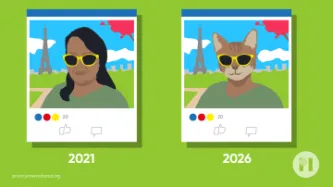
What if we told you that every photo of you, your family, and your friends posted on your social media or even your blog could be copied and saved indefinitely in a database with billions of images of other people, by a company you've never heard of? And what if we told you that this mass surveillance database was pitched to law enforcement and private companies across the world?
This is more or less the business model and aspiration of Clearview AI, a company that only received worldwide…

Content type: Video
<br />
Links
Daniel's petition: https://www.change.org/p/uk-parliament-ban-advertisers-from-targeting-eating-disorders
PI's diet ads report: https://privacyinternational.org/long-read/4603/unhealthy-diet-targeted-ads-investigation-how-diet-industry-exploits-our-data
More information on Instagram, targeted ads, and Frances Haugen - the Facebook whistleblower: https://privacyinternational.org/news-analysis/4622/reduce-facebooks-harms-teens-target-its-data-hungry-business-model…

Content type: Long Read
At Privacy International, we challenge companies and governments who infringe on our privacy and facilitate, as well, violations of other human rights.
Our most recent challenge is against Clearview AI, a company that trawls the internet to save photos of our faces to form part of their biometric database to sell. We have filed complaints alongside 3 other organisations with regulators in the UK, France, Italy, Austria and Greece. Our goal is a clear message that there is no place in society…

Content type: Long Read
In a previous article, we mapped the influence of the Chinese company Huawei across the world and how their sales of smart city infrastructures are contributing to the reshaping of our public space.
We should be alarmed by some of their product deployments – such as the installation of facial recognition technologies in countries with concerning human rights records. But also the deployments of facial recognition technology in countries without strong data protection laws are as such…

Content type: Long Read
The smart city market is booming. And with a booming market comes companies that are profiting and reshaping our public space, like the Chinese tech company Huawei.
While the term ‘Smart City’ is a broad one that encompasses many different initiatives, some with little to no impact on our privacy and other rights. Certain issues are nevertheless recurrent: the lack of transparency around public-private partnerships, the absence of consultation, and the appetite for a “tech quick fix…

Content type: Long Read
Image source
This piece is a part of a collection of research that demonstrates how data-intensive systems that are built to deliver reproductive and maternal healthcare are not adequately prioritising equality and privacy.
Telemedicine describes the vast range of applications and technologies used to provide and manage healthcare remotely.
Telemedicine as its most basic refers to the transmission of data from a patient to a healthcare professional through a range of electronic…

Content type: Long Read
Image found here.
Founded in 1959, Bounty UK Limited markets itself as an information service for pregnant women and new mothers. Prior to the pandemic, it was best known for distributing “Bounty packs” of free samples of baby products to pregnant women at midwife appointments, to new mothers on maternity wards in the UK and through its digital presence via its website and app. Bounty representatives also sold new born photography packages to new mothers at the hospital bedside. Bounty entered…

Content type: Advocacy
On 6 August 2021, the World Health Organisation (WHO) published its technical specifications and implementation guidance for “Digital Documentation of COVID-19 Certificates: Vaccination Status” (DDCC:VS) following months of consultations. As governments around the world are deploying their own Covid-19 certificates, guidance from the global health agency was expected to set a global approach, and one that prioritises public health. As such, we would expect the WHO to identify what these…

Content type: Explainer
An array of digital technologies are being deployed in the context of border enforcement. Satellite and aerial surveillance are part of the surveillance toolkit and yet, they are also used by organisations seeking to hold government actions to account and improve efficacy of their own work. To effectively critique state use and delve into potential benefits of satellite and aerial surveillance, we must first understand it.
In this explainer we dig into a technology which many are aware of for…

Content type: Advocacy
En mai 2021, nous avons fait une soumission pour la 132ème session du Comité des droits de l’homme qui a eu lieu entre le 28 juin 2021 et le 23 juillet 2021 en relation avec la conformité de la France avec le Pacte international relatif aux droits civils et politiques (PIDCP) avant l’adoption de la liste de points à traiter avant présentation de rapports (LoIPR).
Nous avons appelé le Comité des droits de l’homme de l’ONU à inclure dans la liste des questions au gouvernement français les points…
Content type: Advocacy
On May 2021, we made a submission for the 132nd Session of the Human Rights Committee that took place between 28 June 2021 and 23 July 2021 in relation to France’s compliance with the International Covenant on Civil and Political Rights (ICCPR) before the adoption of the List of issues prior to reporting (LoIPR).
We called the UN Human Rights Committee to include in the list of issues to the French government the following:
Emergency measures taken in response to the Covid-19 pandemic, and…

Content type: Long Read
The Grand Chamber of the European Court of Human Rights ruled that the UK government’s historical mass interception program violates the rights to privacy and freedom of expression. The Court held that the program “did not contain sufficient “end-to-end” safeguards to provide adequate and effective guarantees against arbitrariness and the risk of abuse.” As a result the Court ruled that UK law "did not meet the “quality of law” requirement and was therefore incapable of keeping the “…

Content type: Press release
Privacy International (PI), together with Hermes Center for Transparency and Digital Human Rights, Homo Digitalis and noyb - the European Center for Digital Rights, has today filed a series of legal complaints against Clearview AI, Inc. The facial recognition company claims to have “the largest known database of 3+ billion facial images”. The complaints were submitted to data protection regulators in France, Austria, Italy, Greece and the United Kingdom.
As our complaints detail, Clearview AI…

Content type: Video
Links:
Our report in English
Our report in Spanish
You can listen and subscribe to the podcast where ever you normally find your podcasts:
Spotify
Apple podcasts
Google podcasts
Castbox
Overcast
Pocket Casts
Peertube
Youtube
Stitcher
And more...
Content type: Examples
Article extract:
"French laws designed to prohibit individual-level targeting are circumvented by services like those provided by Paris-based firm Liegey Muller Pons, which aggregates personal data. Such services are no less data-intensive than those unconstrained by such legal requirements."
"• Liegey Muller Pons (LMP) is a digital campaigning firm that has provided services to over 1,000 campaigns across six European countries. French law prohibits individual-level targeting except under…
Content type: Examples
Article extract- translated from the original French.
"A political big data company with close ties to the federal liberals and which worked on Emmanuel Macron's campaign in France is setting up its head office in Old Montreal to continue its growth and take advantage of Montreal's digital vitality.
Data Sciences inc. (DS) was born from the victory of the Liberal Party of Canada (PLC) in the last election. Tom Pitfield, a close friend of Justin Trudeau, was leading digital operations during…