
Search
Content type: Press release
Privacy International’s Director-General Simon Davies has today written to Prime Minister David Cameron and Creativity Software CEO Richard Lee following revelations that Kingston-based Creativity sold a location-tracking system to Iran.
Mr Davies expressed his disappointment that the Coalition has taken no steps whatsoever to stop the export from Britain of surveillance technology to repressive regimes in the Middle East and North Africa, where it is used as a tool of political control…

Content type: News & Analysis
Nigel Waters has previously represented Privacy International at APEC Data Privacy Subgroup meetings, on one occasion with PI having official guest status, otherwise indirectly through membership of the Australian delegation. On this occasion, expenses were paid by USAid for participation in the technical assistance seminar, and this allowed attendance at the other meetings.
Cross border privacy rules
As a reminder, or for newcomers, the cross border privacy rules (CBPR) system is one…

Content type: News & Analysis
Not since the 1990s has the internet been so exciting. With its use by political activists and journalists around the world, we can now again entertain the discussions that the internet brings freedom. Digital data traverses routers with little regard to national boundaries and so traditional constraints not longer apply. So it is no surprise that protestors on the streets of Tehran or Cairo are using the internet to organise. We like to believe in the freedom of the internet again, after…
Content type: News & Analysis
For the past couple of months we have been discussing with Google their transparency plans regarding governments accessing data held by Google. Last week Google released initial data on how many requests for data were coming from which governments.
We congratulate Google on this first step, and we believe that by seeking answers to some additional questions, greater clarity may yet emerge. Of course we have many more questions. We hope that this is the first step in an ongoing dialogue with…
Content type: News & Analysis
Following an extensive campaign by Privacy International and our network of groups in the United Kingdom, the UK Government has decided to abandon its current plans for data sharing legislation.
The government has announced that it will immediately abandon clause 152 of the Coroners and Justice Bill, following on from an open letter that Privacy International sent to the Justice Secretary earlier this week.
As the Sunday Telegraph observed, the eloquence of the letter together with the…

Content type: News & Analysis
At the request of the Civil Initiative on Internet Policy, a Kyrgyz public foundation, Privacy International participated in an international conference on Internet and Law in Bishkek, Kyrgyzstan.
The event was organized in response to proposals for a new data retention law and content regulation of the Internet and was attended by government officials, journalists, legal experts, and representatives of the telecommunications industry.
Kyrgyzstan adopted a data protection law only in April…

Content type: News & Analysis
Two months ago, the UK Borders Agency began fingerprinting foreign children over six years old, from outside the European Economic Area and resident in Britain. At the time Jacqui Smith was congratulated for her tough line on issuing identity cards to foreign residents and no one, not even parliament, noticed that the biometric requirements applied to children of six. And parliament didn't know because it was never asked to approve the policy.
Nowhere in the world are you more powerless than…

Content type: News & Analysis
Under the Terrorism Act 2000, police agencies in the UK have the power to stop and search within ‘security zones’ as established under order by the Home Secretary. Since February 2001, London has been designated as a security zone.
When this power was used in 2003 at a London protest against the arms trade, the protestors appealed to the courts on privacy grounds. The UK House of Lords ruled that although a stop and search in public was possibly an interference under Article 8(1) of the ECHR,…
Content type: News & Analysis
Privacy International has briefed the UK House of Commons Treasury subcommittee on the risks to UK census data if a company with a US data centre is called on to run the census. Under weak US laws on safeguarding personal information, the UK census data could be abused without any knowledge of the UK government.
We filed a letter with the subcommittee to respond to the government minister's claims to the Commons that the government had no concerns about the US government gaining access to the…

Content type: News & Analysis
Together with a coalition with 18 Japanese rights groups, Privacy International today delivered a letter to the Japanese Minister of Justice to protest against the implementation of a fingerprinting system and face-scanning system at its borders. All visitors and many foreign residents to Japan will be fingerprinted under this plan. Our letter to the Minister is endorsed by 68 organisations from 30 countries. In our letter, we show that there are numerous problems with the government's plans.…
Content type: News & Analysis
At its last session on November 21st and 22nd 2006, the Article 29 Working Party has again been dealing with the SWIFT case and has unanimously adopted Opinion 128 on its findings in this case.
In this Opinion, the Article 29 Working Party emphasizes that even in the fight against terrorism and crime fundamental rights must remain guaranteed. The Article 29 Working Party insists therefore on the respect of global data protection principles.
SWIFT is a worldwide financial messaging service…
Content type: News & Analysis
Booz Allen Hamilton, Inc., a prominent defence and intelligence consulting and engineering firm, has been hired as an outside "independent" auditor of the CIA and Treasury Department's Terrorist Finance Tracking Program ("TFTP"), which monitors banking transactions made through the Society for Worldwide Interbank Financial Telecommunication (SWIFT). Though Booz Allen's role is to verify that the access to the SWIFT data is not abused, its relationship with the U.S. Government calls its…
Content type: News & Analysis
Dear Mr Schrank,
I am writing with regard to the current controversy over the private arrangement between SWIFT and the U.S. Government that facilitates the extradition of confidential financial transaction data from SWIFT to U.S. authorities. You will be aware that Privacy International contends that this arrangement breaches privacy and data protection law, and we have lodged complaints with regulatory authorities in 38 countries.
In my many discussions with SWIFT officials over the past…

Content type: Long Read
On June 22-23 2006 the New York Times ran a story uncovering an international financial surveillance programme run by the Bush Administration. In essence the Bush Administration is getting access to international transfer data and storing this in databases at the Treasury Department and/or CIA for access to investigate terrorist activity.
There are a number of inconsistencies in the accounts so far:
The U.S. claims that this is a narrowly focused programme that is compliant with the law,…
Content type: News & Analysis
The European Parliament voted today to adopt a new directive allowing for the retention of data "generated by telephony, SMS and internet, but not the content of the information communicated". This data includes email addresses and location data from cell phones. The directive is highly controversial due to the impact it will have on the privacy of European Union citizens.
Also of concern is the broad discretion that is left to EU member states. For example, data may be accessed for the…

Content type: News & Analysis
Privacy International has joined forces with dozens of other human rights and civil liberties organizations around the world to ask the European Parliament to reject a Directive that would seriously compromise personal freedom in the EU. Below is the text of the letter to Members of the European Parliament, and the pdf is also available.
To all Members of the European Parliament
We the undersigned are calling on you to reject the 'Directive of the European Parliament and the Council…

Content type: News & Analysis
‘Indymedia’ (IMC) describes itself as ‘a network of individuals, independent and alternative media activists and organisations, offering grassroots, non-corporate, non-commercial coverage of important social and political issues.’ According to Indymedia, its content is widely read, with the transfer of over 3.2 terabytes of information a month, serving over 18 million page views a month.
On October 7, 2004, over 20 websites administered by the Independent Media Center were taken off-line. This…

Content type: News & Analysis
The UK Presidency's first formal report, entitled 'Liberty and Security: Striking the Right Balance', was released today. It argues the case for new and expansive policies on communications surveillance, biometrics, travel surveillance, and CCTV. In fact, it promises to take UK policy failures to the European level.
Communications data retention
Despite having only a voluntary framework in UK law, the UK Presidency of the EU is pursuing mandatory data retention in a framework decision…

Content type: News & Analysis
The below letter was addresses to UK Prime Minister Tony Blair, Viviane Reding (Commissioner for Information Society and Media) and Franco Frattini (Vice President and Commissioner for Justice, Freedom and Security).
Your excellencies,
On behalf of European Digital Rights and Privacy International we would like to express our sadness and anger at the terrorist attacks in London on 7 July. We understand the difficulty of ensuring the daily safety of all citizens and residents…

Content type: News & Analysis
In a tipping of the hat to the Americans, the UK is set to establish the largest border surveillance programme to date. The new programme will involve the collection of biometrics on visitors to the UK, the generation of vast information stores on all Britons and visitors, and a profiling system to identify those worthy of further scrutiny.
This programme does not merely apply to combatting terrorism however; it is for use for general policing matters.
We have archived the 'partial'…
Content type: News & Analysis
We the undersigned are calling on you to reject the 'Draft Council Regulation on standards for security features and biometrics in passports and travel documents issued by Member States'. This is an unnecessary and rushed policy that will have hazardous effects on Europeans' right to privacy. This policy process requires additional oversight, and the eventual systems established will require significant controls and a strong legal framework to ensure that this is a proportionate response to the…
Content type: Press release
The London-based human rights watchdog Privacy International today attacked Justice Minister Donner's campaign on 'Wet op de uitgebreide identificatieplicht' as an "underhanded" attempt to convince innocent citizens to forego their legal rights.
Last year the organisation advised that the identity legislation would violate both the European Convention on Human Rights and the UN Declaration on the Rights of the Child.
Privacy International today warned that the identity campaign indicated that…
Content type: Press release
The London-based human rights watchdog Privacy International today warned that Justice Minister Donner's proposed 'Wet op de uitgebreide identificatieplicht' will violate the European Convention on Human Rights. The organisation has vowed to take legal action in the courts if the Parliament approves the proposals.
The proposed law will give a wide range of government and law enforcement officials the power to demand identification in the course of their duties. A penalty of €2,250 (US$2,…

Content type: News & Analysis
For the attention of Members and staff of the European Parliament,
I am writing to you on behalf of Privacy International, a London-based human rights group, to call on you to stop the implementation of biometric travel documents.
We at PI have been monitoring the biometric passport developments for three years. Most recently we organized an open letter to the International Civil Aviation Organization (ICAO) calling for clarification and modification to the plans for the biometric passport…

Content type: News & Analysis
The Privacy Commissioner for British Columbia made a call for submissions on whether the USA PATRIOT Act could allow the U.S. authorities to gain access to Canadians' personal information, enabled through the outsourcing of Canadian public services to the United States. The Commission also called for comments on the implications for compliance with Canadian provincial privacy laws, and to see if anything could be done to eliminate or mitigate the risks.
In this submission to the BC…

Content type: News & Analysis
To the participants of the International Civil Aviation Organization 12th Session of the Facilitation Division,
We are writing to you on behalf of a wide range of human rights and civil liberties organizations to express our concerns regarding a number of decisions emerging from your conferences and their likely effects on privacy and civil liberties. We are particularly worried about your plans requiring passports and other travel documents to contain biometrics and remotely readable ‘contact…
Content type: News & Analysis
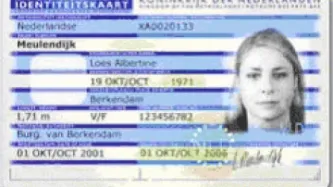
Privacy International is writing this Open Letter to Members of both Chambers of the Netherlands Parliament to express our deep concern over Justice Minister Donner's proposed 'Wet op de uitgebreide identificatieplicht'. We believe these requirements will violate the European Convention on Human Rights and the UN Convention on the Rights of the Child.
By way of introduction, Privacy International (PI) is a human rights group formed in 1990 as a watchdog on surveillance by governments and…
Content type: Press release
A conference held today at the London School of Economics will hear new statistics showing that UK law enforcement and investigation agencies are demanding an unprecedented quantity of customer records from communications providers.
Privacy International has compiled figures based on estimates supplied by the Home Office, Ministerial statements, legal experts, the communications industry and the All Party Internet Group of MPs. The figures being released today indicate that police and…

Content type: News & Analysis
1. What is CCTV?
CCTV (Closed Circuit Television) is a visual surveillance technology designed for monitoring a variety of environments and activities. CCTV systems typically involve a fixed (or "dedicated") communications link between cameras and monitors.
In the past decade, the use of CCTV has grown to unprecedented levels. In Britain between £150 and £300 million ($225 - $450 million) per year is now spent on a surveillance industry involving an estimated 300,000 cameras. Most…
Content type: News & Analysis
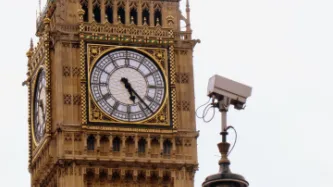
In recent years, the use of Closed Circuit Television (CCTV) in the UK has grown to unprecedented levels. Between £150 and £300 million per year is now spent on a system that involves an estimated 200,000 cameras. According to the British Security Industry Association, more than three quarters of these systems have been professionally installed. Most towns and cities are moving to CCTV surveillance of public areas, housing estates, car parks and public facilities. Growth in the market is…