
Search Taxonomy Terms

Seven applicants sought review from the European Court of Human Rights of the UK Investigatory Powers Tribunal’s refusal to hear their challenges to the UK intelligence services mass intercpetion practices. Their legal action was a result of PI’s campaign and support

PI intervened to emphasise the legal standards applicable to redress mechanisms available to victims of unlawful surveillance

PI, together with Article19 and EFF intervened to outline how unrestricted surveillance of communications data interferences with the right to privacy and threatens freedom of expression.

Human rights defenders are continuously at risk of violence, intimidation and surveillance as a direct consequence of the work they do, with women or those opposing large corporations bearing the brunt of these forms of repression.
Privacy International spoke to four activists based in Colombia, Indonesia, Mexico and South Africa to learn more about their understanding and experiences of surveillance. Their testimonies illustrate how the promises that came with innovation and the use of new technologies have not been enjoyed by all equally, and how some groups in society - such as human rights defenders - have experienced the impact of surveillance and the exploitation of data by governments and companies more severely than others.
Below is an outline of the main issues that these four activists brought to our attention which reflect the concerns raised previously by other organisations and HRDs across the world.

Governments are secretly collaborating with private companies. Here is why PI is concerned about surveillance outsourcing, and why together we urgently must expose them.
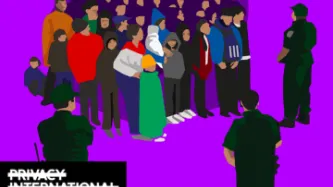
Powerful countries encourage and enable other governments to deploy advanced surveillance capabilities without adequate safeguards.

Privacy International filed complaints with multiple data protection regulators to investigate potential GDPR infringements by data brokers, ad-tech companies and credit referencing agencies.

People all over the world share with menstruation apps their deeply intimate data - the date of their last periods, dates and details pertaining to their sex lives, their moods, their health. This data is being ruthlessly exploited and shared with third parties to target and profile people.

From facial recognition to social media monitoring, from remote hacking to the use of mobile surveillance equipment called 'IMSI catchers', UK police forces are using an ever-expanding array of surveillance tools to spy on us as we go about our everyday lives.

After months of research, we filed complaints against seven of data broker companies: Acxiom, Criteo, Equifax, Experian, Oracle, Quantcast, and Tapad.