
Search Legal Cases
![White House (Pete Souza) Maison Blanche (Pete Souza) [Public domain]](/sites/default/files/styles/teaser_small_x1/public/2020-02/White%20House%20%28Pete%20Souza%29%20%20%20Maison%20Blanche%20%20%28Pete%20Souza%29%20%5BPublic%20domain%5D.jpg.webp?itok=_CifTyeV)
Increasingly counter-terrorism strategies and policies are decided at the international level, most notably by the UN Security Council, and are used to erode human rights, with no accountability.
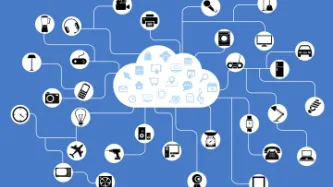
Exploiting new technologies that are in our homes and on our bodies as part of criminal investigations and for use as evidence, raises new challenges and risks that have not been sufficiently explored.

Surveillance technologies are radically transforming the ability of authorities to monitor civic spaces that see the space around them increasingly shrinking
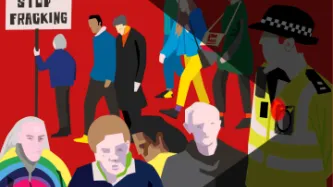
From facial recognition to social media monitoring, from remote hacking to the use of mobile surveillance equipment called 'IMSI catchers', UK police forces are using an ever-expanding array of surveillance tools to spy on us as we go about our everyday lives.
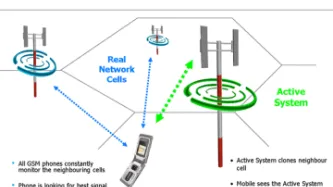
PI challenges police forces' refusal to disclose information on mobile phone surveillance.
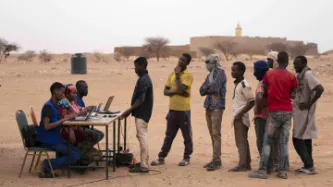
Powerful governments are financing, training and equipping countries — including authoritarian regimes — with surveillance capabilities.
The use of ‘mobile phone extraction’ tools enables police forces to download all of the content and data from people’s phones. This can apply to suspects, witnesses and even victims – without their knowledge.

In September 2016, Privacy International intervened in the case of Catt v the United Kingdom before the European Court of Human Rights.

Privacy International filed an amicus curiae brief outlining the international implications of eroding safety features on mobile phones

Facial Recognition is a technology that matches captured images with other facial images held, for example, in databases or "watchlists". It is an extremely intrusive form of surveillance and can seriously undermine our freedoms and eventually our society as a whole.