
Search

Content type: News & Analysis
As we mark the 750th anniversary of the first parliament called in Britain, its time for intelligence agencies to tell the truth.
After the fall of the Berlin wall, the new German government dedicated its commitment to democracy by physically building transparency into the political process - the impressive glass cupola of the Reichstag, the expansive glass walls of the ministry buildings and in the chancellery all encourage public curiosity and…

Content type: News & Analysis
In an enormous breakthrough for those seeking transparency and accountability to the shadowy surveillance industry, the Swiss Government has been forced to publish the list of export licenses for surveillance technologies and other equipment, including details of their cost and destination.
The decision by the Federal Information and Data Protection Commissioner comes on the heels of consistent pressure from Privacy International, Swiss journalists, and several Members of Parliament on…
Content type: Press release
Privacy International's new report exposes the companies that have built the Colombian Government's controversial and highly invasive surveillance systems. The report “Demand/Supply: Exposing the Surveillance Industry in Colombia” shows the extensive dealings that companies from Israel, the UK, the USA, Finland, and New Zealand, among other countries, have had in supporting Colombian government agencies in purchasing surveillance equipment. Many of the company's customers were agencies that did…

Content type: News & Analysis
Over a dozen international companies are supplying powerful communications surveillance technology in Colombia, according to a Privacy International investigation released today featuring original documentation. Over the past few decades, companies primarily from Israel, the US, and the UK have worked with Colombian partners to expand the Government's surveillance capacities. This is despite evidence that the Government is undertaking unlawful surveillance of Colombians.
The…
Content type: Press release
The release of a new report by Privacy International exposes Colombia's intelligence agencies' previously unknown history of developing communications surveillance capabilities outside of lawful authority.
The report “Shadow State: Surveillance law and order in Colombia” reveals, via previously unreleased documents, the Colombian police agencies' and intelligence services' long history developing surveillance systems. Rather than building a well-regulated system of surveillance after Colombia…

Content type: News & Analysis
Here are eight things we have learned from this week's hack of some 400GB of internal company material and correspondence from Italian surveillance company Hacking Team.
The Citizen Lab was right
The Citizen Lab, who in 2014 identified some 21 countries that are potential customers of Hacking Team, were right about all of them. A 2015 report stated that there was likely to be more. In fact, at least 45 countries are purchasers of Hacking Team's…

Content type: News & Analysis
The Swiss Federal Council has introduced a major amendment to its export licensing legislation in order to ensure surveillance technologies that might be used for human rights abuses are not exported from Switzerland.
What this means is that Swiss authorities must reject companies’ requests to export internet and mobile surveillance technologies if there “are reasonable grounds to believe” that the items could be used for repression in the country of destination.
The amendment…

Content type: News & Analysis
There is a common practice within the surveillance industry that makes the already murky market even harder to track: collaborating companies.
Within Privacy International's Surveillance Industry Index there are 83 documents detailing collaborations between companies involved in developing and selling surveillance technologies. These documents represent a variety of relationships – some are friendly companies, others advertise corporate partners, and some present themselves as a distributor of…
Content type: Press release
Privacy International, Amnesty International, FIDH, the French League for Human Rights and Reporters Without Borders are alarmed by the expansive surveillance powers to be granted to surveillance agencies contained in a Bill transferred to the French parliament on Friday. Under the new law, French intelligence agencies would be empowered to hack into computers and devices and spy on the communications of anyone who makes contact with a person under suspicion, even incidentally. The new law will…

Content type: News & Analysis
Late last year, the newly-elected government of Indonesia began to take steps which are almost unheard of today: reforming government communications surveillance powers.
The much-needed development, on the back of the victory of President Joko Widodo, comes at a critical moment in the country's history as the relationships that Indonesians have with technology are changing and growing rapidly. A recent poll revealed that Indonesians consider technology to have had a mostly…
Content type: News & Analysis
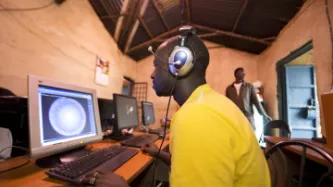
The right to privacy is on the frontline of a struggle that has seen a number of other constitutionally protected rights threatened during the last few bloody months of Kenya's ongoing security crisis.
After at least 64 people were killed in two attacks by Al Shabaab militants in late 2014, members of the ruling Jubilee Coalition swiftly moved to introduce an omnibus bill, the Security Laws (Amendment) Bill 2014. The bill, which was hastily enacted into law despite street…