
Search
Content type: Advocacy
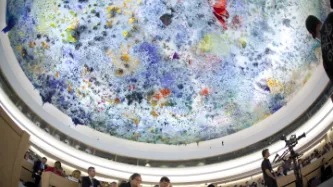
Below is Privacy International’s oral statement to the Human Rights Council 31st ordinary session, 9 March 2016 Inter-active dialogue with the UN Special Rapporteur on the right to privacy. Privacy International's written statement is here.
BEGIN
Mr. President,
Privacy International welcomes the opportunity to participate in this first inter-active dialogue with the Special Rapporteur on the right to privacy. We regret however the Rapporteur’s late submission of his report.…
Content type: News & Analysis
Surveillance companies and government officials from across the world are gathering in the UK this week at the invitation of the Home Office for the UK’s “Premier Security and Law Enforcement Event’, one week after the controversial spying legislation, entitled the Investigatory Powers Bill, had its first reading in Parliament.
Delegates and companies will be attending the three-day long ‘Security and Policing’ trade show in Farnborough, the historical centre of the UK’s aerospace industry.…

Content type: Advocacy
In his first report to the UN Human Rights Council (the main UN human rights political body composed of 47 states from around the world), the UN Special Rapporteur on the Right to Privacy has offered a scathing critique on the UK Investigatory Powers Bill. In particular the Rapporteur noted how bulk surveillance powers, including bulk hacking, are disproportionate and violate the right to privacy as established by human rights courts. The Rapporteur noted that the powers proposed in the…

Content type: News & Analysis
A new illegal spying scandal in Colombia involving the National Police has brought about the resignation of the Chief of the National Police, set off an investigation by the country’s Inspector General and brought the issue of illegal surveillance by Colombian authorities back into the national discussion.
With another institution engulfed in a spying scandal, it begs the question: just how many more of these can Colombia take before something finally changes?
Privacy International’s report…
Content type: News & Analysis
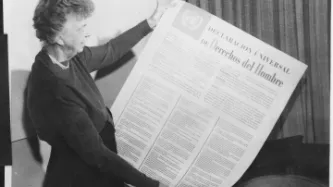
This week will see the right to privacy take center stage at the UN in Geneva.
The UN Special rapporteur on the right to privacy will present his first report to the UN Human Rights Council on Wednesday 9 March. Meanwhile the Human Rights Committee will review the records of surveillance and the right to privacy of South Africa and Sweden among others.
The new Special Rapporteur on the right to privacy
A year ago the Human Rights Council established the mandate of the Special…

Content type: News & Analysis
The Investigatory Powers Bill introduced on Tuesday 1 March contains the same range of ‘bulk powers’ envisaged in the earlier draft: bulk interception warrants; bulk acquisition warrants; bulk equipment interference warrants; and bulk personal dataset warrants.
These powers, if adopted as currently envisaged in the Bill, would codify a practice of mass, untargeted surveillance by the UK intelligence services.
In the last couple of years, some of the mass surveillance powers used by…
Content type: News & Analysis
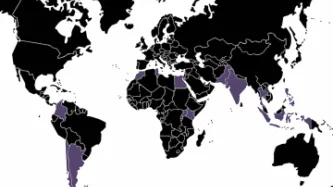
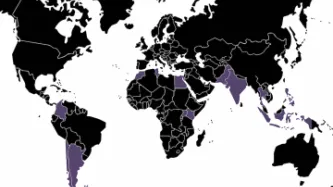
Today, Privacy International is publishing the result of a global effort to benchmark surveillance policies and practices in the countries that are part of the Privacy International Network. We're calling it the 'State of Surveillance'.
We designed a survey of questions based on some key issues: statistics about the communications infrastructure of the country; what civil society organisations and groups that analyse privacy issues; the international and domestic legal framework…
Content type: Long Read
Today, Privacy International is publishing the result of a global effort to benchmark surveillance policies and practices in the countries that are part of the Privacy International Network. We’re calling it the ‘State of Surveillance’.We designed a survey of questions based on some key issues: statistics about the communications infrastructure of the country; what civil society organisations and groups that analyse privacy issues; the international and domestic legal framework regulating…
Content type: Press release
Privacy International today publishes a new investigation, based on exclusive documents, exposing the sale of European surveillance technologies to a secret unit of Egypt's intelligence infrastructure.
The Technical Research Department (TRD) is an independent unit within the General Intelligence Service (GIS), accountable only to the President. According to sources, the TRD has the biggest budget for surveillance technologies of any Egyptian government body. Such large public expenditure…

Content type: Long Read
The Investigatory Powers Tribunal (“IPT”) today held that GCHQ hacking of computers, mobile devices and networks is lawful, wherever it occurs around the world. We are disappointed that the IPT has not upheld our complaint and we will be challenging its findings.
Our complaint is the first UK legal challenge to state-sponsored hacking, an exceptionally intrusive form of surveillance. We contended that GCHQ hacking operations were incompatible with democratic principles and human rights…
Content type: News & Analysis
The problems with thematic warrants and why they should be removed from the UK Government’s Investigatory Powers Bill
We currently have the rare opportunity to scrutinise and debate the powers that law enforcement, the security and intelligence agencies and public bodies should have to interfere with our private communications, our devices and our digital lives. These powers are being enshrined and expanded upon in the draft Investigatory Powers Bill (IP Bill), currently under scrutiny by the…
Content type: Press release
Gus Hosein, Executive Director, Privacy International said:
“Parliament's Intelligence and Security Committee (ISC) has today slammed the Government’s draft Investigatory Powers Bill for its lack of transparency, lack of clarity and lack of privacy protections. We urge the Home Office to take on board the wide ranging criticisms that the tech sector, civil society, and now even the Parliamentary committee that oversees the surveillance capabilities of the intelligence agencies, have made of…
Content type: News & Analysis
In 2015 the United Nations' human rights mechanisms significantly increased their capacity to monitor and assess states' compliance with their obligations around the right to privacy. Notably, the Human Rights Council established the mandate of the Special Rapporteur on the right to privacy, filling a significant gap in the international human rights protection system. Meanwhile, the Human Rights Committee put surveillance laws and practices in a range of countries under close scrutiny, making…