
Search
Content type: Explainer
Following sustained reporting by researchers, journalists and activists around the world, including recent disclosures exposed by the PegasusProject, the surveillance industry is facing scrutiny like never before.
In the latest move, eighteen U.S. lawmakers have today demanded that the U.S. government imposes sanctions on four non-US surveillance companies for, as they mention in their letter, facilitating “disappearance, torture and murder of human rights activists and journalists”.
The move…

Content type: News & Analysis
Update: Based on the complaint, on 30 November 2021 the Ombudsman opened an inquiry into whether the European Commission failed to take into account human rights concerns or carry out human rights impact assessments before providing support to African countries to develop surveillance capabilities.
___
Privacy International (PI) together with a coalition of human rights groups have today called on the European Ombudsman, the EU’s oversight body, to investigate evidence that the block is…

Content type: Report
In this briefing, Amnesty International, PI and The Centre for Research on Multinational Corporations (SOMO) discuss the corporate structure of NSO group, one of the surveillance industry's well-known participants. The lack of transparency around NSO Group’s corporate structure and the lack of information about the relevant jurisdictions within which it operates are significant barriers in seeking prevention of, and accountability for, human rights violations reportedly linked to NSO Group’s…
Content type: Long Read
On 25 May 2021, the European Court of Human Rights issued its judgment in Big Brother Watch & Others v. the UK. Below, we answer some of the main questions relating to the case.
After our initial reaction, below we answer some of the main questions relating to the case.
NOTE: This post reflects our initial reaction to the judgment and may be updated.
What’s the ruling all about?
In a nutshell, one of the world’s most important courts, the Grand Chamber of the European Court of Human…

Content type: Press release
The Grand Chamber of the European Court of Human Rights has today ruled that UK mass surveillance laws violate the rights to privacy and freedom of expression.It found that:The UK’s historical bulk interception regime violated the right to privacy protected by Article 8 of the European Convention on Human Rights and freedom of expression, protected by Article 10. Particularly it found that:the absence of independent authorisation,the failure to include the categories of selectors in the…

Content type: Video
On 6 February 2021, the Constitutional Court of South Africa in a historic judgment declared unconstitutional years of secret and unchecked surveillance by South African authorities against millions of people - irrespective of whether they reside in South Africa.
The Court powerfully placed the judgment in historical context:
The constitutionally protected right to privacy seeks to be one of the guarantees that South Africa will not again act like the police state that it was under apartheid…
Content type: Report
In December 2018, the National Coalition of Human Rights Defenders-Kenya published a report analysing the needs and concerns of human rights defenders (HRD) in relation to privacy, data protection and communications surveillance.
A summary of their findings is below. Access the full report on their website.

Content type: Examples
In 2015, The Intercept obtained documents showing that the Mall of America in Bloomington, Minnesota used a fake Facebook account to friend and monitor local Black Lives Matter activists, and collect their personal information and photographs without their knowledge. The account was discovered in a cache of files the Mall of America provided to Bloomington officials after a large BLM protest against police brutality that was held at the mall. After the protest, the city charged 11 protesters…

Content type: Impact Case Study
PI and our global partners have been at the forefront of challenging communications data retention for over a decade.
What is the problem
Communications data, also known as metadata, tells a story about your digital activity and answers the who, when, what, and how of a specific communication. While communications data doesn't include the contents of a message, all of the other information about the message can be very revealing about people, their habits, thoughts, health and personal…
Content type: Impact Case Study
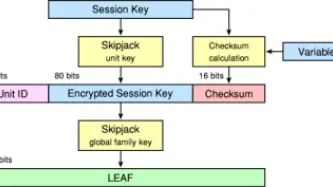
What happenedThe Clinton Administration kicked off the cypto-wars in 1993 with the Clipper Chip. The continued application of export controls restrained the deployment of strong cryptography in products at a key moment of internet history: as it began to be embedded in software and networking. What we didIn the early phases of the crypto-wars we placed pressure on global industry to implement encryption in their products. We ran campaigns and events across the world on the need for strong…
Content type: Impact Case Study
What is the problem
For over two decades we have been documenting an alarming use and spread of surveillance. It is no longer just the wars on terror or drugs or migration that is driving this trend. The management of health crises and distribution of welfare regularly are among others being used to justify this turn to increasingly invasive forms of surveillance. From country to country we see the same ideas and the same profiteers expanding their reach.
When we first released our report on…