
Search
Content type: Examples
While countries like New Zealand, Singapore, and South Korea publish detailed near-real-time data on local coronavirus outbreaks, the US offers very few details on how the disease is spreading due to political meddling, privacy concerns, and long-time neglect of public health surveillance systems. CDC reports are often delayed until after they can influence outcomes, a problem that has not been helped by the Trump administration’s decision to divert data from the CDC to a new $10 million system…
Content type: Examples
As part of efforts to make returning to campus safer, US universities are considering or implementing mandates requiring students to install exposure notification apps, quarantine enforcement programs, and other unproven new technologies, risking exacerbating existing inequalities in access to both technology and education. In some cases, such as Indiana University, UMass Amherst, and the University of New Hampshire, universities are requiring students to make a blanket commitment to install…
Content type: Examples
US epidemiologists are complaining that secrecy is interfering with public health efforts to curb the coronavirus. Beginning in April, California state and county health authorities have refused requests from scientists from Stanford University and several University of California campuses for detailed COVID-19 and contact tracing data for research they hope will find more effective approaches to slowing the epidemic. The agencies have cited reasons such as workload constraints and privacy…
Content type: Examples
Thermal temperature scanners, software keystroke monitors, and wearable location trackers are proliferating in US workplaces, with the data they collect outside of any of the country's electronic privacy laws. Companies report that employers are being asked to form part of the front line of contact tracing for COVID-19 and share data on a wholly new level. Even before the pandemic, employers sought to keep employee data exempt from the CCPA; privacy activists eventually won a one-year…
Content type: Examples
Many of the steps suggested in a draft programme for China-style mass surveillance in the US are being promoted and implemented as part of the government’s response to the pandemic, perhaps due to the overlap of membership between the National Security Commission on Artificial Intelligence, the body that drafted the programme, and the advisory task forces charged with guiding the government’s plans to reopen the economy. The draft, obtained by EPIC in a FOIA request, is aimed at ensuring that…
Content type: Examples
Cameras repurposed as "fever-detecting" aren't designed for and are not very good at detecting infections, but businesses, airlines, major employers, and public officials are nonetheless reacting to the coronavirus pandemic by spending large sums to buy them without understanding their limitations. The systems can detect elevated skin temperatures, but aren't precise enough to be able to identify the cause. In addition, many people who develop COVID-19 don't have fevers. The scanners have not…
Content type: Examples
The state of Utah gave the AI company Banjo real time access to state traffic cameras, CCTV, and public safety cameras, 911 emergency systems, location data for state-owned vehicles, and other data that the company says it's combining with information collected from social media, satellites, and various apps in order to detect anomalies in the real world and alert law enforcement to crimes as they are happening. The company claims its algorithm can do all this while stripping all personal data…
Content type: Examples
The automated facial recognition company Clearview AI has suggested to US federal and state authorities that its facial biometrics could leverage cameras already in place at gyms and retailers in order to identify individuals in the interests of contact tracing.
Simultaneously, the company is asking for a stay in a privacy lawsuit in federal court in Illinois under the state's Biometric Information Privacy Act. The company wants the case to be moved to the Southern District of New York, where…
Content type: Examples
The US Department of Health and Human Services has announced it will waive penalties for violations of the Health Insurance Portability and Accountability Act, which protects patient data privacy. HHS argued that in the nationwide emergency caused by the COVID-19 pandemic, greater latitude is needed to allow doctors to provide telehealth services and use new technologies such as one-on-one video conferencing apps to communicate with patients. However, the agency said that public-facing…
Content type: Examples
The US Centers for Disease Control and Prevention, in conjunction with local and state governments, are using location data collected by the mobile advertising industry from millions of cellphones in order to better understand how Americans are moving during the COVID-19 pandemic and how those movements affect the spread of the disease. The goal is to create a portal that federal, state, and local officials can use to study geolocation from up to 500 US cities and see which retail…
Content type: Examples
As governments look into surveillance, geolocation and biometric facial recognition to contain the coronavirus, even if they violate user data privacy, the controversial facial recognition company Clearview AI is allegedly negotiating a partnership with state agencies to monitor infected people and the individuals with whom they have interacted. The data mining company Palantir is already collaborating with the CDC and NIH, while the White House convened a task force of technology companies to…

Content type: Case Study
In 2015, a man in Connecticut was charged with murdering his wife based on evidence from her Fitbit. Richard Dabate, the accused, told the police that a masked assailant came into the couple’s suburban home at around 9am on 23 December 2015, overpowering Dabate then shooting his wife as she returned through the garage.
However, the victim’s fitness tracker told a different story. According to data from the device, which uses a digital pedometer to track the wearer’s steps, Dabate’s wife was…
Content type: Case Study
In early May 2019, it was revealed that a spyware, exploiting a vulnerability in Facebook’s WhatsApp messaging app, had been installed onto Android and iOS phones. The spyware could be used to turn on the camera and mic of the targeted phones and collect emails, messages, and location data. Citizen Lab, the organization that discovered the vulnerability, said that the spyware was being used to target journalists and human rights advocates in different countries around the world. The spyware…
Content type: News & Analysis
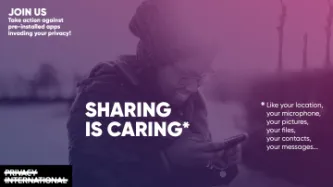
Maddie Stone, formally a Senior reverse engineer and tech lead on the Android security team, shockingly revealed a number of examples of how pre-installed apps on Android devices can undermine users privacy and security in her BlackHat USA talk in August 2019. The video of the talk only recently became available to the public in late December 2019.
The apps in question come preloaded on a device when it is purchased and often can't be removed. Stone reveals a litany of abuses carried out by…
Content type: Case Study
Slavery, servitude, and forced labour are absolutely forbidden today, as is anything that seeks to undermine or limit that restriction. The horrific reality, however, is that modern slavery remains a significant global issue.
Human trafficking is one form of modern slavery. It involves the recruitment, harbouring or transporting of people into a situation of exploitation through the use of violence, deception or coercion and forcing them to work against their will.
Human traffickers do…