
Search

Content type: Advocacy
In the wake of Privacy International’s (PI) campaign against the unfettered use of Facial Recognition Technology in the UK, MPs gave inadequate responses to concerns raised by members of the public about the roll-out of this pernicious mass-surveillance technology in public spaces. Their responses also sidestep calls on them to take action.The UK is sleepwalking towards the end of privacy in public. The spread of insidious Facial Recognition Technology (FRT) in public spaces across the country…

Content type: Case Study
This piece was written by Privacy International, based on publicly available information and on research by our partners at Hiperderecho
Overview
The Documento Nacional de Identidad (DNI) is the personal ID card recognised by the Peruvian State in any situation where a person might have to identify themselves, be it in an administrative, judicial, civil, or commercial context. The DNI also grants its holder the right to vote.
The DNI issuing and overseeing body is the Registro Nacional de…

Content type: News & Analysis
After almost 20 years of presence of the Allied Forces in Afghanistan, the United States and the Taliban signed an agreement in February 2020 on the withdrawal of international forces from Afghanistan by May 2021. A few weeks before the final US troops were due to leave Afghanistan, the Taliban had already taken control of various main cities. They took over the capital, Kabul, on 15 August 2021, and on the same day the President of Afghanistan left the country.As seen before with regime…

Content type: Report
Many countries in the world have existing ID cards - of varying types and prevalence - there has been a new wave in recent years of state “digital identity” initiatives.
The systems that states put in place to identify citizens and non-citizens bring with them a great deal of risks.
This is particularly the case when they involve biometrics - the physical characteristics of a person, like fingerprints, iris scans, and facial photographs.
Activists and civil society organisations around the…

Content type: Report
A common theme of all major pieces of national jurisprudence analyzing the rights implications of national identity system is an analysis of the systems’ impacts on the right to privacy.
The use of any data by the State including the implementation of an ID system must be done against this backdrop with respect for all fundamental human rights. The collection of data to be used in the system and the storage of data can each independently implicate privacy rights and involve overlapping and…

Content type: Report
National identity systems naturally implicate data protection issues, given the high volume of data necessary for the systems’ functioning.
This wide range and high volume of data implicates raises the following issues:
consent as individuals should be aware and approve of their data’s collection, storage, and use if the system is to function lawfully. Despite this, identity systems often lack necessary safeguards requiring consent and the mandatory nature of systems ignores consent…

Content type: Explainer
In the name of reinforcing migration control and increasing security, the EU is introducing a host of new surveillance measures aimed at short-term visitors to the Schengen area. New tools and technologies being introduced as part of the visa application process and the incoming “travel authorisation” requirement include automated profiling systems, a ‘pre-crime’ watchlist, and the automated cross-checking of numerous national, European and international databases. There are significant risks…

Content type: News & Analysis
Unlikely as it may seem, the UN institution that has one of the greatest potential to impact upon people’s rights around the world is now the UN Statistics Division. And why is that?
Last week, they had a crucial meeting where they endorsed the UN’s Legal Identity Agenda and the UN’s Legal Identity Task Force. The stakes could hardly be higher. One of the UN’s Sustainable Development Goals, SDG 16.9, states that “by 2030 provide legal identity for all including free birth…

Content type: Long Read
Photo By: Cpl. Joel Abshier
‘Biometrics’ describes the physiological and behavioural characteristics of individuals. This could be fingerprints, voice, face, retina and iris patterns, hand geometry, gait or DNA profiles. Because biometric data is particularly sensitive and revealing of individual’s characteristics and identity, it can be applied in a massive number of ways – and has the potential to be gravely abused.
Identification systems across the world increasingly rely on…
Content type: News & Analysis
This guest piece was written by Leandro Ucciferri of the Association for Civil Rights (Asociación por los Derechos Civiles). It does not necessarily reflect the views or position of Privacy International.
We look at our smartphone first thing in the morning to check the weather, and our to-do list for the day. During breakfast, we read the news and learn about what is going on in the rest of the world. In our commute to work or college, we scroll through our social media feeds…

Content type: News & Analysis
Humanitarian agencies are collecting personal information for Syrians caught in the crossfire of a drawn-out and bloody civil war. Indeed, refugees fleeing persecution and conflict, need to access services and protection offered by the world’s humanitarian community. But in the rush to provide necessary aid to those afflicted by the crisis in Syria, humanitarian organisations are overlooking a human right that also needs protecting: the right to privacy.
Humanitarian and aid agencies are…

Content type: News & Analysis
Privacy International today is proud to announce our new project, Aiding Privacy, which aims to promote the right to privacy and data protection in the development and humanitarian fields. Below is an outline of the issues addressed in our new report released today, Aiding Surveillance.
New technologies hold great potential for the developing world. The problem, however, is that there has been a systematic failure to critically contemplate the potential ill effects of deploying technologies in…

Content type: News & Analysis
Since mid-2012 the Hebrew University International Human Rights Clinic has been collaborating with Privacy International to produce research about the state of privacy laws and protections in Israel and worldwide.
Last week marked the launch of a long-anticipated pilot of a controversial Israeli biometric database, a project that has been the target of civil society protest and the subject of a challenge in the Israeli Supreme Court.
While there is no shortage of institutions maintaining…
Content type: News & Analysis
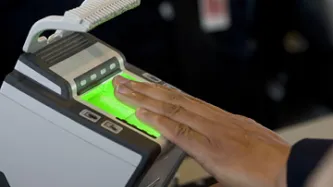
Privacy International's recent complaint to the UK Information Commissioner has threatened to bring to a halt an imminent plan to fingerprint all domestic and international passengers departing from Heathrow's Terminal 1 and Terminal 5, due to begin on March 27th. The British media is reporting that in response to PI's complaint, the Information Commissioner has advised that passengers should only accept fingerprinting "under protest" until our complaint is resolved.
The prospect of…
Content type: News & Analysis
For the attention of Members and staff of the European Parliament,
I am writing to you on behalf of Privacy International, a London-based human rights group, to call on you to stop the implementation of biometric travel documents.
We at PI have been monitoring the biometric passport developments for three years. Most recently we organized an open letter to the International Civil Aviation Organization (ICAO) calling for clarification and modification to the plans for the biometric passport…
Content type: News & Analysis
To the participants of the International Civil Aviation Organization 12th Session of the Facilitation Division,
We are writing to you on behalf of a wide range of human rights and civil liberties organizations to express our concerns regarding a number of decisions emerging from your conferences and their likely effects on privacy and civil liberties. We are particularly worried about your plans requiring passports and other travel documents to contain biometrics and remotely readable ‘contact…
Content type: News & Analysis
In 1994, in an attempt to discover the problems caused by ID cards, Privacy International compiled a survey containing reports from correspondents in forty countries. Amongst the gravest of problems reported to Privacy International was the over zealous use or misuse of ID cards by police - even where the cards were supposed to be voluntary. One respondent wrote:
On one occasion I was stopped in Switzerland when walking at night near Lake Geneva. I was living in Switzerland at the time and had…