
Search

Content type: News & Analysis
European leaders met last week in Brussels to discuss what is supposed to be two separate issues, the next trillion euro-plus budget and migration. In truth, no such separation exists: driven by nationalists and a political mainstream unable to offer any alternative but to implement their ideas, the next budget is in fact all about migration.
This strategy contained within the budget will get the approval of Hilary Clinton, who recently told the Guardian that ‘Europe needs to get a handle on…
Content type: Press release
PI Research Officer Edin Omanovic said:
“The European Commission has proposed sweeping updates [PDF] to trade regulations in an effort to modernise the EU’s export control system and to ensure that the trade in surveillance technology does not facilitate human rights abuses or internal repression.
Privacy International welcomes the intentions of the proposed changes in terms of protecting human rights as it does all such moves. More than half of the world’s surveillance…

Content type: Long Read
“This is my personal opinion,” concedes Branko, a taxi driver in Skopje, the Republic of Macedonia's capital. “It was done by America to stop Putin building his gas pipe line through Macedonia.”
“This is just politics,” he advises, skeptically.
It's a common reaction to the wiretapping scandal in Macedonia. Beginning in February last year when opposition leader Zoran Zaev posted a series of wiretaps online that he called 'bombs' – they seemingly showed that for years the phone calls of some…
Content type: News & Analysis
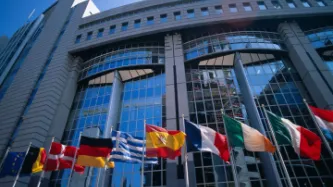
The Coalition Against Unlawful Surveillance Exports (CAUSE) has today released a new policy paper calling on the EU to take the opportunity to update its Dual Use Regulation to ensure that surveillance technologies are not exported from Europe and used for human rights violations.
The proposals have been developed by the international secretariat of CAUSE, a coalition of NGOs consisting of Access, Amnesty International, Digitale Gesellschaft, Human Rights Watch, the…
Content type: Press release
Privacy International, Reporters Without Borders, Digitale Gesellschaft, FIDH, and Human Rights Watch welcome news that the European Commission will move ahead and add specific forms of surveillance technology to the EU control list on dual use items, thus taking steps to finally hold companies to account who sell spy equipment and enable human rights abuses.
These important steps demonstrate that policymakers are beginning to wake up to the real harm that exists…
Content type: News & Analysis
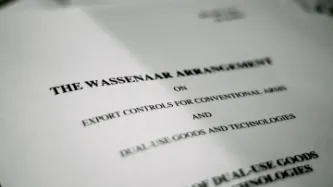
What is the Wassenaar Arrangement?
The Wassenaar Arrangement on Export Controls for Conventional Arms and Dual-Use Goods and Technologies (the "Wassenaar Arrangement") is a multilateral export control regime in which 41 states participate.
The Wassenaar Arrangement was established on 12 July 1996 in Wassenaar, the Netherlands by 33 founding members to contribute to regional and international security and stability. It is the successor to COCOM, a NATO based…