
Search

Content type: Examples
Facebook's latest tool for inspecting political ads showed that in the run-up to the US mid-term elections in November 2018, many of the same politicians who had been questioning Facebook about privacy and leaked user data were spending campaign funds on advertisements on the service. Between 2014 and 2018, the digital percentage of political spending rose from 1% to 22% (or about $1.9 billion); between May and November 2018 political spending on Facebook and its subsidiaries came to nearly $…
Content type: News & Analysis
This past weekend, in an Op-Ed in the Washington Post, Mark Zuckerberg called for new regulations to address harmful content, electoral integrity, privacy and data portability.
Nine years since he proclaimed that privacy is no longer a social norm, four years since Facebook noticed broadscale harvesting and exploitation of their users' data by third party companies and chose not to tell us about it, two years since he denied there were any abuses of data in political campaigns, and…

Content type: Examples
In 2018, the UK Information Commissioner's Office fined Emma's Diary, a site offering pregnancy and childcare advice owned by Lifecycle Marketing (Mother and Baby) Ltd, £140,000 for collecting and selling personal information belonging to more than 1 million people without disclosing in the site's privacy policy how it would be used. Although Lifecycle denied the allegations, the ICO found that the company sold the data to Experian Marketing Services to build into profiles for use by the…

Content type: Examples
In the months leading up to the US 2018 midterm elections, Republican officials in Georgia, Texas, and North Carolina made moves they described as ensuring voting integrity but which critics saw as blocking voter access. In Georgia, where Secretary of State Brian Kemp is charged with enforcing election law and was simultaneously running for governor, election officials blocked 53,000 applications to register, 70% of which are those of African-Americans, under a law requiring personal…
Content type: Long Read
In December 2017, Privacy International published an investigation into the use of data and microtargeting during the 2017 Kenyan elections. Cambridge Analytica was one of the companies that featured as part of our investigation.
Due to the recent reporting on Cambridge Analytica and Facebook, we have seen renewed interest in this issue and our investigation. Recently in March of 2018, Channel 4 News featured a report on micro targeting during the 2017 Kenyan Presidential Elections, and the…
Content type: Long Read
The ongoing Facebook and Cambridge Analytica scandal is a wake-up call for UK policy-makers who too often encourage and promote digital industries over the protection people’s personal data. The scandal has shown that the public is concerned by companies’ exploitation of their data. The current lack of transparency into how companies are using people’s data is unacceptable and needs to be addressed.
Reform should not be limited to the behaviour of individual companies. Consumers are confronted…
Content type: News & Analysis
This post was written by PI Policy Officer Lucy Purdon.
In 1956, US Presidential hopeful Adlai Stevenson remarked that the hardest part of any political campaign is how to win without proving you are unworthy of winning. Political campaigning has always been a messy affair and now the online space is where elections are truly won and lost. Highly targeted campaign messages and adverts flood online searches and social media feeds. Click, share, repeat; this is what political engagement looks…
Content type: Long Read
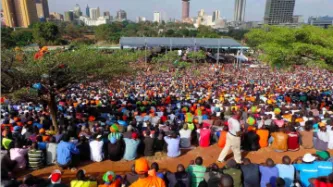
The battle for Kenyan voters’ allegiance in the 2017 Presidential election was fought on social media and the blogosphere. Paid advertisements for two mysterious, anonymous sites in particular started to dominate Google searches for dozens of election-related terms in the months leading up to the vote. All linked back to either “The Real Raila”, a virulent attack campaign against presidential hopeful Raila Odinga, or Uhuru for Us, a site showcasing President Uhuru Kenyatta’s accomplishments. As…

Content type: Case Study
Political campaigns around the world have turned into sophisticated data operations. In the US, Evangelical Christians candidates reach out to unregistered Christians and use a scoring system to predict how seriously millions these of voters take their faith. As early as 2008, the Obama campaign conducted a data operation which assigned every voter in the US a pair of scores that predicted how likely they would cast a ballot, and whether or not they supported him. The campaign was so confident…
Content type: News & Analysis
Image source: AFP
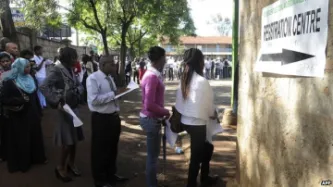
Earlier this month, the Kenyan daily The Star reported that UK-based data analytics firm Cambridge Analytica had been quietly contracted by President Uhuru Kenyatta’s party in a bid to win himself a second term in office. State House officials were quick to deny the claims, while the company itself issued no comment.
Cambridge Analytica has exploded onto the scene following revelations that its psychometric profiling techniques were used and reportedly played a role in…
Content type: Long Read
Disclaimer: This piece was written in April 2017. Since publishing, further information has come out about Cambridge Analytica and the company's involvement in elections.
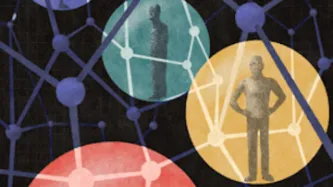
Recently, the data mining firm Cambridge Analytica has been the centre of tons of debate around the use of profiling and micro-targeting in political elections. We’ve written this analysis to explain what it all means, and the consequences of becoming predictable to companies and political campaigns.
What does…
Content type: News & Analysis
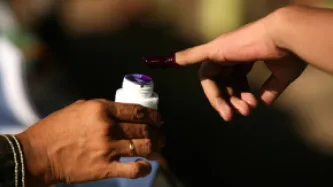
In the coming year, the elections to be held in Nigeria, Indonesia, Turkey, Ethiopia, Mexico, and Tunisia will be closely watched. Not only will the international community be monitoring the elections, but domestic governments could be monitoring their own citizens at the ballot box.
When courageous citizens brave uncertain political and societal contexts to exercise one of their fundamental human rights - the right to vote - they will rely on another fundamental human right - privacy. Privacy…