
Search
Content type: Examples
The Belarusian government is using the "Kipod" facial recognition software developed by the local software company LLCC Synesis to track and identify dissidents. Synesis was previously sanctioned by the EU for providing authorities with an AI surveillance platform capable of tracking individuals. Kipod uses biometrics machine learning algorithms to analyse material. Synesis has denied that the technology could be used to identify protesters, but the Belarusian government decreed the…
Content type: Examples
In 2019, interviews with Hong Kong protesters destroying smart lampposts revealed that many distrusted the government's claim that they would only take air quality measurements and help with traffic control, largely because of the comprehensive surveillance net the Chinese government was using to control and oppress the minority Uighur population in the Xinjiang region. As part of their response to this threat, the protesters wore masks, carried umbrellas, and travelled on foot, using online…
Content type: Examples
In 2019 Hong Kong protesters cut down 20 of the city's smart lampposts, which are streetlights equipped with sensors and cameras, in order to counter the threat that they were vectors for surveillance technologies such as facial and licence plate recognition. TickTack Technology, which provided the lampposts, terminated its contract with the Hong Kong government because of the property damage and threats to its employees. Protesters uploaded pictures of the lampposts' inner workings to Facebook…
Content type: Examples
During 2019, Hong Kong law enforcement authorities had access to AI facial recognition software provided by Sydney-based iOmniscient that can match faces and licence plates from video footage to police databases, but chief executive Carrie Lam's administration and police did not confirm whether they were using it to quash the pro-democracy protests. IOmniscient is also used to find lost children and manage traffic and has users in more than 50 countries. Under Hong Kong's privacy laws, members…
Content type: Examples
As police began treating every 2019 Hong Kong protest as an illegal assembly attracting sentences of up to ten years in jail, facial recognition offered increased risk of being on the streets, as protesters could be identified and arrested later even if they were in too large a crowd to be picked up at the time. By October, more than 2,000 people had been arrested, and countless others had been targeted with violence, doxxing, and online harassment. On the street, protesters began using…
Content type: Examples
Both protesters and police during the 2019 Hong Kong protests used technical tools including facial recognition to counter each other's tactics. Police tracked protest leaders online and sought to gain access to their phones on a set of Telegram channels. When police stopped wearing identification badges, protesters began to expose their identities online on another. The removal of identification badges has led many to suspect that surveillance techniques are being brought in from mainland…
Content type: Examples
Russian authorities are using facial recognition to track opposition protesters to their homes and arrest them, though the cameras are often turned off or "malfunctioning" when state security agents are suspected of attacks on or murders of journalists and opposition activists. The data is gathered into a central database and is sold cheaply by corrupt officials on Russia's "probiv" black market in data. Facial recognition software, produced by local companies such as NtechLab, is…
Content type: Examples
When Dallas police posted on Twitter asking for videos of the protests taking place after George Floyd's killing, a flood of videos and images of K-pop stars were uploaded to its anonymous iWatch Dallas tip-off app. Law enforcement can call on vast numbers of networked cameras - from cars, food and retail chains that are typically willing to share with police, law enforcement agencies' own networks of surveillance and body cameras as well as object and face recognition software, protesters and…
Content type: Examples
Following the January 6 invasion of the US Capitol Building, federal law enforcement used a wide variety of surveillance technologies to track down participants, including facial recognition, licence plate readers, policy body cameras, and cellphone tracking. While many of the people being tracked and charged are members of white supremacist groups, human rights organizations such as ACLU and EFF are concerned that the level of surveillance was excessive and poses a threat to peaceful protests…
Content type: Examples
Human rights activists and Democratic members of the US Congress wrote to top law enforcement officials in the Trump administration to demand they cease surveilling Americans engaging in peaceful protests. Trump and others in his administration called those protesting the killing of George Floyd "domestic terrorists" and "anarchists". Recent efforts to surveil Americans have included facial recognition, automated licence plate readers, and Stingrays, as well as spy planes and drones.
https://…
Content type: Report
In Israel/Palestine, the Israeli government has been deploying biometrics, including cutting-edge facial recognition technology, in the name of counter-terrorism. The Israeli state routinely surveils and severely restricts Palestinians’ freedom of movement using myriad technologies, including biometrics, which result in furthering the policies of systemic segregation. Since many Palestinians live under Israeli occupation, they have little control over the way their sensitive data is turned…

Content type: Long Read
Since the September 11th attacks, decision makers across the globe have embraced overreaching surveillance technologies. The global “War on Terror” ushered in and normalized an array of invasive surveillance technologies. Collection and storage of biometrics data and the application of statistical methods to such data have been touted as uniquely suited to twenty-first century threats. Yet, biometrics technologies are not seamless, panoptic technologies that allow for perfect control. They can…

Content type: Explainer
What is social media monitoring?
Social media monitoring refers to the monitoring, gathering and analysis of information shared on social media platforms, such as Facebook, Twitter, Instagram and Reddit.
It may include snooping on content posted to public or private groups or pages. It may also involve “scraping” – grabbing all the data from a social media platform, including content you post and data about your behaviour (such as what you like and share).
Through scraping and other tools…
Content type: Explainer
What do Body Worn Video cameras do?
Body worn video (BWV) cameras can be attached to a police officer’s clothing – often at chest, shoulder or head level – and record video, including sound, from the officer’s perspective.
BWV cameras will probably be visible to you, and when it’s recording, a flashing light should appear on the device.
How might body worn video cameras be used at a protest?
BWV cameras may be used at protests to monitor actions of protestors.
They do not usually…
Content type: Explainer
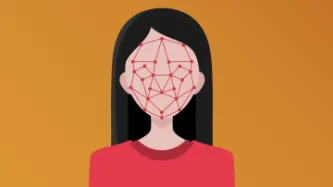
What is Facial Recognition Technology?Facial recognition technology (FRT) collects and processes data about people’s faces, and can be used to identify people. FRT matches captured images with images stored in existing databases or ‘watchlists’.How might it be used in relation to a protest?FRT may be used to monitor, track and identify people’s faces in public spaces, including at protests. This may be done openly or surreptitiously, without people knowing or consenting.FRT-enabled cameras can…

Content type: Advocacy
This report is presented by TEDIC (Technology and Community Association) and Privacy International (PI). TEDIC is a non-governmental, non-profit organization, based in Asunción, that promotes and defends human rights on the Internet and extends its networking to Latin America. PI is a London based human rights organization that works globally at the intersection of modern technologies and rights.
TEDIC and PI wish to express some concerns about the protection and promotion of the right to…
Content type: Video
Remember: sign our ECI! pvcy.org/banbiometrics
And you can find our survey here: pvcy.org/tpsurvey
Links
Facebook Leak
- Facebook Leak: https://www.businessinsider.com/stolen-data-of-533-million-facebook-users-leaked-online-2021-4?r=US&IR=T
- Mark Zuckerburg on signal?: https://www.thesun.co.uk/tech/14595265/mark-zuckerberg-using-whatsapp-rival-signal/
- Irish DPA investigation: https://www.cnet.com/news/facebook-under-investigation-in-europe-over-massive-personal-data-leak…
Content type: News & Analysis
This blog post by Coding Rights was originally published in Portuguese at: https://tinyurl.com/mediumcodingrightsTransID. It was written by Mariah Rafaela Silva and Joana Varon and translated by Erly Guedes. Illustration was produced by Clarote.On the International Transgender Day of Visibility, Mariah Rafaela Silva and Joana Varon authors of the report “Facial recognition in the public sector and trans identities: techno-politics of control, surveillance and threats to gender diversity…
Content type: Video
This podcast was recorded before the US Federal Trade Commission told a company called 'Ever' to delete any facial recognition algorithms they developed without consent
Links:
The original article
Info on how to do your own Data Subject Access Request
And the template from the ICO
Info on how to request your data be deleted
Find more from Ann Cavoukian
Find out more about the ACLU's legal challenge in Illinois
Find out more about Robert Julian-Borchack William's case…

Content type: Advocacy
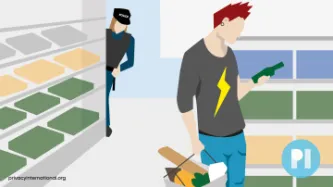
Privacy International has written to the Southern Co-operative supermarket chain to express serious concerns and ask for assurances following a report that it "completed a successful trial using Facewatch [facial recognition] in a select number of stores".
Facewatch describes itself as a “cloud-based facial recognition security system [which] safeguards businesses against crime.” Premises using the system are alerted when Subjects of Interest (SOI) enter their premises through the…
Content type: News & Analysis
Privacy International (PI) has today warned UK regulatory and law enforcement bodies about the potential deployment of an extensive and potentially nationwide police facial recognition surveillance system. We are urging them to investigate and take steps to ensure that no ‘backdoor’ for unlawful facial recognition surveillance will be developed under the umbrella of a crime reporting system.
According to pricing and data-sharing templates, UK surveillance company Facewatch is offering to…
Content type: Long Read
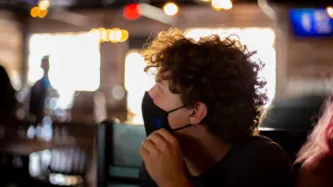
As more and more of us feel compelled to cover our faces with masks, companies that work on facial recognition are confronted with a new challenge: how to make their products relevant in an era where masks have gone from being seen as the attribute of those trying to hide to the accessory of good Samaritans trying to protect others.
Facewatch is one of those companies. In May 2020, they announced they had developed a new form of facial recognition technology that allows for the…
Content type: Examples
After governments in many parts of the world began mandating wearing masks when out in public, researchers in China and the US published datasets of images of masked faces scraped from social media sites to use as training data for AI facial recognition models. Researchers from the startup Workaround, who published the COVID19 Mask image Dataset to Github in April 2020 claimed the images were not private because they were posted on Instagram and therefore permission from the posters was not…
Content type: Explainer
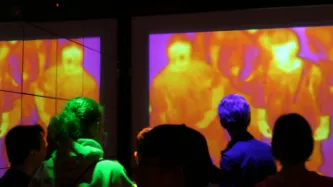
At first glance, infrared temperature checks would appear to provide much-needed reassurance for people concerned about their own health, as well as that of loved ones and colleagues, as the lockdown is lifted. More people are beginning to travel, and are re-entering offices, airports, and other contained public and private spaces. Thermal imaging cameras are presented as an effective way to detect if someone has one of the symptoms of the coronavirus - a temperature.
However, there is little…
Content type: Long Read
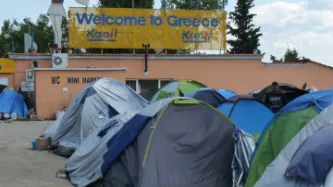
Over the last two decades we have seen an array of digital technologies being deployed in the context of border controls and immigration enforcement, with surveillance practices and data-driven immigration policies routinely leading to discriminatory treatment of people and undermining peoples’ dignity.And yet this is happening with little public scrutiny, often in a regulatory or legal void and without understanding and consideration to the impact on migrant communities at the border and…

Content type: Case Study
Facial recognition technology (FRT) is fairly present in our daily lives, as an authentication method to unlock phones for example. Despite having useful applications, FRT can also be just another technology used by those in power to undermine our democracies and carry out mass surveillance. The biometric data collected by FRT can be as uniquely identifying as a fingerprint or DNA. The use of this technology by third parties, specially without your consent, violates your right to privacy.
The…

Content type: Long Read
In April 2018, Amazon acquired “Ring”, a smart security device company best known for its video doorbell, which allows Ring users to see, talk to, and record people who come to their doorsteps.
What started out as a company pitch on Shark Tank in 2013, led to the $839 million deal, which has been crucial for Amazon to expand on their concept of the XXI century smart home. It’s not just about convenience anymore, interconnected sensors and algorithms promise protection and provide a feeling of…

Content type: Case Study
Well into the 21st century, Serbia still does not have a strong privacy culture, which has been left in the shadows of past regimes and widespread surveillance. Even today, direct police and security agencies’ access to communications metadata stored by mobile and internet operators makes mass surveillance possible.
However, a new threat to human rights and freedoms in Serbia has emerged. In early 2019, the Minister of Interior and the Police Director announced that Belgrade will receive “a…
Content type: News & Analysis
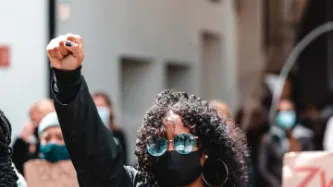
On June 9th, in light of the global debate against racial injustices, the company IBM announced they would stop selling facial recognition. In a letter to the US congress, they demanded a “national dialogue on whether and how facial recognition technology should be employed by domestic law enforcement agencies.”
It is worth noting first of all that it is not entirely clear that IBM is actually stopping facial recognition. The letter states that "IBM no longer offers general purpose IBM facial…
Content type: News & Analysis
Yesterday, Amazon announced that they will be putting a one-year suspension on sales of its facial recognition software Rekognition to law enforcement. While Amazon’s move should be welcomed as a step towards sanctioning company opportunism at the expense of our fundamental freedoms, there is still a lot to be done.
The announcement speaks of just a one-year ban. What is Amazon exactly expecting to change within that one year? Is one year enough to make the technology to not discriminate…