
Search

Content type: Advocacy
On 18 October 2023, the Inter-American Court of Human Rights (IACtHR or Court) issued a historic judgment declaring the Republic of Colombia internationally responsible for human rights violations against several members of the human rights non-profit Colectivo de Abogados y Abogadas José Alvear Restrepo (CAJAR)and their relatives. This groundbreaking decision marks the first acknowledgment within the inter-American context of a state’s international responsibility for violating the right to…

Content type: Advocacy
Privacy International joined civil society efforts to call the South African Parliament not to approve the draft General Intelligence Laws Amendment Bill 2023 (GILAB), which was approved by the Cabinet and introduced in Parliament.
The Bill was proposed by the South African government, after the Constitutional Court found the Regulation of Interception of Communications Act of 2002 (RICA) unconstitutional on multiple grounds.
The draft Bill fails to meet the human rights standards on many…

Content type: News & Analysis
After almost 20 years of presence of the Allied Forces in Afghanistan, the United States and the Taliban signed an agreement in February 2020 on the withdrawal of international forces from Afghanistan by May 2021. A few weeks before the final US troops were due to leave Afghanistan, the Taliban had already taken control of various main cities. They took over the capital, Kabul, on 15 August 2021, and on the same day the President of Afghanistan left the country.As seen before with regime…

Content type: Long Read
Additionally, in January 2020 Privacy International and UK-based NGO Liberty filed a new claim against MI5 and the Secretary of State for the Home Department in the Investigatory Powers Tribunal (the “Ungoverned Spaces Case”, this time, the case sought to hold MI5 and the SSHD accountable for systemic, long-term failures in the way they handle and retain millions of people’s personal data. As part of this claim, PI requested that the IPT re-opens parts of the original BPD/BCD. This aspect of…

Content type: Long Read
The Grand Chamber of the European Court of Human Rights ruled that the UK government’s historical mass interception program violates the rights to privacy and freedom of expression. The Court held that the program “did not contain sufficient “end-to-end” safeguards to provide adequate and effective guarantees against arbitrariness and the risk of abuse.” As a result the Court ruled that UK law "did not meet the “quality of law” requirement and was therefore incapable of keeping the “…
Content type: Long Read
On 25 May 2021, the European Court of Human Rights issued its judgment in Big Brother Watch & Others v. the UK. Below, we answer some of the main questions relating to the case.
After our initial reaction, below we answer some of the main questions relating to the case.
NOTE: This post reflects our initial reaction to the judgment and may be updated.
What’s the ruling all about?
In a nutshell, one of the world’s most important courts, the Grand Chamber of the European Court of Human…

Content type: Long Read
Imagine that every time you want to attend a march, religious event, political meeting, protest, or public rally, you must share deeply personal information with police and intelligence agencies, even when they have no reason to suspect you of wrongdoing.
First, you need to go to the police to register; have your photo taken for a biometric database; share the contacts of your family, friends, and colleagues; disclose your finances, health records, lifestyle choices, relationship status, and…

Content type: Long Read
A major new report published today by Privacy International has identified alarming weaknesses in the oversight arrangements that are supposed to govern the sharing of intelligence between state intelligence agencies.
'Secret Global Surveillance Networks: Intelligence Sharing Between Governments and the Need for Safeguards' is based on an international collaborative investigation carried out by 40 NGOs in 42 countries.
Previously undisclosed documents obtained by PI via litigation in the…

Content type: Long Read
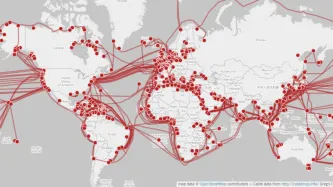
This week, Privacy International, together with nine other international human rights NGOs, filed submissions with the European Court of Human Rights. Our case challenges the UK government’s bulk interception of internet traffic transiting fiber optic cables landing in the UK and its access to information similarly intercepted in bulk by the US government, which were revealed by the Snowden disclosures. To accompany our filing, we have produced two infographics to illustrate the…
Content type: Press release
British intelligence services acted unlawfully in accessing millions of people’s personal communications collected by the NSA, the Investigatory Powers Tribunal ruled today. The decision marks the first time that the Tribunal, the only UK court empowered to oversee GHCQ, MI5 and MI6, has ever ruled against the intelligence and security services in its 15 year history.
The Tribunal declared that intelligence sharing between the United States and the…

Content type: Long Read
Many people imagine intelligence sharing to be a practice whereby men in trench coats silently slide manilla envelopes containing anonymous tip-offs or intelligence reports marked TOP SECRET across tables in smoke-filled rooms.
While such practices certainly exist, they represent only a tiny slice of intelligence sharing activities, and are vastly overshadowed by the massive exchange of bulk unanlysed (raw) intelligence data that takes place between the UK and its Five Eyes allies.…
Content type: Press release
Privacy International today has filed a complaint with the Australian Inspector-General of Intelligence Security, calling for an immediate investigation into deeply troubling reports that the Australian intelligence services offered to violate the privacy rights of millions of citizens by handing over bulk metadata to its Five Eye partners.
According to the leaked Five Eyes memo published in the Guardian on 2 December, the Australian Signals Directorate, during a meeting…
Content type: Press release
The United Nations General Assembly should approve a new resolution and make clear that indiscriminate surveillance is never consistent with the right to privacy, five human rights organizations said in a November 21, 2013 letter to members of the United Nations General Assembly.
After heated negotiations, the draft resolution on digital privacy initiated by Brazil and Germany emerged on November 21 relatively undamaged, despite efforts by the …