
Search

Content type: Long Read
The fourth edition of PI’s Guide to International Law and Surveillance provides the most hard-hitting past and recent results on international human rights law that reinforce the core human rights principles and standards on surveillance. We hope that it will continue helping researchers, activists, journalists, policymakers, and anyone else working on these issues.The new edition includes, among others, entries on (extra)territorial jurisdiction in surveillance, surveillance of public…

Content type: Advocacy
BackgroundThe Snowden revelations and subsequent litigation have repeatedly identified unlawful state surveillance by UK agencies. In response, the UK Parliament passed the highly controversial Investigatory Powers Act 2016 (IPA), which authorised massive, suspicionless surveillance on a scale never seen before, with insufficient safeguards or independent oversight.Privacy International led legal challenges to this mass surveillance regime both before and after the Act became law. The Act…
Content type: Advocacy
Dejusticia, Fundación Karisma, and Privacy International submitted a joint stakeholder report on Colombia to the 44th session of the Universal Periodic Review at the UN Human Rights Council.Our submission raised concerns regarding the protection of the rights to freedom of expression and opinion, to privacy, and to personal data protection; the shutdown of civil society spaces; protection of the right to protest; and protection of the rights of the Venezuelan migrant and refugee population.…
Content type: News & Analysis
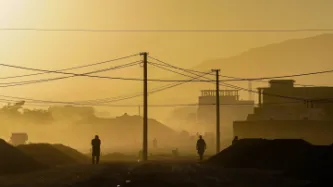
After almost 20 years of presence of the Allied Forces in Afghanistan, the United States and the Taliban signed an agreement in February 2020 on the withdrawal of international forces from Afghanistan by May 2021. A few weeks before the final US troops were due to leave Afghanistan, the Taliban had already taken control of various main cities. They took over the capital, Kabul, on 15 August 2021, and on the same day the President of Afghanistan left the country.As seen before with regime…
Content type: Examples
During the Black Lives Matter protests of summer 2020, US police took advantage of a lack of regulation and new technologies to expand the scope of people and platforms they monitor; details typically emerge through lawsuits, public records disclosures, and stories released by police department PR as crime prevention successes. A report from the Brennan Center for Justice highlights New York Police Department threats to privacy, freedom of expression, and due process and the use of a predator…
Content type: Long Read
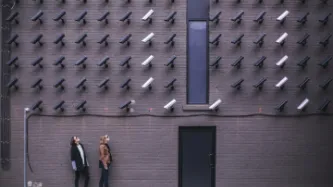
Imagine that every time you want to attend a march, religious event, political meeting, protest, or public rally, you must share deeply personal information with police and intelligence agencies, even when they have no reason to suspect you of wrongdoing.
First, you need to go to the police to register; have your photo taken for a biometric database; share the contacts of your family, friends, and colleagues; disclose your finances, health records, lifestyle choices, relationship status, and…

Content type: Impact Case Study
PI and our global partners have been at the forefront of challenging communications data retention for over a decade.
What is the problem
Communications data, also known as metadata, tells a story about your digital activity and answers the who, when, what, and how of a specific communication. While communications data doesn't include the contents of a message, all of the other information about the message can be very revealing about people, their habits, thoughts, health and personal…

Content type: News & Analysis
In Egypt, the internet, social media and online engagement have provided a critical platform in recent years for Egyptians to express their frustration and demand change after years of social, economic and political repression. The use of social media during protests, and the government's recent attempts to crack down on the use of services like Twitter and Facebook, have been widely reported.
So it was with shock and disappointment that Privacy International looked on earlier this month…
Content type: News & Analysis
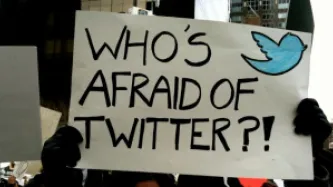
Earlier this month, only a few days before the new president of Egypt was sworn in, leaked documents from the Ministry of Interior revealed that the government is trying to acquire mass surveillance equipment capable of monitoring social networks such as Facebook, Twitter, and YouTube.
While being billed as a way to monitor social media in order to “monitor security hazards in social networks” and “identify persons representing a danger on society” (sic), past and recent actions by…