
Search

Content type: Long Read
Sports are a huge part of daily life for billions around the world, a fundamental aspect of the rich tapestry of the human experience.Attending a major sporting event can be a formative experience in someone’s life, as a place to share in a communal culture.Increasingly we have seen surveillance, and especially mass surveillance measures, being introduced at sports events impeding the enjoyment particularly of the right to privacy and right to participate in sporting life.When we saw that the…
Content type: Report
Over the past years, data retention regulation imposing generalised and indiscriminate data retention obligations to telecommunication companies and Internet service provides has been introduced in various jurisdictions across the world. As the data retention practices across the world have evolved this new report is an attempt to shed some light on the current state of affairs in data retention regulation across ten key jurisdictions. Privacy International has consulted with human…

Content type: Report
PI has been fighting against police using intrusive & disproportionate surveillance technologies at protests around the world for years. Unregulated surveillance and indiscriminate intrusions on our privacy have a chilling effect on the right to freedom of assembly.
We've fought to uncover the types of technologies that police secretly deploy at protests, and we have detailed how protesters around the world can try to protect their intimate and sensitive data from being captured by the…

Content type: News & Analysis
In the midst of the atrocious war currently being waged by Russia on Ukraine, on 14 March 2022 Reuters reported that Clearview AI, the infamous online surveillance company, had offered its services to the Ukrainian defense ministry. A day later in an interview for TechCrunch, Ukraine's vice prime minister and minister for Digital Transformation confirmed that the partnership with Clearview AI was "currently in very early development".
Clearview is an online surveillance company that collects…

Content type: Explainer
Following sustained reporting by researchers, journalists and activists around the world, including recent disclosures exposed by the PegasusProject, the surveillance industry is facing scrutiny like never before.
In the latest move, eighteen U.S. lawmakers have today demanded that the U.S. government imposes sanctions on four non-US surveillance companies for, as they mention in their letter, facilitating “disappearance, torture and murder of human rights activists and journalists”.
The move…
Content type: Advocacy
En mai 2021, nous avons fait une soumission pour la 132ème session du Comité des droits de l’homme qui a eu lieu entre le 28 juin 2021 et le 23 juillet 2021 en relation avec la conformité de la France avec le Pacte international relatif aux droits civils et politiques (PIDCP) avant l’adoption de la liste de points à traiter avant présentation de rapports (LoIPR).
Nous avons appelé le Comité des droits de l’homme de l’ONU à inclure dans la liste des questions au gouvernement français les points…
Content type: Advocacy
On May 2021, we made a submission for the 132nd Session of the Human Rights Committee that took place between 28 June 2021 and 23 July 2021 in relation to France’s compliance with the International Covenant on Civil and Political Rights (ICCPR) before the adoption of the List of issues prior to reporting (LoIPR).
We called the UN Human Rights Committee to include in the list of issues to the French government the following:
Emergency measures taken in response to the Covid-19 pandemic, and…

Content type: Long Read
The Grand Chamber of the European Court of Human Rights ruled that the UK government’s historical mass interception program violates the rights to privacy and freedom of expression. The Court held that the program “did not contain sufficient “end-to-end” safeguards to provide adequate and effective guarantees against arbitrariness and the risk of abuse.” As a result the Court ruled that UK law "did not meet the “quality of law” requirement and was therefore incapable of keeping the “…

Content type: News & Analysis
The “EU Trust Fund for Stability and Addressing Root Causes of Irregular Migration and Displaced Persons in Africa” (EUTF for Africa) isn’t exactly headline news (and nor does it exactly roll off the tongue), but its influence is vast and will be felt for decades to come for millions of people across Africa.
Set up in the wake of the 2015 ‘migration crisis’ in Europe and largely made up of money earmarked for development aid (80% of its budget comes from development and humanitarian aid funds…
Content type: News & Analysis
Le « Fonds fiduciaire d’urgence de l’Union européenne en faveur de la stabilité et de la lutte contre les causes profondes de la migration irrégulière et du phénomène des personnes déplacées en Afrique » (le « fonds fiduciaire pour l’Afrique ») ne fait pas les grands titres (et il est plutôt difficile à retenir), mais son influence est vaste et aura des conséquences pendant plusieurs décennies sur la vie de millions de personnes sur le continent africain.
Mis en place suite à la « crise…

Content type: Press release
By treating everyone as a suspect, the bulk data collection or retention regimes engage European fundamental rights to privacy, data protection, freedom of expression, as guaranteed respectively by Articles 7, 8, and 11 of the EU Charter of Fundamental Rights.
Caroline Wilson Palow, Legal Director of Privacy International, said:
"Today’s judgment reinforces the rule of law in the EU. In these turbulent times, it serves as a reminder that no government should be above the law. Democratic…

Content type: News & Analysis
On June 9th, in light of the global debate against racial injustices, the company IBM announced they would stop selling facial recognition. In a letter to the US congress, they demanded a “national dialogue on whether and how facial recognition technology should be employed by domestic law enforcement agencies.”
It is worth noting first of all that it is not entirely clear that IBM is actually stopping facial recognition. The letter states that "IBM no longer offers general purpose IBM facial…

Content type: News & Analysis
Today Advocate General (AG) Campos Sánchez-Bordona of the Court of Justice of the European Union (CJEU), issued his opinions (C-623/17, C-511/18 and C-512/18 and C-520/18) on how he believes the Court should rule on vital questions relating to the conditions under which security and intelligence agencies in the UK, France and Belgium could have access to communications data retained by telecommunications providers.
The AG addressed two major questions:
(1) When states seek to impose…

Content type: Press release
Today the Advocate General (AG) of the Court of Justice of the European Union (CJEU), Campos Sánchez-Bordona, issued his opinion on how he believes the Court should rule on vital questions relating to the conditions under which security and intelligence agencies in the UK, France and Belgium could have access to communications data retained by telecommunications providers.
The AG advises the following:
The UK’s collection of bulk communications data violates EU law.
The French and Belgium…

Content type: Long Read
Imagine that every time you want to attend a march, religious event, political meeting, protest, or public rally, you must share deeply personal information with police and intelligence agencies, even when they have no reason to suspect you of wrongdoing.
First, you need to go to the police to register; have your photo taken for a biometric database; share the contacts of your family, friends, and colleagues; disclose your finances, health records, lifestyle choices, relationship status, and…

Content type: Impact Case Study
What is the problem
For over two decades we have been documenting an alarming use and spread of surveillance. It is no longer just the wars on terror or drugs or migration that is driving this trend. The management of health crises and distribution of welfare regularly are among others being used to justify this turn to increasingly invasive forms of surveillance. From country to country we see the same ideas and the same profiteers expanding their reach.
When we first released our report on…
Content type: Long Read
European Court of Human Rights Intervention
On 15 September 2017, Privacy International filed an intervention to the European Court of Human Rights in Association Confraternelle de la Presse Judiciare and 11 Other Applications v. France. This case challenges various surveillance powers authorised under the French Intelligence Act of 24 July 2015 as incompatible with Articles 8 and 10 of the European Convention on Human Rights, which respectively protect the right to privacy…
Content type: Press release
Privacy International has today published an investigation, which sheds light on the shady deals that built Syria’s surveillance state and the role Western companies have played in its construction. The investigation also shows how Western surveillance companies seek to exploit loopholes to do business with repressive states.
Key points:
Technical specifications acquired by Privacy International reveal the Syrian government’s ambitious mass surveillance projects, including a nationwide…
Content type: News & Analysis
We already know that in some countries, like the UK, governments are drafting laws to legalise and legitimise their incredible surveillance powers. In the U.S. we are seeing legislation that is using remarkably similar language on encryption and surveillance. The next phase of the cryptowars has openly begun.
Yesterday what is being called the Feinstein-Burr decryption Bill was introduced into the US Senate and leaked online. Whilst the short title ‘Compliance with Court Orders…

Content type: News & Analysis
Today the Grand Chamber of the Court of Justice of the European Union ruled that mass surveillance is in violation of the right to privacy and that a legal system that provides no legal redress against interference with someone's privacy falls short of EU human rights standards.
The Court was seized following a complaint initiated by Mr Schrems to the Irish Data Protection Commissioner about the transfer of his Facebook data from Ireland to the US under the now defunct “…
Content type: News & Analysis
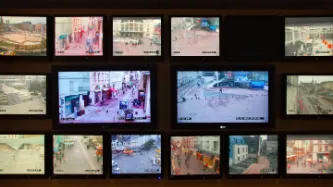
Today Privacy International together with other international human rights organisations call on the French parliament [PDF] to reject a bill on international surveillance, which, as it is currently worded, fails to protect and respect the right to privacy of individuals worldwide.
In June this year, the French parliament passed a law regulating the work of the intelligence services that will greatly undermine the privacy of French residents. Soon after, the French…
Content type: Press release
In yet another blow to the UK’s surveillance proponents, the UN Human Rights Committee has criticised the British legal regime governing the interception of communications, observing that it allows for mass surveillance and lacks sufficient safeguards.
The latest in a series of calls for wholesale reform of surveillance laws and practices in Britain, and following on the footsteps of reports by the Independent Reviewer of Terrorism Legislation David Anderson QC and Royal United Services…
Content type: Press release
Governments must accept they have lost the debate over the legitimacy of mass surveillance and reform their oversight of intelligence gathering, Privacy International and Amnesty International said today in a briefing published two years after Edward Snowden blew the lid on US and UK intelligence agencies’ international spying network.
“The balance of power is beginning to shift,” said Edward Snowden in an article published today in newspapers around the world. “With each court victory,…
Content type: Press release
Privacy International, Amnesty International, FIDH, the French League for Human Rights and Reporters Without Borders are alarmed by the expansive surveillance powers to be granted to surveillance agencies contained in a Bill transferred to the French parliament on Friday. Under the new law, French intelligence agencies would be empowered to hack into computers and devices and spy on the communications of anyone who makes contact with a person under suspicion, even incidentally. The new law will…

Content type: News & Analysis
The French Government unveiled a new Bill that aims at providing a legal framework to intelligence services last Friday. While Privacy International welcomes the positive step of placing powers that were until now poorly regulated under the law, we remain alarmed by many aspects of this Bill. Two months after the deadly terrorist attacks in Paris that targeted the satirical weekly Charlie Hebdo and a Kosher supermarket, the Government seeks to provide the intelligence services with a…
Content type: Press release
Privacy International, Reporters Without Borders, Digitale Gesellschaft, FIDH, and Human Rights Watch welcome news that the European Commission will move ahead and add specific forms of surveillance technology to the EU control list on dual use items, thus taking steps to finally hold companies to account who sell spy equipment and enable human rights abuses.
These important steps demonstrate that policymakers are beginning to wake up to the real harm that exists…

Content type: News & Analysis
NETMundial – a global conference initiated by the Brazilian government – has produced ‘The Multi-stakeholder Statement of São Paulo’, a Roadmap and Principles on internet governance that could herald new respect for the right to privacy online. However, the outcome document fails to adequately recognise the relationship between internet governance and mass surveillance, reflecting a larger problem that was present throughout the two-day meeting.
By the end of the conference, both the…
Content type: News & Analysis
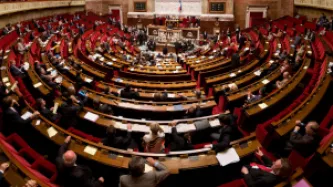
In the same week that the Advocate General of the European Court of Justice labelled the retention of electronic communications data throughout Europe as a “serious interference with the right to privacy”, the French National Assembly has codified into law a suite of invasive and unrestrained surveillance powers, allowing an expanded range of government bodies invasive access to citizens electronic communications data and content and threatening the privacy rights of the French people.…

Content type: News & Analysis
With the launch of the "Eyes Wide Open" project, Privacy International has put together a fact sheet about the secretive Five Eyes alliance. Consider this a guide to the secret surveillance alliance that has infiltrated every aspect of the modern global communications system.
Beginning in 1946, an alliance of five English-speaking countries (the US, the UK, Australia, Canada and New Zealand) developed a series of bilateral agreements over more than a decade that became known as the UKUSA…

Content type: News & Analysis
Privacy International is pleased to announce the Surveillance Industry Index, the most comprehensive publicly available database on the private surveillance sector.
Over the last four years, Privacy International has been gathering information from various sources that details how the sector sells its technologies, what the technologies are capable of and in some cases, which governments a technology has been sold to. Through our collection of materials and brochures at surveillance trade…