




Search
Content type: Long Read
The fourth edition of PI’s Guide to International Law and Surveillance provides the most hard-hitting past and recent results on international human rights law that reinforce the core human rights principles and standards on surveillance. We hope that it will continue helping researchers, activists, journalists, policymakers, and anyone else working on these issues.The new edition includes, among others, entries on (extra)territorial jurisdiction in surveillance, surveillance of public…
Content type: Advocacy
Privacy International had suggested the Human Rights Committee consider the following recommendations for the UK government:Review and reform the IPA 2016 to ensure its compliance with Article 17 of the ICCPR, including by removing the powers of bulk surveillance;Abandon efforts to undermine the limited safeguards of the IPA 2016 through the proposed Investigatory Powers Amendment Bill;Refrain from taking any measures that undermine or limit the availability of encrypted communications or other…
Content type: Advocacy
Dejusticia, Fundación Karisma, and Privacy International submitted a joint stakeholder report on Colombia to the 44th session of the Universal Periodic Review at the UN Human Rights Council.Our submission raised concerns regarding the protection of the rights to freedom of expression and opinion, to privacy, and to personal data protection; the shutdown of civil society spaces; protection of the right to protest; and protection of the rights of the Venezuelan migrant and refugee population.…
Content type: Report
End-to-end encryption (E2EE) contributes significantly to security and privacy. For that reason, PI has long been in favour of the deployment of robust E2EE.Encryption is a way of securing digital communications using mathematical algorithms that protect the content of a communication while in transmission or storage. It has become essential to our modern digital communications, from personal emails to bank transactions. End-to-end encryption is a form of encryption that is even more private.…
Content type: Advocacy
PI, together with 30 national and international civil society organisations (CSOs), release an open letter calling on Parliament and relevant stakeholders to halt and ban the use of live facial recognition technology (LFRT) by the police and private companies.We believe that the use of LFRT poses significant and unmitigable risks to our society. We do not believe that it can ever be safely deployed in public spaces or for mass surveillance purposes.The open letter comes as a result of a recent…
Content type: News & Analysis
As Amnesty International and Forbidden Stories continue to publish crucial information about the potential targets of NSO Group’s spyware, we know this much already: something needs to be done.
But what exactly needs to be done is less obvious. Even though this is not the first time that the world has learned about major abuses by the surveillance industry (indeed, it’s not even the first time this month), it’s difficult to know what needs to change.
So how can the proliferation and use of…
Content type: Examples
During the Black Lives Matter protests of summer 2020, US police took advantage of a lack of regulation and new technologies to expand the scope of people and platforms they monitor; details typically emerge through lawsuits, public records disclosures, and stories released by police department PR as crime prevention successes. A report from the Brennan Center for Justice highlights New York Police Department threats to privacy, freedom of expression, and due process and the use of a predator…
Content type: News & Analysis
IMSI catchers (or stingrays as they are known in the US) are one of the surveillance technologies that has come to the forefront again in the protests against police brutality and systemic racism that have been sparked by the murder of George Floyd on 25 May 2020.
An International Mobile Subscriber Identity catcher – in short an “IMSI catcher” – is an intrusive piece of technology that can be used to locate and track all mobile phones that are switched on in a certain area. It does so by…
Content type: Press release
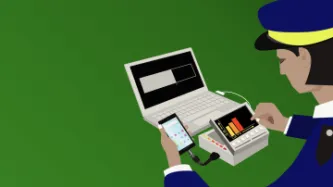
Today, the ICO has issued a long-awaited and critical report on Police practices regarding extraction of data from people's phones, including phones belonging to the victims of crime.
The report highlights numerous risks and failures by the police in terms of data protection and privacy rights. The report comes as a result of PI’s complaint, dating back to 2018, where we outlined our concerns about this intrusive practice, which involves extraction of data from devices of victims, witnesses…
Content type: Long Read
In December 2019, the Information Rights Tribunal issued two disappointing decisions refusing appeals brought by Privacy International (PI) against the UK Information Commissioner.
The appeals related to decisions by the Information Commissioner (IC), who is responsible for the UK’s Freedom of Information regime, concerning responses by the Police and Crime Commissioner for Warwickshire and the Commissioner of Police for the Metropolis (The Metropolitan Police) to PI’s freedom of information…