United Nations

Long Read

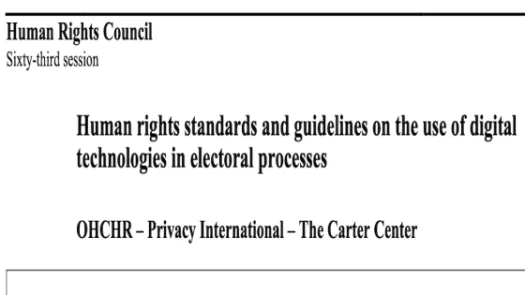
The Office of the UN High Commissioner for Human Rights (OHCHR), Privacy International (PI), and The Carter Center have published practical guidance for States, businesses and political actors on the human rights compliant use of technologies throughout the electoral cycle.

Advocacy

We explored what the recently adopted ILO Convention on Decent Work in the Platform Economy will mean for workers and labour rights, and analysed what are gaps that still need to be addressed during and beyond its implementation into national legislation.

Advocacy

AI in counter terrorism drives intrusive surveillance and unreliable risk scoring that can wrongly target individuals. Strong safeguards are essential because these systems amplify privacy harms and discriminatory outcomes.

Advocacy

Our submission to forthcoming report of the UN High Commissioner for Human Rights discusses the challenges and risks with regard to discrimination and unequal enjoyment of the right to privacy associated with the collection and processing of data.

Advocacy

Privacy International (PI) contributed to the call for inputs of the UN Special Rapporteur on counter-terrorism and human rights for a Position Paper on the Human Rights Impacts of Using Artificial Intelligence in Countering Terrorism.

Advocacy
On 10 March 2025, Privacy International (PI) attended the 32nd Session of the Committee of the Convention on the the Rights of Persons with Disabilities (CRPD Committee) in Geneva, and participated in a private briefing to the Committee on the European Union (EU). As part of PI's work promoting
Advocacy

On 21 February 2025, Privacy International, the Office of the United Nations High Commissioner for Human Rights and the Carter Center convened an expert roundtable to examine the international human rights implications of digital technologies in elections.

Report

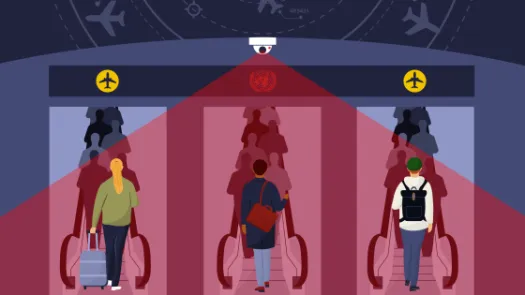
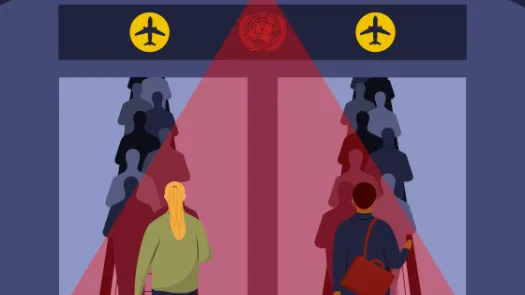
PI's report on Travellers’ surveillance: The role of the UN Countering Terrorist Travel Programme

Long Read

In this briefing, we identify the most significant concerns on the UN Countering Terrorist Travel Programme (CTTP), and put forward a range of recommendations to mitigate some of the human rights risks associated with the surveillance of travellers.

Advocacy

As negotiations of a UN treaty against cybercrime are coming to a close, Privacy International is concerned that, in its current, almost final form, the draft treaty poses significant risks to both human rights and the security of digital communications.

The Ad Hoc Committee to Elaborate a Comprehensive International Convention on Countering the Use of Information and Communications Technologies for Criminal Purposes is concluding its final negotiating session at UN headquarters in New York City, after over two years of negotiations which exposed deep divisions among states.

Advocacy

In this briefing, Privacy International outlines its analysis of some key provisions on the Updated Draft of the United Nations Convention against Cybercrime, which will be negotiated at the reconvened concluding session of the Ad Hoc Committee in late July. While not aiming to be comprehensive, PI's comments cover the following Articles: 3, 4, 6, 7-11, 23, 24, 28, 29, 30, 35, 36, 47 and 54.

Advocacy

Privacy International and other CSOs present their main comments and recommendations on the Zero Draft of the UN Global Digital Compact.

Advocacy

Privacy International submitted its input to the UN Special Rapporteur on racism for their upcoming report which will examine and analyse the relationship between artificial intelligence (AI) and non-discrimination and racial equality, as well as other international human rights standards.

Advocacy

PI published its comments on the Revised Draft of the negotiating text of the WHO Pandemic Agreement (13 March 2024) which will be discussed by the WHO Intergovernmental Negotiating Body (INB) between 18 and 28 March 2024.

Advocacy

PI responded to the call for input from the UN High Commissioner for Human Rights on the role of access to information in preventing, mitigating, and responding to the negative human rights impact of arms transfers.

Advocacy

In this briefing, Privacy International (PI) outlines its analysis of some key provisions on the Revised Draft Text of the UN Cybercrime Convention, with the aim to provide delegations of Member States and other stakeholders with our recommendations to strengthen the draft and to bring it in line with human rights law. This briefing builds upon the submissions made by PI at the previous sessions of the AHC and reflects upon some of the amendments proposed by Member States. While not aiming to be comprehensive, it covers in particular the following Articles: 3, 5, 23, 24, 28, 29, 30, 35, 36, 47 and 54.