
Search

Content type: Long Read
Across the world facial recognition technologies (FRT) are increasingly being deployed in public and private spaces without adequate laws or regulation to protect individuals from the grave risks they pose to human rights. States rely more and more on this technology for public mass surveillance, enabling an authoritarian omnipresence over people’s activities, movements, and expressions at all times, often without them knowing.Over the past few years we have raised concerns about the rapid…

Content type: Long Read
Governments are increasingly relying on data-intensive systems, both to wage wars and to administer public services. These systems, increasingly provided by the same firms using similar tools, will come to affect our day-to-day lives whether we are in war zones or town squares. This is the era of Militarisation of Tech.The technologies that our governments rely on to deliver services and pursue their objectives are becoming increasingly data-intensive and militarised, which threatens our…

Content type: Long Read
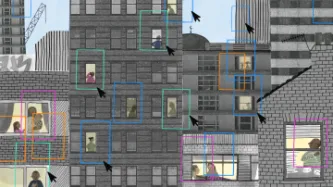
Legal regimes governing situations of armed conflict and peace time have traditionally been clearly defined, leaving little to no doubt as to which regime applies to what situation. However, the Militarisation of Tech challenges this tidy distinction. Instead we are seeing the blurring of lines between actors, technologies, and the areas of deployment, financing, export, and regulations of certain technologies. This growing overlap between on the ground and remote, between war and peace,…
Content type: Long Read
We are at a war footing as we enter an era where the tech world is increasingly defined by conflict. Innovation has never been driven solely by social needs, market forces or the common good. Military imperatives have periodically played central roles in steering the development of new generations of technologies. For instance, the origins of the internet can be traced back to defence research and initiatives like the ARPANET.Now we are witnessing a significant shift: states and corporations…

Content type: Long Read
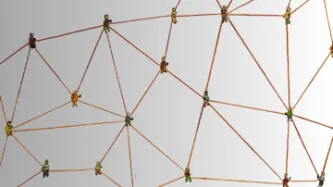
Governments are rapidly militarising our societies. They are already increasing military spending, undermining civil rights protections, and reducing social protection programmes. Governments already depend on the private sector for delivering public services, through public-private partnerships.Now they are looking to the tech industry to design the next generation battlefield. As new technologies are at the core of this shift, industry is keenly adapting.Big Tech firms are militarising,…
Content type: Long Read
There’s a revolution occurring in how war and conflict are waged. New data-intensive systems are being developed; battlefields are testing grounds for a new generation of tech; and commercial tech infrastructure is now supporting military operations.Data plays a key role in this revolution. Data is used to train and test systems, and the systems are fed data to target operations, communities, and individuals.While intelligence has long informed warfare, now we’re seeing the very same…

Content type: News & Analysis
We’ve been warning for a while now about the risks of AI Assistants. Are these assistants designed for us or to exploit us?The answer to that question hinges on whether the firms building these tools are considering security and privacy from the outset. The initial launches over the last couple of years were not promising.Now with OpenAI’s agent launch, users deserve to know whether these firms are considering these risks and designing their service for people in the real world. The OpenAI…

Content type: Long Read
If you’ve ever used TikTok, Instagram, or X/Twitter, you will already be familiar with centralised social media.Centralised social media means big company owns the app, controls the software, and keeps all your data.For example, ByteDance makes TikTok. They own it, run the servers, decide what you see in your feed, and hold onto every video you like or comment on. They call the shots when it comes to your data.But what if social media didn’t work that way? What if no single company was in…

Content type: Long Read
On 13 March 2025, we filed a complaint against the UK government challenging their use of dangerous, disproportionate and intrusive surveillance powers to undermine the privacy and security of people all over the world. Here, we answer some key questions about the case and the recent events that led to this development.Note: This post was last updated on 13 March 2025.What’s the fuss about?A month ago, it was reported that the UK government demanded Apple Inc – maker of the iPhone, iPads, Macs…

Content type: Long Read
In 2019, the Waorani achieved a huge legal victory against the Ecuadorian government. They opposed the sale of millions of hectares of their rainforest to new oil companies, a forest that forms part of the home and territory of seven different Indigenous peoples in the southern Ecuadorian Amazon. Nemonte Nenquimo, as the first female leader of the Waorani of Pastaza and co-founder of the nonprofit Alianza Ceibo, and plaintiff in this case, has been a powerful advocate for her community’s…

Content type: Long Read
IntroductionHarnessing new digital technology to improve people’s health is now commonplace across the world. Countries and international organisations alike are devising digital health strategies and looking to emerging technology to help solve tricky problems within healthcare. At the same time, more and more start-ups and established tech companies are bringing out new, and at times innovative, digital tools aimed at health and wellbeing.

Content type: Long Read
Education is a fundamental human right outlined in the Universal Declaration of Human Rights (Article 26), which states that everyone has the right to education. Schools play a core role in the education of children, but it’s also in schools that children are encouraged to learn to work with others, and to develop their own identities and emotional skills. The education process doesn’t stop there, it continues as children grow and make their way through different higher educational spaces such…

Content type: Long Read
1. What is the issue?Governments and international organisations are developing and accessing databases to pursue a range of vague and ever-expanding aims, from countering terrorism and investigating crimes to border management and migration control.These databases hold personal, including biometric, data of millions if not billions of people, and such data is processed by technologies, including Artificial Intelligence (AI), to surveil, profile, predict future behaviour, and ultimately make…

Content type: Long Read
The fourth edition of PI’s Guide to International Law and Surveillance provides the most hard-hitting past and recent results on international human rights law that reinforce the core human rights principles and standards on surveillance. We hope that it will continue helping researchers, activists, journalists, policymakers, and anyone else working on these issues.The new edition includes, among others, entries on (extra)territorial jurisdiction in surveillance, surveillance of public…

Content type: Explainer
Behind every machine is a human person who makes the cogs in that machine turn - there's the developer who builds (codes) the machine, the human evaluators who assess the basic machine's performance, even the people who build the physical parts for the machine. In the case of large language models (LLMs) powering your AI systems, this 'human person' is the invisible data labellers from all over the world who are manually annotating datasets that train the machine to recognise what is the colour…
Content type: Examples
According to police plans to enhance “school safety”, security cameras and facial recognition will monitor children in Hong Kong in class and around educational facilities. The move is part of a trend also found in China, India, and the US toward mining children’s data, even though few benefits have been found.Article: Hong Kong schools adopt facial recognition and security camerasPublication: Biometric UpdateWriter: Christ Burt

Content type: Long Read
Our world is undergoing a seismic process of increasing digitisation, which sees the proliferation of new technologies and the growing integration of these technologies into public services, which rely more and more on copious amounts of personal data and on automated processes. This phenomenon has a unique impact upon the rights of persons with disabilities. As the era of global digitisation causes societies worldwide to undergo a digital metamorphosis, persons with…
Content type: Long Read
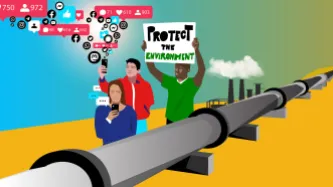
The defense and protection of the environment continues to come at a high cost for activists and human rights defenders. In 2021, the murders of environment and land defenders hit a record high. This year, a report by Global Witness found that more than 1,700 environmental activists have been murdered in the past decade.
While the issue of surveillance of human rights defenders has received attention, evidence of the surveillance of environmental activists keeps mounting, with recent examples…
Content type: Call to Action

Content type: Report
This briefing takes a look at the private intelligence industry, a collection of private detectives, corporate intel firms, and PR agencies working for clients around the world that have made London their hub.
Often staffed by ex-spooks, and promising complete secrecy, little is known about them. But reports over the years have exposed their operations, including things like hacking and targeting of anti-corruption officials, spying on peaceful environment activists, and running fake '…

Content type: Explainer
The ‘Guide to Digital Safety and Privacy at Peaceful Protests’ has been produced by 7amleh - The Arab Center for the Advancement of Social Media.
7amleh has adapted the content of PI's UK Free to Protest guide to fit the Palestinian context. The guide is organized in three sub-guides: (1) a guide to digital safety and privacy at peaceful protests; (2) a guide to surveillance of protesters’ faces and bodies; and (3) a guide to policing databases and predictive policing tools.
This guide was…

Content type: Explainer
Bluetooth
The majority of apps settled on using Bluetooth for proximity tracing.
Just what is Bluetooth?
Named after the 10th Century King Harald "Bluetooth" Gormsson who unified Scandinavia — and whose runic initials comprise the logo — Bluetooth is a wireless, low-power, and therefore short-distance, set of protocols used primarily to connect devices directly to each other in order to transfer data, such as video and audio.
Bluetooth for tracking?
Most of us who've encountered Bluetooth use…

Content type: Explainer
Introduction/Background
Electronic tags have been a key part of criminal justice offender management for over 20 years, being used in the United States since the mid 1980’s and in the UK and some other commonwealth countries since 2003. In 2021 the UK introduced GPS tagging for immigration bail.
The tag is predominantly used to curtail the liberties of individuals. For those on criminal bail its intended use includes managing return into communities while deterring reoffending.
As we explore…

Content type: Long Read
In a roundtable available on YouTube, co-hosted with Garden Court Chambers, Privacy International brought together immigration law practitioners to discuss how they’ve used privacy and data protection law to seek information or redress for their clients.Index:1. UK Border 20252. Super-complaint and judicial review challenge to data sharing3. Mobile phone seizure and extraction4. Freedom of Information Act requestsThe dystopian future: UK Border 2025To set the scene on how the future may look…
Content type: Long Read
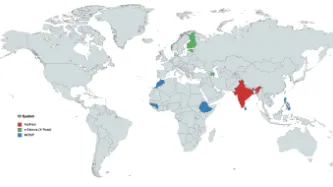
Governments around the world are increasingly making registration in national digital ID systems mandatory for populations, justifying its need on a range of issues from facilitating access to services, to national security and fighting against corruption. This is an attempt to create a "foundational identity" for an individual, or "a single source of truth" about who someone is, according to a government agency. These identity systems are run by governments, sometimes by private companies, or…

Content type: News & Analysis
Our relationship with ‘public space’ is being redefined, not just by a global pandemic, but also by a new era of biometric surveillance technologies. Biometric mass surveillance enables companies and authorities to track us based on unique personal data and identify us whenever, wherever we go.The increasing use of facial recognition and other biometric surveillance technologies – on our streets, in train stations, at protests, at sports matches and even in our global ‘town square’, Facebook –…

Content type: News & Analysis
As Amnesty International and Forbidden Stories continue to publish crucial information about the potential targets of NSO Group’s spyware, we know this much already: something needs to be done.
But what exactly needs to be done is less obvious. Even though this is not the first time that the world has learned about major abuses by the surveillance industry (indeed, it’s not even the first time this month), it’s difficult to know what needs to change.
So how can the proliferation and use of…
Content type: News & Analysis
A new industry is offering border agencies around the world access to advanced space-based surveillance capabilities once reserved for the most advanced intelligence agencies. Using satellites able to track signals from satellite phones and other emitters, these companies are then selling access to the data obtained to anyone willing to pay, including UK and EU border agencies.
While such surveillance can and is being used to save lives, it can also be used for illegal ‘pull backs’ in…