
Search

Content type: Long Read
In their gold rush to build cloud and AI tools, Big Tech is also enabling unprecedented government surveillance. Thanks to reporting from The Guardian, +972 Magazine, Local Call, and The Intercept, we have insights into the murky deals between the Israeli Government and Big Tech firms. Designed to insulate governments from scrutiny and accountability, these deals bode a dark future for humanity, one that is built using the same tools that once promised a bright, positive world.On 25 September…
Content type: Report
Over the past years, data retention regulation imposing generalised and indiscriminate data retention obligations to telecommunication companies and Internet service provides has been introduced in various jurisdictions across the world. As the data retention practices across the world have evolved this new report is an attempt to shed some light on the current state of affairs in data retention regulation across ten key jurisdictions. Privacy International has consulted with human…

Content type: Press release
By treating everyone as a suspect, the bulk data collection or retention regimes engage European fundamental rights to privacy, data protection, freedom of expression, as guaranteed respectively by Articles 7, 8, and 11 of the EU Charter of Fundamental Rights.
Caroline Wilson Palow, Legal Director of Privacy International, said:
"Today’s judgment reinforces the rule of law in the EU. In these turbulent times, it serves as a reminder that no government should be above the law. Democratic…

Content type: Long Read
Miguel Morachimo, Executive Director of Hiperderecho. Hiperderecho is a non-profit Peruvian organisation dedicated to facilitating public understanding and promoting respect for rights and freedoms in digital environments.The original version of this article was published in Spanish on Hiperderecho's website.Where does our feeling of insecurity come from? As we walk around our cities, we are being observed by security cameras most of the time. Our daily movement, call logs, and internet…
Content type: Long Read
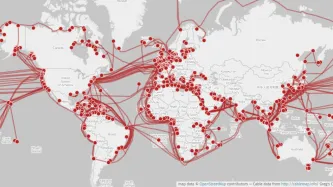
Six years after NSA contractor Edward Snowden leaked documents providing details about how states' mass surveillance programmes function, two states – the UK and South Africa – publicly admit using bulk interception capabilities.Both governments have been conducting bulk interception of internet traffic by tapping undersea fibre optic cables landing in the UK and South Africa respectively in secret for years.Both admissions came during and as a result of legal proceedings brought by Privacy…

Content type: Long Read
Imagine that every time you want to attend a march, religious event, political meeting, protest, or public rally, you must share deeply personal information with police and intelligence agencies, even when they have no reason to suspect you of wrongdoing.
First, you need to go to the police to register; have your photo taken for a biometric database; share the contacts of your family, friends, and colleagues; disclose your finances, health records, lifestyle choices, relationship status, and…

Content type: Impact Case Study
PI and our global partners have been at the forefront of challenging communications data retention for over a decade.
What is the problem
Communications data, also known as metadata, tells a story about your digital activity and answers the who, when, what, and how of a specific communication. While communications data doesn't include the contents of a message, all of the other information about the message can be very revealing about people, their habits, thoughts, health and personal…

Content type: Long Read
Privacy International is celebrating Data Privacy Week, where we’ll be talking about privacy and issues related to control, data protection, surveillance and identity. Join the conversation on Twitter using #dataprivacyweek.
Exercising the right to privacy extends to the ability of accessing and controlling our data and information, the way it is being handled, by whom, and for what purpose. This right is particularly important when it comes to control of how States perform these activities.…

Content type: News & Analysis
On a hot day in Nairobi, our researcher is speaking to an officer of Kenya’s National Intelligence Service (NIS). The afternoon is wearing on and the conversation has turned to the presidential elections, taking place in August this year. He has just finished describing the NIS’ highly secret surveillance powers and the disturbing ways in which these powers are deployed.
“It is what you might call ‘acceptable deaths,’” he states about the misuse of communications surveillance powers. “People…
Content type: Long Read
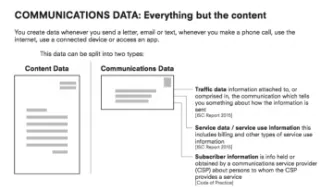
Privacy International’s case on Bulk Personal Datasets and Bulk Communications Data comes to a head with a four-day hearing in the Investigatory Powers Tribunal which commenced on 26 July 2016.
The litigation has brought to light significant revelations about the use of section 94 of the 1984 Telecommunications Act to obtain bulk communications data.
Large amounts of disclosure have shed new light on this hitherto secret power and explained confusing aspects of the Government’s Response to…

Content type: News & Analysis
Despite Wednesday's publication of the Investigatory Powers Bill being trailed as world leading legislation that would balance security and privacy, what the Government is actually seeking is a mandate for mass surveillance. This is a new Snoopers' Charter and we must oppose many of its most virulent elements.
The true debate on surveillance can now begin. After years of downplaying, obscuring, and denying the Snowden revelations, the Government has finally joined the conversation about the…

Content type: News & Analysis
“We always assume we are being watched. It is part of our understanding,” explained Father Alberto. The clergyman knows what it's like to live under surveillance. Father Alberto is Executive Secretary of the Inter-ecclesiastical Commission for Justice and Peace in Colombia, which supports displaced and conflict-affected communities in their struggle for justice. The CIJP also works in the restive Urabá region, where they document and litigate on the links between neo-paramilitary groups,…
Content type: Press release
The ruling today from the European Court of Justice, invalidating the European Union’s 2006 Data Retention Directive policy, was strong and unequivocal: the right to privacy provides a fundamental barrier between the individual and powerful institutions, and laws allowing for indiscriminate, blanket retention on this scale are completely unacceptable.
As the Court states, it is not, and never was, proportionate to spy on the entire population of Europe. The types of data retained under this…

Content type: News & Analysis
This post originally appeared on the blog for Association for Progessive Communications, written by Shawna Finnegan and Carly Nyst, for APCNews and Privacy International:
At the 23rd session of the UN Human Rights Council, the UN Special Rapporteur on freedom of opinion and expression, Frank La Rue, released his latest report – an analysis of the implications of States’ surveillance of communications on the exercise of the human rights to privacy and to freedom of opinion and expression.…