
Search
Content type: News & Analysis
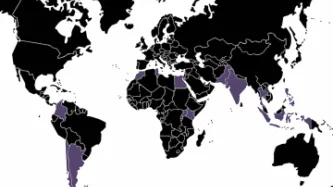
Today, Privacy International is publishing the result of a global effort to benchmark surveillance policies and practices in the countries that are part of the Privacy International Network. We're calling it the 'State of Surveillance'.
We designed a survey of questions based on some key issues: statistics about the communications infrastructure of the country; what civil society organisations and groups that analyse privacy issues; the international and domestic legal framework…
Content type: Press release
Privacy International today publishes a new investigation, based on exclusive documents, exposing the sale of European surveillance technologies to a secret unit of Egypt's intelligence infrastructure.
The Technical Research Department (TRD) is an independent unit within the General Intelligence Service (GIS), accountable only to the President. According to sources, the TRD has the biggest budget for surveillance technologies of any Egyptian government body. Such large public expenditure…

Content type: News & Analysis
In an enormous breakthrough for those seeking transparency and accountability to the shadowy surveillance industry, the Swiss Government has been forced to publish the list of export licenses for surveillance technologies and other equipment, including details of their cost and destination.
The decision by the Federal Information and Data Protection Commissioner comes on the heels of consistent pressure from Privacy International, Swiss journalists, and several Members of Parliament on…
Content type: Press release
A 400 gigabyte trove of internal documents belonging to surveillance company Hacking Team has been released online. Hacking team sells intrusive hacking tools that have allegedly been used by some of the most repressive regimes in the world.
The documents reportedly confirm Hacking Team has customers in 35 countries, including some that routinely abuse human rights. These documents seemingly validate research conducted by Citizen Lab…
Content type: Press release
Privacy International's new report exposes the companies that have built the Colombian Government's controversial and highly invasive surveillance systems. The report “Demand/Supply: Exposing the Surveillance Industry in Colombia” shows the extensive dealings that companies from Israel, the UK, the USA, Finland, and New Zealand, among other countries, have had in supporting Colombian government agencies in purchasing surveillance equipment. Many of the company's customers were agencies that did…

Content type: Report
Over a dozen international companies are supplying powerful communications surveillance technology in Colombia. Privacy International examines the actors across the world involved in facilitating state surveillance.The report is available in English and Spanish.

Content type: Report
For nearly two decades, the Colombian government has been expanding its capacity to spy on the private communications of its citizens. Privacy International's investigation reveals the state of Colombia's overlapping, unchecked systems of surveillance, including mass surveillance, that are vulnerable to abuse.
See the report in English and Spanish.
Content type: News & Analysis
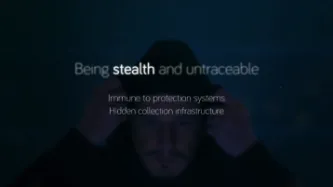
Here are eight things we have learned from this week's hack of some 400GB of internal company material and correspondence from Italian surveillance company Hacking Team.
The Citizen Lab was right
The Citizen Lab, who in 2014 identified some 21 countries that are potential customers of Hacking Team, were right about all of them. A 2015 report stated that there was likely to be more. In fact, at least 45 countries are purchasers of Hacking Team's…

Content type: News & Analysis
The Coalition Against Unlawful Surveillance Exports (CAUSE) has today released a new policy paper calling on the EU to take the opportunity to update its Dual Use Regulation to ensure that surveillance technologies are not exported from Europe and used for human rights violations.
The proposals have been developed by the international secretariat of CAUSE, a coalition of NGOs consisting of Access, Amnesty International, Digitale Gesellschaft, Human Rights Watch, the…

Content type: News & Analysis
The Swiss Federal Council has introduced a major amendment to its export licensing legislation in order to ensure surveillance technologies that might be used for human rights abuses are not exported from Switzerland.
What this means is that Swiss authorities must reject companies’ requests to export internet and mobile surveillance technologies if there “are reasonable grounds to believe” that the items could be used for repression in the country of destination.
The amendment…

Content type: News & Analysis
UPDATE (21st July 2015): The deadline for submissions was Monday 20 July, 2015. Privacy International has been working hard since the proposed rule was announced to analyse its potential effectiveness and any potential effects the proposed rule could have for security research.
UPDATE (12th June): The US Bureau of Industry and Security has published (http://www.bis.doc.gov/index.php/policy-guidance/faqs#subcat200) a clarification of the scope of the proposed rule implementing…

Content type: News & Analysis
There is a common practice within the surveillance industry that makes the already murky market even harder to track: collaborating companies.
Within Privacy International's Surveillance Industry Index there are 83 documents detailing collaborations between companies involved in developing and selling surveillance technologies. These documents represent a variety of relationships – some are friendly companies, others advertise corporate partners, and some present themselves as a distributor of…

Content type: News & Analysis
Investigations by Privacy International in co-operation with VICE Motherboard, reveal that Hacking Team has sold its Remote Control System to the US Drug Enforcement Agency and US military via a front company based in the US.
The investigation catalogues what is known about Hacking Team’s intrusive spyware that can remotely switch on the microphone on mobile phones, activate webcams, as well as modify and/or extract data from the computer or phone itself. Whether the export was corrected…
Content type: News & Analysis
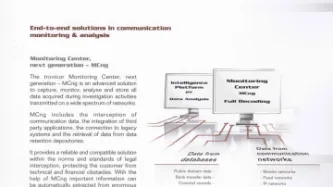
German surveillance technology company Trovicor played a central role in expanding the Ethiopian government's communications surveillance capacities, according to a joint investigation by Privacy International and netzpolitik.org.
The company, formerly part of Nokia Siemens Networks (NSN), provided equipment to Ethiopia's National Intelligence and Security Service (NISS) in 2011 and offered to massively expand the government's ability to intercept and store internet…

Content type: News & Analysis
UPDATE: Argentina's President Cristina Fernandez de Kirchner has announced plans to disband Argentina's intelligence agency. Go here for more, and keep reading below.
This post was originally published on 20 January 2015 by Privacy International's partner in Argentina, the Asociación por los Derechos Civiles (ADC). To read the original post, please go here.
In view of the serious incidents that took place on 18 January 2015, the Asociación por los Derechos Civiles (ADC)…
Content type: News & Analysis
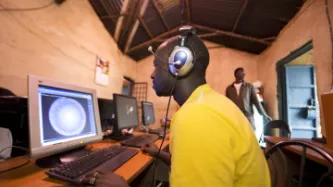
The right to privacy is on the frontline of a struggle that has seen a number of other constitutionally protected rights threatened during the last few bloody months of Kenya's ongoing security crisis.
After at least 64 people were killed in two attacks by Al Shabaab militants in late 2014, members of the ruling Jubilee Coalition swiftly moved to introduce an omnibus bill, the Security Laws (Amendment) Bill 2014. The bill, which was hastily enacted into law despite street…
Content type: Press release
Governments across Central Asia have deployed advanced surveillance systems, including monitoring centres capable of spying on an entire country's communications, according to a new investigative report published today by Privacy International.
The comprehensive report, “Private Interests: Monitoring Central Asia”, contains personal accounts taken by Privacy International detailing how Central Asian governments use electronic surveillance technology to spy on activists and…

Content type: News & Analysis
Privacy international is proud to release “Private Interests: Monitoring Central Asia”, a 96-page report detailing its findings from an extensive investigation into electronic surveillance technologies in Kazakhstan, Kyrgyzstan, Tajikistan, Turkmenistan, and Uzbekistan.
The report brings together the findings of PI's team of investigative researchers, consultants, and technical, legal and policy experts, and is the outcome of consultations with confidential sources, regional experts,…
Content type: Press release
Privacy International, Reporters Without Borders, Digitale Gesellschaft, FIDH, and Human Rights Watch welcome news that the European Commission will move ahead and add specific forms of surveillance technology to the EU control list on dual use items, thus taking steps to finally hold companies to account who sell spy equipment and enable human rights abuses.
These important steps demonstrate that policymakers are beginning to wake up to the real harm that exists…

Content type: News & Analysis
Thousands of innocent people in London have had their communications spied on and collected through the use of invasive mobile phone surveillance technology, called IMSI Catchers, according to a recent report by the Times.
IMSI Catchers are no longer, and have not been for a while, a law enforcement secret. They have been featured crime dramas like the Wire and in movies such as Zero Dark Thirty. For years, the German Parliament has publicly received the number of IMSI Catcher…

Content type: News & Analysis
The publishing of materials from a support server belonging to surveillance-industry giant Gamma International has provided a trove of information for technologists, security researchers and activists. This has given the world a direct insight into a tight-knit industry, which demands secrecy for themselves and their clients, but ultimately assists in the violation human rights of ordinary people without care or reproach.
Now for the first time, there is solid confirmation of Gamma's…

Content type: News & Analysis
Last year, UK-based surveillance company Gamma TSE sold the Indonesian military US$ 6.7 million worth of equipment as part of the military's weapons modernisation effort. As early as 2005, Indonesian officials were soliciting the advice of a close partner of Gamma, Germany-based Elaman, to create technical surveillance unit (TSU), according to a white paper published as part of the WikiLeak SpyFiles and found in the Surveillance Industry Index.
Gamma and Elaman are…

Content type: News & Analysis
Global problems require global solutions. One of the significant emerging threats to human rights and democracy today is the incredible and mostly unaccountable spread of surveillance technologies.
The rapid proliferation of these systems has created a shadowy billion-dollar industry, where companies sell spying equipment with impunity to authoritarian regimes, who wield them against journalists, political activists, and human rights defenders.
Given the scale and international scope of this…

Content type: News & Analysis
Facing intense scrutiny from a Swiss government inquiry into the human rights impact of the commercial surveillance trade, companies have packed up and are no longer attempting to export their spying technology from Switzerland.
Speaking with St. Galler Tagblatt, one of Switzerland’s largest German-language daily newspapers, government spokeswoman Marie Avet confirmed that the companies have cancelled export applications for surveillance technology - including all applications for…
Content type: News & Analysis
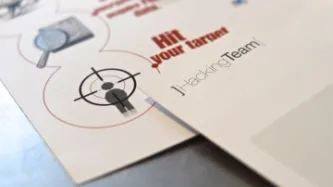
Only a few days after it was reported that intrusive surveillance technology developed and sold by Italian surveillance company Hacking Team was found in some of the most repressive countries in the world, Privacy International has uncovered evidence which suggests the company has received over €1 million in public financing.
It has come to Privacy International’s attention that Hacking Team appears to have received €1.5 million from two venture capital funds originating from the Region of…

Content type: News & Analysis
The 'GSOC saga' began a number of weeks ago with the revelation that the oversight body of the Irish police force, the Garda Siochana Ombudsman Commission (GSOC), may have been the target of sophisticated electronic surveillance. A security company, Verrimus, found that there was evidence that an IMSI Catcher device may have been deployed in the vicinity of GSOC's offices which could have intercepted all mobile phone communications of its officers and anyone visiting the offices. Following the…

Content type: News & Analysis
Over the past half year, Privacy International has been investigating the sale of surveillance technology made by South African company VASTech to Libya and what role the government had in promoting and developing the system. Unfortunately, the government has been slow to respond to our questions and has offered only vague answers. This has done little to ease our concerns about the part they played in the development and export of mass surveillance technology to a military regime with a…

Content type: News & Analysis
UK parliamentary select committees are charged with overseeing the work of government in relation to particular topical issues or the work of particular departments. When it comes to UK Government policy on arms, it’s the Committees on Arms Export Controls (CAEC) that's responsible: a conglomeration of four select committees made up of serving Members of Parliament that collects evidence and conducts an inquiry into developments in export control policy and the preceding years’ exports of…

Content type: News & Analysis
Privacy International is currently engaged in a joint project on export controls with the Open Technology Institute and Digitale Gesellschaft. The blog post below was co-written by Edin Omanovic and Tim Maurer and is also available on the OTI blog.
Export controls have something of a bad reputation in technology circles, and not without good reason.
The crypto wars that imposed draconian polices regulating how people could buy, sell and use cryptography stifled the free…

Content type: News & Analysis
What is the Wassenaar Arrangement?
The Wassenaar Arrangement on Export Controls for Conventional Arms and Dual-Use Goods and Technologies (the "Wassenaar Arrangement") is a multilateral export control regime in which 41 states participate.
The Wassenaar Arrangement was established on 12 July 1996 in Wassenaar, the Netherlands by 33 founding members to contribute to regional and international security and stability. It is the successor to COCOM, a NATO based…