
Search

Content type: Video
On 6 February 2021, the Constitutional Court of South Africa in a historic judgment declared unconstitutional years of secret and unchecked surveillance by South African authorities against millions of people - irrespective of whether they reside in South Africa.
The Court powerfully placed the judgment in historical context:
The constitutionally protected right to privacy seeks to be one of the guarantees that South Africa will not again act like the police state that it was under apartheid…

Content type: Long Read
What’s the ruling all about?The Constitutional Court of South Africa in a historic judgment declared that bulk interception by the South African National Communications Centre is unlawful and invalid. Furthermore, the Constitutional Court found that the Regulation of Interception of Communications and Provision of Communication-Related Information Act (RICA) 1) was deficient in failing to provide at least a post-notification procedure for subjects of interception; 2) failed to ensure the…

Content type: News & Analysis
Today, the Constitutional Court of South Africa in a historic judgment declared that bulk interception by the South African National Communications Centre is unlawful and invalid.
The judgment is a confirmation of the High Court of South Africa in Pretoria’s powerful rejection of years of secret and unchecked surveillance by South African authorities against millions of people - irrespective of whether they reside in South Africa.
The case was brought by two applicants, the amaBhungane Centre…
Content type: Long Read
On 8 January 2021, the UK High Court issued a judgment in the case of Privacy International v. Investigatory Powers Tribunal. The Secretary of State for Foreign and Commonwealth Affairs and Government Communication Headquarters (GCHQ) appeared as interested parties to the case.
After our initial reaction, below we answer some of the main questions relating to the case.
NOTE: This post reflects our initial reaction to the judgment and may be updated.
What’s the ruling all about?
In…

Content type: News & Analysis
The “EU Trust Fund for Stability and Addressing Root Causes of Irregular Migration and Displaced Persons in Africa” (EUTF for Africa) isn’t exactly headline news (and nor does it exactly roll off the tongue), but its influence is vast and will be felt for decades to come for millions of people across Africa.
Set up in the wake of the 2015 ‘migration crisis’ in Europe and largely made up of money earmarked for development aid (80% of its budget comes from development and humanitarian aid funds…
Content type: News & Analysis
Le « Fonds fiduciaire d’urgence de l’Union européenne en faveur de la stabilité et de la lutte contre les causes profondes de la migration irrégulière et du phénomène des personnes déplacées en Afrique » (le « fonds fiduciaire pour l’Afrique ») ne fait pas les grands titres (et il est plutôt difficile à retenir), mais son influence est vaste et aura des conséquences pendant plusieurs décennies sur la vie de millions de personnes sur le continent africain.
Mis en place suite à la « crise…

Content type: Press release
By treating everyone as a suspect, the bulk data collection or retention regimes engage European fundamental rights to privacy, data protection, freedom of expression, as guaranteed respectively by Articles 7, 8, and 11 of the EU Charter of Fundamental Rights.
Caroline Wilson Palow, Legal Director of Privacy International, said:
"Today’s judgment reinforces the rule of law in the EU. In these turbulent times, it serves as a reminder that no government should be above the law. Democratic…

Content type: News & Analysis
The UN Special Rapporteur on the promotion and protection of human rights and fundamental freedoms while countering terrorism, Professor Fionnuala Ní Aoláin together with Dr. Krisztina Huszti-Orbán, released today a key report on the “Use of Biometric Data to Identify Terrorists: Best Practice or Risky Business?”.
The report explores the human rights risks involved in the deployment of biometrics emphasising that
in the absence of robust rights protections which are institutionally embedded…

Content type: Report
The majority of people today carry a mobile phone with them wherever they go, which they use to stay connected to the world. Yet an intrusive tool, known as an International Mobile Subscriber Identity catcher, or “IMSI catcher” is a form of surveillance equipment that enables governments and state authorities to conduct indiscriminate surveillance of mobile devices, and by extension, on users.
IMSI catchers can do much more than monitor and intercept mobile communications. Designed to imitate…
Content type: News & Analysis
IMSI catchers (or stingrays as they are known in the US) are one of the surveillance technologies that has come to the forefront again in the protests against police brutality and systemic racism that have been sparked by the murder of George Floyd on 25 May 2020.
An International Mobile Subscriber Identity catcher – in short an “IMSI catcher” – is an intrusive piece of technology that can be used to locate and track all mobile phones that are switched on in a certain area. It does so by…

Content type: Case Study
Chinese artist Ai Weiwei creates art that highlights the harmful effects of surveillance on society — and is himself a target of persistent surveillance by the Chinese government. In an article for Agence France-Presse, he said, "In my life, there is so much surveillance and monitoring -- my phone, my computer ... Our office has been searched, I have been searched, every day I am being followed, there are surveillance cameras in front of my house.”
Weiwei is an artist, blogger, documentary…

Content type: Long Read
In December 2019, the Information Rights Tribunal issued two disappointing decisions refusing appeals brought by Privacy International (PI) against the UK Information Commissioner.
The appeals related to decisions by the Information Commissioner (IC), who is responsible for the UK’s Freedom of Information regime, concerning responses by the Police and Crime Commissioner for Warwickshire and the Commissioner of Police for the Metropolis (The Metropolitan Police) to PI’s freedom of information…
Content type: News & Analysis
On 29 May, Niger’s Congress voted on a law allowing for broad interception powers of certain electronic communications by the government. The bill makes it lawful for the government to approve the interception of communications without appropriate safeguards or oversight mechanisms.
The law passed with 104 votes – the Nigerien parliament has 171 members – without the participation of the opposition that boycotted the law. The opposition claimed that
the law will allow those, for…

Content type: Case Study
The increasing deployment of highly intrusive technologies in public and private spaces such as facial recognition technologies (FRT) threaten to impair our freedom of movement. These systems track and monitor millions of people without any regulation or oversight.
Tens of thousands of people pass through the Kings Cross Estate in London every day. Since 2015, Argent - the group that runs the Kings Cross Estate - were using FRT to track all of those people.
Police authorities rushed in secret…

Content type: News & Analysis
In mid-2019, MI5 admitted, during a case brought by Liberty, that personal data was being held in “ungoverned spaces”. Much about these ‘ungoverned spaces’, and how they would effectively be “governed” in the future, remained unclear. At the moment, they are understood to be a ‘technical environment’ where personal data of unknown numbers of individuals was being ‘handled’. The use of ‘technical environment’ suggests something more than simply a compilation of a few datasets or databases.
The…

Content type: News & Analysis
Today Advocate General (AG) Campos Sánchez-Bordona of the Court of Justice of the European Union (CJEU), issued his opinions (C-623/17, C-511/18 and C-512/18 and C-520/18) on how he believes the Court should rule on vital questions relating to the conditions under which security and intelligence agencies in the UK, France and Belgium could have access to communications data retained by telecommunications providers.
The AG addressed two major questions:
(1) When states seek to impose…

Content type: Long Read
Miguel Morachimo, Executive Director of Hiperderecho. Hiperderecho is a non-profit Peruvian organisation dedicated to facilitating public understanding and promoting respect for rights and freedoms in digital environments.The original version of this article was published in Spanish on Hiperderecho's website.Where does our feeling of insecurity come from? As we walk around our cities, we are being observed by security cameras most of the time. Our daily movement, call logs, and internet…
Content type: News & Analysis
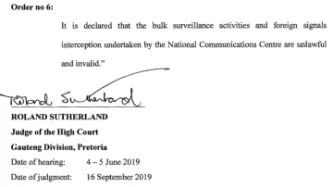
Today, the High Court of South Africa in Pretoria in a historic decision declared that bulk interception by the South African National Communications Centre is unlawful and invalid.
The judgment is a powerful rejection of years of secret and unchecked surveillance by South African authorities against millions of people - irrespective of whether they reside in South Africa.
The case was brought by two applicants, the amaBhungane Centre for Investigative Journalism and journalist Stephen…
Content type: Long Read
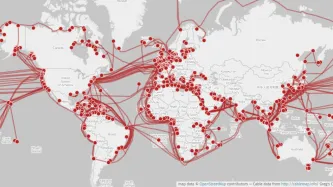
Six years after NSA contractor Edward Snowden leaked documents providing details about how states' mass surveillance programmes function, two states – the UK and South Africa – publicly admit using bulk interception capabilities.Both governments have been conducting bulk interception of internet traffic by tapping undersea fibre optic cables landing in the UK and South Africa respectively in secret for years.Both admissions came during and as a result of legal proceedings brought by Privacy…

Content type: News & Analysis
Citing inaccuracy, major manufacturer declines to combine facial recognition and body worn cameras - but accurate or not, real-time facial recognition should never be coupled with police body-worn cameras
Axon Enterprise Inc.—a major manufacturer of police body-worn cameras and digital evidence management systems that also partners with Microsoft to provide services to law enforcement—announced that the company would refrain from equipping police body-worn cameras with facial…
Content type: Long Read
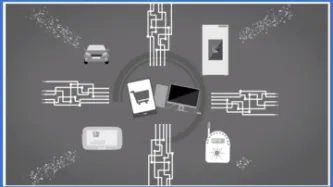
Everyday objects and devices that can connect to the Internet -- known as the Internet of Things (IoT) or connected devices -- play an increasing role in crime scenes and are a target for law enforcement. Exploiting new technologies that are in our homes and on our bodies as part of criminal investigations and for use as evidence, raises new challenges and risks that have not been sufficiently explored.
We believe that a discussion on the exploitation of IoT by law enforcement would…

Content type: Explainer
We look at the recently published report on forensic science in the UK, highlight concerns about police not understanding new tech used to extract data from mobile phones; the risk of making incorrect inferences and the general lack of understanding about the capabilities of these tools.
The delivery of justice depends on the integrity and accuracy of evidence and trust that society has in it. So starts the damning report of the House of Lords Science and Technology Select…

Content type: News & Analysis
We look at the recently published report on forensic science in the UK, highlight concerns about police not understanding new tech used to extract data from mobile phones; the risk of making incorrect inferences and the general lack of understanding about the capabilities of these tools.
The delivery of justice depends on the integrity and accuracy of evidence and trust that society has in it. So starts the damning report of the House of Lords Science and Technology Select…
Content type: Long Read
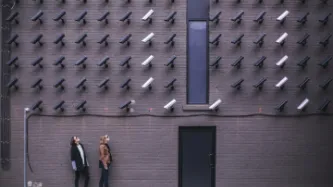
Imagine that every time you want to attend a march, religious event, political meeting, protest, or public rally, you must share deeply personal information with police and intelligence agencies, even when they have no reason to suspect you of wrongdoing.
First, you need to go to the police to register; have your photo taken for a biometric database; share the contacts of your family, friends, and colleagues; disclose your finances, health records, lifestyle choices, relationship status, and…
Content type: Long Read
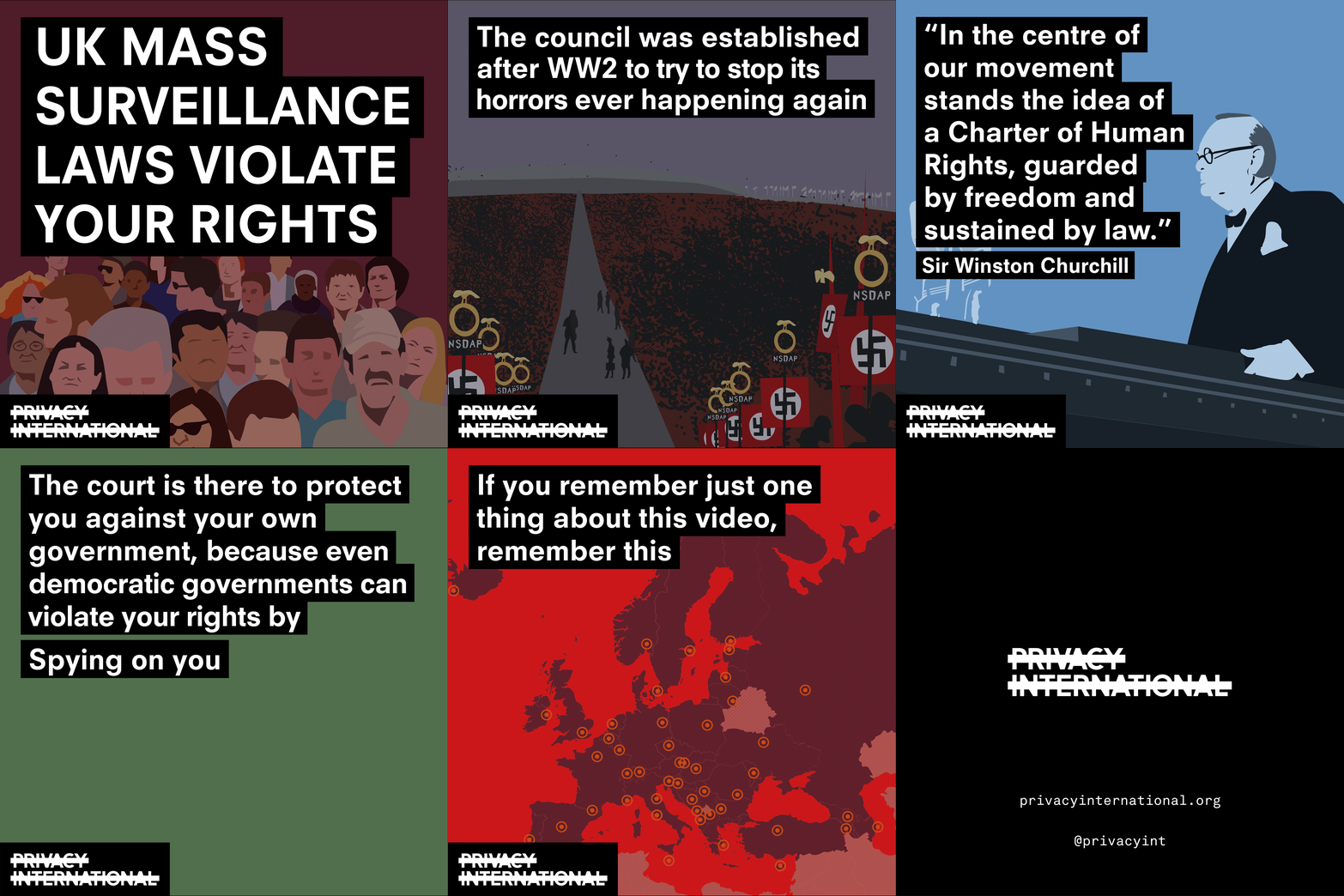
Yesterday, the European Court of Human Rights issued its judgement in Big Brother Watch & Others V. the UK. Below, we answer some of the main questions relating to the case.
What's the ruling all about?
In a nutshell, one of the world's most important courts, the European Court of Human Rights, yesterday found that certain UK laws about how intelligence agencies can spy on our internet communications breach our human rights. These surveillance laws have meant that the UK intelligence…

Content type: News & Analysis
This post was written by William Marks, a former volunteer at Privacy International.
The right to privacy is central to the protection of human dignity, and supports and reinforces other rights, such as the right to freedom of expression and association. Privacy International, supported by the International Human Rights Clinic at Harvard Law School, recently submitted a joint stakeholder report to the United Nations Human Rights Council regarding New Zealand’s protection of the right to…
Content type: News & Analysis
Our intervention comes on the back of mounting evidence that the South African state’s surveillance powers have been abused, and so-called “checks & balances” in RICA have failed to protect citizens’ constitutional right to privacy.
Among our core arguments are:
That people have a right to be notified when their communications have been intercepted so that they can take action when they believe their privacy has been unlawfully breached. Currently RICA prevents such notification, unlike…
Content type: Press release
We found this image here
The Investigatory Powers Tribunal (IPT) today held that, for a sustained period, successive Foreign Secretaries wrongly gave GCHQ unfettered discretion to collect vast quantities of personal customer information from telecommunications companies.
The judgment exposes:
· the error-ridden and inconsistent evidence provided by GCHQ throughout the case;
· the willingness of telecommunications companies to secretly hand over customer data on the basis of mere verbal…

Content type: Impact Case Study
PI and our global partners have been at the forefront of challenging communications data retention for over a decade.
What is the problem
Communications data, also known as metadata, tells a story about your digital activity and answers the who, when, what, and how of a specific communication. While communications data doesn't include the contents of a message, all of the other information about the message can be very revealing about people, their habits, thoughts, health and personal…

Content type: Impact Case Study
What is the problem
For over two decades we have been documenting an alarming use and spread of surveillance. It is no longer just the wars on terror or drugs or migration that is driving this trend. The management of health crises and distribution of welfare regularly are among others being used to justify this turn to increasingly invasive forms of surveillance. From country to country we see the same ideas and the same profiteers expanding their reach.
When we first released our report on…