
Search

Content type: Advocacy
Privacy International has today submitted comments to a U.S. government consultation on whether the US Department of Homeland Security (DHS) should keep the social media details of individuals travelling to the US in so-called “Alien Files” documenting all immigrants.
We’ve urged that they don’t, and that they review and stop all similar social media surveillance by the DHS.
The systematic surveillance of social media is an increasingly dangerous trend …
Content type: Long Read
Disclaimer: This piece was written in April 2017. Since publishing, further information has come out about Cambridge Analytica and the company's involvement in elections.
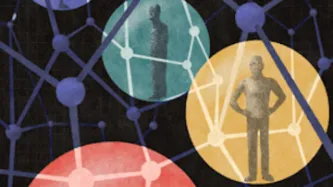
Recently, the data mining firm Cambridge Analytica has been the centre of tons of debate around the use of profiling and micro-targeting in political elections. We’ve written this analysis to explain what it all means, and the consequences of becoming predictable to companies and political campaigns.
What does…
Content type: Advocacy
Privacy International's submission on the right to privacy in Thailand, Human Rights Committee, 119th Session.
In our assessment to the Committee, national legislation governing surveillance is inadequate, unclear as to the powers, scope and capacity of state surveillance activities and thus it falls short of the required human rights standards to safeguard individuals from unlawful interference to the right to privacy.
Content type: News & Analysis
This piece originally appeared in the Responsible Data Forum.
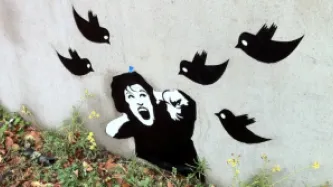
Would you mind if, every time you post a comment on Twitter, Facebook or another social media platform, the police logged it? I mean, it’s public — surely it’s fair game?
If you think that’s OK, then maybe it’s also OK for a police officer to follow you when you walk down a busy street. That’s also public, right?
Clearly, definitions of public and private become very problematic when you are communicating with potentially…

Content type: News & Analysis
As of October 1st, it has become impossible for the public to see footage from North Carolina police body cameras as a result of new law HB 972. This should be of concern to anyone who cares about police accountability and the balance of power in the new digital surveillance era. Increasingly, we are seeing law enforcement use new technology to respond not only to unrest and crime but also to collect and monitor data about individuals who are not suspected of any criminal involvement, such as…

Content type: Long Read
This report examines the emergence of social media based surveillance in Thailand, carried out potentially by people’s own networks of friends and family. It looks at the severe impact this has on personal privacy and points to potential solutions.
In May 2014, Thailand experienced a military coup – its second in eight years. A military government led by General Prayut Chan-o-cha seized power and overthrew the administration of Prime Minister Yingluck Shinawatra. The Army declared martial…

Content type: News & Analysis
In Egypt, the internet, social media and online engagement have provided a critical platform in recent years for Egyptians to express their frustration and demand change after years of social, economic and political repression. The use of social media during protests, and the government's recent attempts to crack down on the use of services like Twitter and Facebook, have been widely reported.
So it was with shock and disappointment that Privacy International looked on earlier this month…
Content type: News & Analysis
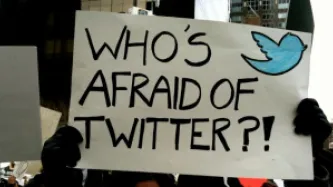
Earlier this month, only a few days before the new president of Egypt was sworn in, leaked documents from the Ministry of Interior revealed that the government is trying to acquire mass surveillance equipment capable of monitoring social networks such as Facebook, Twitter, and YouTube.
While being billed as a way to monitor social media in order to “monitor security hazards in social networks” and “identify persons representing a danger on society” (sic), past and recent actions by…