
Search

Content type: Advocacy
In September 2018, the National Executive sent the proposed Data Protection Bill to the National Congress. The proposed law was directed to the Senate and it will be considered by two commissions: the Commission of Constitutional Affairs (Comision de Asuntos Constitucionales) and the Commission of Rights and Guarantees (Comision de Derechos y Garantías).
Privacy International welcomes the continued efforts by Argentina to provide protections for the right to privacy, already enshrined in the…

Content type: News & Analysis
Creative Commons Photo Credit: Source
In September 2018, a month after Argentina lawmakers voted against the legalisation of abortion, we spoke to Eduardo Ferreyra from the Buenos Aires-based Asociacion por los Derechos Civiles about the role of privacy in the abortion debate. Also joining us in this second episode of the Gender and Privacy Series is Ambika Tandon from the Centre for Internet and Society in India to discuss the intersection between privacy and bodily autonomy.…
Content type: Advocacy
Privacy International welcomes the effort by the Government of India to reaffirm its commitment to upholding and respecting the right to privacy, and for noting the need to regulate the processing of personal data as essential for the protection of privacy through the adoption of a data protection law.
The urgent need for this legislation has been validated in the Supreme Court decision regarding the Aadhaar Act, which stipulates the need for a robust data protection regime. …

Content type: News & Analysis
Image attribution: By Blue Diamond Gallery CC BY-SA 3.0.
In March 2017, when the UN Human Rights Council requested the High Commissioner for Human Rights to prepare a report on the right to privacy in the digital age, including the responsibility of business enterprises, Cambridge Analytica was an obscure company among others. A year later the data exploitation scandal erupted, leading to plenty of soul searching by politicians in US, UK, Europe and elsewhere, pledges of…

Content type: Long Read
Image attribution: By Legaleagle86 at en.wikipedia, CC BY-SA 3.0.
In a long-anticipated judgment, the Indian Supreme Court has ruled that India's controversial identification system Aadhaar is Constitutional. They based their conclusion on notes that there are sufficient measures in place to protect data, and that it is difficult to undertake surveillance of citizens on the basis of Aadhaar.
But there is some good in this ruling. The court has demanded that the Government introduce…


Content type: News & Analysis
Actualmente, las empresas tecnológicas se encuentran inmersas en constante cambio. Uno de ellos es la creciente importancia que ha cobrado la seguridad digital, convirtiéndose en una prioridad. Que un emprendimiento resguarde su seguridad digital significa que puede gestionar los riesgos asociados a mantener la confidencialidad, integridad y disponibilidad de su información.
En este contexto, resulta de gran relevancia que las personas responsables del emprendimiento digital y el…

Content type: News & Analysis
El objetivo es facilitar a la sociedad civil una guía para la navegación de este organismo, efectuar un diagnóstico que permita situar cualquier persona interesada sobre la actualidad de la temática a nivel regional y descubrir la agenda de seguridad digital que sostiene la OEA en el continente.
Finalmente, concluimos con una serie de breves recomendaciones dirigidas a los organismos de la OEA. Con ello, esperamos que este órgano reconozca el papel que puede jugar como catalizador en el…

Content type: Report
La seguridad digital es una discusión crítica y hay que reconocer que la sociedad civil y los grupos de interés público no han sido suficientemente considerados. Como respuesta, varias organizaciones de la sociedad civil de América Latina se unieron para presentar informes que recuerdan a las entidades estatales responsables de formulación de políticas públicas que la seguridad digital debe tener en cuenta la seguridad de las personas y los derechos humanos. Presentamos la serie, Derechos…

Content type: Advocacy
India has been leading at developing some of the most complex and intense data-intensive systems in the world as exemplified with their mass biometric identification system, known as Aadhaar, as well as in the development and design of new technologies. To find out more about the main privacy issues in India, check out the State of Privacy in India.
And yet, India does not have a comprehensive privacy legislation and only limited data protection standards can be found under section 43A and…

Content type: Long Read
To celebrate Data Privacy Week, we spent the week discussing privacy and issues related to control, data protection, surveillance, and identity. Join the conversation on Twitter using #dataprivacyweek.
Do you live in a “smart city”? Chances are, you probably do (or at least your city claims to be). But do you know what exactly makes your city “smart”, beyond the marketing term? And what does this have to do with privacy?
Companies and governments will tell you that the more cameras, sensors…
Content type: Long Read
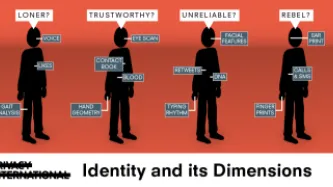
To celebrate International Data Privacy Day (28 January), PI and its International Network have shared a full week of stories and research, exploring how countries are addressing data governance in light of innovations in technology and policy, and implications for the security and privacy of individuals.
According to the World Bank, identity “provides a foundation for other rights and gives a voice to the voiceless”. The UN Deputy Secretary-General has called it a tool for “advancing…

Content type: Long Read
To celebrate International Data Privacy Day (28 January), PI and its International Network have shared a full week of stories and research, exploring how countries are addressing data governance in light of innovations in technology and policy, and implications for the security and privacy of individuals.
At the core of data protection debates, there is a power play between empowering individuals to control their data and empowering those who use (or want to) use their data.
By…

Content type: Examples
In 2017, a website run by the Jharkhand Directorate of Social Security leaked the personal details of over.1 million Aadhaar subscribers, most of them old age pensioners who had enabled automatic benefits payment into their bank accounts. Aadhaar is a 12-digit unique identification number issued to all Indian residents based on their biometric and demographic data. Both cyber security agencies and the Supreme Court have expressed concerns over its security,…
Content type: News & Analysis
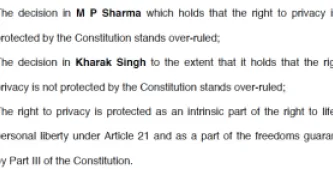
The Supreme Court has ruled that there is a fundamental right to privacy under the Indian constitution, establishing that “The right to privacy is protected as an intrinsic part of the right to life and personal liberty”. This was a unanimous ruling by a bench of nine supreme court justices, who heard the case following a decision in 2015 over whether the controversial Aadhaar biometric identity scheme was constitutional.
The judgment is clear: privacy and human dignity are intrinsically…

Content type: Advocacy
Este informe es presentado por la Asociación por los Derechos Civiles (ADC) y Privacy International (PI). La Asociación por los Derechos Civiles (ADC) es una organización no gubernamental, sin nes de lucro, ubicada en Buenos Aires, que promueve los derechos civiles y sociales en Argentina y otros países latinoamericanos. Fue fundada en 1995 con el objetivo de fortalecer una cultura jurídica e institucional que garantice los derechos fundamentales de la gente, basado en el respeto a la…

Content type: Report
Financial services are changing, with technology being a key driver. It is affecting the nature of financial services, from credit and lending through to insurance, and even the future of money itself.
The field of fintech is where the attention and investment is flowing. Within it, new sources of data are being used by existing institutions and new entrants. They are using new forms of data analysis.
These changes are significant to this sector and the lives of people it serves. This…

Content type: News & Analysis
This piece was co-written with Valeria Milanes of the Asociación por los Derechos Civiles (ADC). A Spanish version is available here.
In January 2015, the intelligence regime in Argentina was put in the limelight following the death of Prosecutor Alberto Nisman. It was alleged that the intelligence services were involved in his death. This scandal prompted reform of the country’s intelligence system.
In February of the same year, the Intelligence Act (N° 25…

Content type: Advocacy
This stakeholder report is a submission by Asociación por los Derechos Civiles (ADC) and Privacy International (PI). The Asociación por los Derechos Civiles (ADC) is a non-governmental, non-pro t organisation based in Buenos Aires that promotes civil and social rights in Argentina and other Latin American countries. It was founded in 1995 with the purpose of helping to strengthen a legal and institutional culture that guarantees the fundamental rights of the people, based on respect…

Content type: News & Analysis
This guest piece was written by Leandro Ucciferri of the Association for Civil Rights (Asociación por los Derechos Civiles). It does not necessarily reflect the views or position of Privacy International.
We look at our smartphone first thing in the morning to check the weather, and our to-do list for the day. During breakfast, we read the news and learn about what is going on in the rest of the world. In our commute to work or college, we scroll through our social media feeds…

Content type: News & Analysis
This guest piece was written by Elonnai Hickok, Amber Sinha and Vanya Rakesh of the Centre for Internet and Society. It does not necessarily reflect the views or position of Privacy International.
In 2009, the Government of India set up the Unique Identification Authority of India (UIDAI) as an attached office of the erstwhile Planning Commission of India via an executive order. The mandate of the UIDAI was to assign a 12-digit unique identification (UID) number (…

Content type: Long Read
The use of IMSI catchers[1] to arrest individuals is rarely documented — as IMSI catchers are used secretively in most countries. The arrest of Colombian drug lord Henry López Londoño in Argentina is therefore a rare opportunity to understand both how IMSI catchers are used, and also the complexity of their extraterritorial use.
In October 2012, Londoño — also known as Mi Sangre (“My Blood”) — was arrested in Argentina. His arrest was the result of cooperation between the Dirección de…

Content type: Long Read
The move to digital payments, without an adequate legal framework, is a double-blow to privacy. India is proving to be the case study of how not to do the move to the cashless society. We are seeing in India the deeper drives to digital: linking financial transactions to identity. On the 8th November, Prime Minister Modi of India announced that 500 and 1,000 rupee notes – 86% of the money supply – would be removed from circulation. The initial justification for this was to tackle the…

Content type: News & Analysis
This guest piece was written by Elonnai Hickok and Vipul Kharbanda of the Centre for Internet and Society. It does not necessarily reflect the views or position of Privacy International.
In light of the complex challenges and threats posed to, and by, the field of information telecommunications in cyberspace, in 1998 the draft resolution in the First Committee of the UN General Assembly was introduced and adopted without a vote (A/RES/53/70)…

Content type: News & Analysis
Este artículo fue co-escrita con Valeria Milanes de la Asociación por los Derechos Civiles (ADC). Una versión en ingles está disponible aquí.
En Enero de 2015, el sistema de inteligencia de Argentina fue objeto de atención pública luego de la muerte del fiscal Alberto Nisman, debido a la presunta participación de los servicios de inteligencia en dicho suceso. Este escándalo impulsó la reforma del sistema de inteligencia del país.
En Febrero del mismo…

Content type: Advocacy
This stakeholder report is a submission by Centre for Internet and Society India (CIS India) and Privacy International (PI). CIS is a non-profit organisation that undertakes interdisciplinary research on internet and digital technologies from policy and academic perspectives. Through its diverse initiatives, CIS explores, intervenes in, and advances contemporary discourse and practices around internet, technology and society in India, and elsewhere. PI is a human rights organisation that…
Content type: Press release
This week in Geneva, the UN Human Rights Committee will examine the Argentina’s compliance with the International Covenant on Civil and Political Rights (ICCPR), an international treaty which places obligations on signatories to guarantee human rights such as the right to privacy.
This review, by a body of independent experts charged with monitoring compliance with the ICCPR, comes at a critical time for Argentina laws and policies on privacy and surveillance.
Recent years have seen…
Content type: Press release
Esta semana en Ginebra, el Comité de Derechos Humanos de la ONU examinará el cumplimiento de la Argentina con el Pacto Internacional de Derechos Civiles y Políticos (PIDCP), un tratado internacional que establece obligaciones a los firmantes para garantizar los derechos humanos, como el derecho a la privacidad.
Este examen, por un grupo de expertos independientes encargados de vigilar el cumplimiento del PIDCP, llega en un momento crítico para las leyes y políticas de la Argentina sobre la…

Content type: Advocacy
La Asociación por los Derechos Civiles (ADC) y Privacy International toman nota de las respuestas del gobierno de Argentina a la lista de cuestiones antes de la presentación del informe, en particular en relación a la legislación, políticas y prácticas relacionadas con la vigilancia y la protección de los datos personales.
Privacy International es una organización de derechos humanos que trabaja para favorecer y promover el derecho a la privacidad y la lucha contra la vigilancia en todo el…

Content type: Advocacy
Asociación por los Derechos Civiles (ADC) and Privacy International note the replies by the government of Argentina to the list of issues prior to the submission of the report, in particular in relation to the laws, policies and practices related to surveillance and protection of personal data.
Privacy International is a human rights organisation that works to advance and promote the right to privacy and fight surveillance around the world. The Asociación por los Derechos Civiles (ADC) is a…