
Search
Content type: News & Analysis
New technologies continue to present great risks and opportunities for any users but for some communities the implications and harms can have severe consequences and one of the sectors facing increasing challenges to keep innovating whilst protecting themselves and the people they serve is the humanitarian sector.
Over the course of engagement with the humanitarian sector, one of our key observations has been how risk assessments undertaken in the sector omitted to integrate a hollistic…

Content type: News & Analysis
The UN Special Rapporteur on the promotion and protection of human rights and fundamental freedoms while countering terrorism, Professor Fionnuala Ní Aoláin together with Dr. Krisztina Huszti-Orbán, released today a key report on the “Use of Biometric Data to Identify Terrorists: Best Practice or Risky Business?”.
The report explores the human rights risks involved in the deployment of biometrics emphasising that
in the absence of robust rights protections which are institutionally embedded…

Content type: Long Read
Immunity Passports have become a much hyped tool to cope with this pandemic and the economic crisis. Essentially, with immunity passports those who are 'immune' to the virus would have some kind of certified document - whether physical or digital. This 'passport' would give them rights and privileges that other members of the community do not have.
This is yet another example of a crisis-response that depends on technology, as we saw with contact-tracing apps. And it is also yet another…

Content type: Explainer
Definition
An immunity passport (also known as a 'risk-free certificate' or 'immunity certificate') is a credential given to a person who is assumed to be immune from COVID-19 and so protected against re-infection. This 'passport' would give them rights and privileges that other members of the community do not have such as to work or travel.
For Covid-19 this requires a process through which people are reliably tested for immunity and there is a secure process of issuing a document or other…
Content type: Examples
Thermal temperature scanners, software keystroke monitors, and wearable location trackers are proliferating in US workplaces, with the data they collect outside of any of the country's electronic privacy laws. Companies report that employers are being asked to form part of the front line of contact tracing for COVID-19 and share data on a wholly new level. Even before the pandemic, employers sought to keep employee data exempt from the CCPA; privacy activists eventually won a one-year…
Content type: Examples
Many of the steps suggested in a draft programme for China-style mass surveillance in the US are being promoted and implemented as part of the government’s response to the pandemic, perhaps due to the overlap of membership between the National Security Commission on Artificial Intelligence, the body that drafted the programme, and the advisory task forces charged with guiding the government’s plans to reopen the economy. The draft, obtained by EPIC in a FOIA request, is aimed at ensuring that…
Content type: Long Read
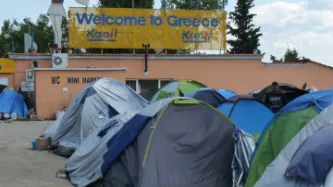
Over the last two decades we have seen an array of digital technologies being deployed in the context of border controls and immigration enforcement, with surveillance practices and data-driven immigration policies routinely leading to discriminatory treatment of people and undermining peoples’ dignity.And yet this is happening with little public scrutiny, often in a regulatory or legal void and without understanding and consideration to the impact on migrant communities at the border and…

Content type: Advocacy
Privacy International and Hiperderecho made a joint submission to the UN Committee on the Elimination of all Forms of Discrimination Against Women (CEDAW) ahead of the Committee finalising the list of issues for the examination of Peru.
The submission builds on research commissioned by Privacy International and carried out by Hiperderecho on the state of reproductive rights in Peru, and how their exercise intersects with privacy and tech.
The submission is available in…

Content type: News & Analysis
In September 2019, PI published the report Your Mental Health for Sale. Our investigation looked into popular mental health websites and their data sharing practices.
Our findings suggest that, at the time of the research, most websites we looked at were using third party tracking for advertising purposes, sometimes relying on programmatic advertising technologies such as Real Time Bidding (RTB), sharing personal data with potentially thousands of actors. Some websites were also found sharing…

Content type: News & Analysis
At a time where the mass surveillance of protests has been at the forefront, the UN High Commissioner for Human Rights released a timely report on the impact of new technologies on the promotion and protection of human rights in the context of assemblies, including peaceful protests.
The new report highlights the strong ties between protest and privacy and warns that “…the use of some such technologies to surveil or crack down on protesters can lead to human rights violations, including…
Content type: Case Study
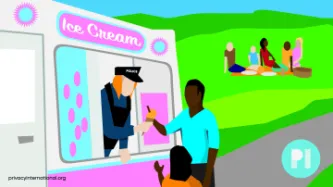
Facial recognition technology (FRT) is fairly present in our daily lives, as an authentication method to unlock phones for example. Despite having useful applications, FRT can also be just another technology used by those in power to undermine our democracies and carry out mass surveillance. The biometric data collected by FRT can be as uniquely identifying as a fingerprint or DNA. The use of this technology by third parties, specially without your consent, violates your right to privacy.
The…

Content type: Case Study
Well into the 21st century, Serbia still does not have a strong privacy culture, which has been left in the shadows of past regimes and widespread surveillance. Even today, direct police and security agencies’ access to communications metadata stored by mobile and internet operators makes mass surveillance possible.
However, a new threat to human rights and freedoms in Serbia has emerged. In early 2019, the Minister of Interior and the Police Director announced that Belgrade will receive “a…

Content type: Report
The majority of people today carry a mobile phone with them wherever they go, which they use to stay connected to the world. Yet an intrusive tool, known as an International Mobile Subscriber Identity catcher, or “IMSI catcher” is a form of surveillance equipment that enables governments and state authorities to conduct indiscriminate surveillance of mobile devices, and by extension, on users.
IMSI catchers can do much more than monitor and intercept mobile communications. Designed to imitate…
Content type: News & Analysis
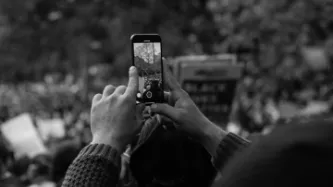
IMSI catchers (or stingrays as they are known in the US) are one of the surveillance technologies that has come to the forefront again in the protests against police brutality and systemic racism that have been sparked by the murder of George Floyd on 25 May 2020.
An International Mobile Subscriber Identity catcher – in short an “IMSI catcher” – is an intrusive piece of technology that can be used to locate and track all mobile phones that are switched on in a certain area. It does so by…

Content type: Case Study
Chinese artist Ai Weiwei creates art that highlights the harmful effects of surveillance on society — and is himself a target of persistent surveillance by the Chinese government. In an article for Agence France-Presse, he said, "In my life, there is so much surveillance and monitoring -- my phone, my computer ... Our office has been searched, I have been searched, every day I am being followed, there are surveillance cameras in front of my house.”
Weiwei is an artist, blogger, documentary…
Content type: Press release
Today, the ICO has issued a long-awaited and critical report on Police practices regarding extraction of data from people's phones, including phones belonging to the victims of crime.
The report highlights numerous risks and failures by the police in terms of data protection and privacy rights. The report comes as a result of PI’s complaint, dating back to 2018, where we outlined our concerns about this intrusive practice, which involves extraction of data from devices of victims, witnesses…
Content type: Press release
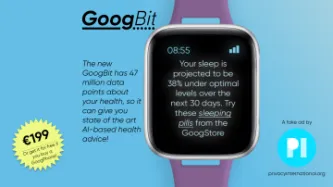
On 15 June 2020, Google formally notified the European Commission of its proposed acquisition of Fitbit, enabling them to capture a massive trove of sensitive health data that will expand and entrench its digital dominance. Privacy International is calling on EU regulators to block the merger.
In November 2019, Google announced its plan to acquire Fitbit, a company that produces and sells health tracking technologies and wearables - including smartwatches, health trackers and smart scales -…

Content type: Explainer
Hello friend,
You may have found your way here because you are thinking about, or have just submitted, a Data Subject Access Request, maybe to your Facebook advertisers like we did. Or maybe you are curious to see if Policing, Inc. has your personal data.
The right to access your personal data (or access right) is just one of a number of data rights that may be found in data protection law, including the European Union's General Data Protection Regulation, better known as "GDPR", which took…

Content type: Long Read
Introduction
In August 2019, when Facebook announced a few new features for advertisers such as ads in search, PI decided to take an in-depth look at what features the company offers its users when it comes to understanding its advertising practices. One of these features, which caught our attention is Facebook Ads Preference, a tool that among other things, lists businesses/advertisers that have uploaded your personal data to target you with (or exclude you from) ads on the platform.

Content type: Long Read
In December 2019, the Information Rights Tribunal issued two disappointing decisions refusing appeals brought by Privacy International (PI) against the UK Information Commissioner.
The appeals related to decisions by the Information Commissioner (IC), who is responsible for the UK’s Freedom of Information regime, concerning responses by the Police and Crime Commissioner for Warwickshire and the Commissioner of Police for the Metropolis (The Metropolitan Police) to PI’s freedom of information…
Content type: Examples
Cameras repurposed as "fever-detecting" aren't designed for and are not very good at detecting infections, but businesses, airlines, major employers, and public officials are nonetheless reacting to the coronavirus pandemic by spending large sums to buy them without understanding their limitations. The systems can detect elevated skin temperatures, but aren't precise enough to be able to identify the cause. In addition, many people who develop COVID-19 don't have fevers. The scanners have not…
Content type: Examples
It's been two months since the launch of "Perú en us manos", the mobile app promoted by the Peruvian government amidst the Covid-19 pandemic. Until now the app did not accomplish the ambitious goals it set out to.
On its first month the app had detected 1400 risk zones while there where already 36,000 confirmed infection cases. There is little transparency on how those risk zones are estimated. Developers of the app state that only one fifth of the data provided by the Health Ministry is clean…

Content type: Long Read
1. What are the barriers to access safe and legal abortion care?
Abortion is considered a crime in Brazil, except in cases of pregnancy resulting from rape, when it puts the woman's life at risk or, most recently, in cases of fetal anencephaly. Article 273 of the Penal Code also forbids the sale or distribution of medication that is not registered at Anvisa (National Health Agency), which is the case for abortion pills in Brazil. Misoprostol, the active substance of abortive medicines in the…

Content type: Long Read
1. What are the barriers to access safe and legal abortion care?
The Indian state’s approach to reproductive rights historically has focused on population control rather than enhancing individual autonomy and removing structural barriers to reproductive health services, which is reflected in the barriers to provision of services. As a consequence of the early adoption of family planning and population control measures in the 1950s, India was one of the first countries to legislate on abortion…

Content type: Long Read
This research was commissioned as part of Privacy International’s global research into data exploitative technologies used to curtail women’s access to reproductive rights. Reproductive Rights and Privacy Project. Read about Privacy International’s Reproductive Rights and Privacy Project here and our research findings here.
1. What are the barriers to access safe and legal abortion care?
In Kenya, access to abortion care is restricted by the Constitution, which provides that: “…

Content type: Long Read
This research was commissioned as part of Privacy International’s global research into data exploitative technologies used to curtail women’s access to reproductive rights.
Read about Privacy International’s Reproductive Rights and Privacy Project here and our research findings here.
1. What are the barriers to access safe and legal abortion care?
Even though abortion is legal in certain cases in Argentina, different types of barriers restrict the access to legal abortions, contribute…

Content type: Long Read
This research was produced by Paz Peña as part of Privacy International’s global research into data exploitative technologies used to curtail women’s access to reproductive rights. Reproductive Rights and Privacy Project. Read about Privacy International’s Reproductive Rights and Privacy Project here and our research findings here.
1. What are the barriers to access safe and legal abortion?
According to figures from the Ministry of Health, more than 33 thousand clandestine abortions are…

Content type: News & Analysis
On 29 May, Niger’s Congress voted on a law allowing for broad interception powers of certain electronic communications by the government. The bill makes it lawful for the government to approve the interception of communications without appropriate safeguards or oversight mechanisms.
The law passed with 104 votes – the Nigerien parliament has 171 members – without the participation of the opposition that boycotted the law. The opposition claimed that
the law will allow those, for…
Content type: Long Read
This research was commissioned as part of Privacy International’s global research into data exploitative technologies used to curtail women’s access to reproductive rights.
Read about Privacy International’s Reproductive Rights and Privacy Project here and our research findings here.
1. What are the barriers to access safe and legal abortion care?
Legal barriers
To identify the barriers experienced by women to access safe and legal abortion care, we have to understand the legal picture…