
Search

Content type: News & Analysis
After two years of pressing the Government to come clean on what, if anything, they are doing to investigate the potentially illegal export of the spyware FinFisher, a ruling today by the Administrative Court in Privacy International’s favour marks a significant turning point in our long-running campaign to bring more transparency and accountability to the surveillance industry.
The High Court slammed Her Majesty’s Revenue and Customs for not disclosing whether it was investigating…

Content type: News & Analysis
May Day serves as a timely reminder that across their history, intelligence services have targeted trade unions and other organisations working for progressive social change.
Intelligence agencies have sought to justify expanded surveillance capabilities on the basis of pressing national security threats, particularly terrorism; however, as the Snowden revelations have highlighted, intelligence agencies actually often use these capabilities to monitor organisations that promote human…

Content type: News & Analysis
NETMundial – a global conference initiated by the Brazilian government – has produced ‘The Multi-stakeholder Statement of São Paulo’, a Roadmap and Principles on internet governance that could herald new respect for the right to privacy online. However, the outcome document fails to adequately recognise the relationship between internet governance and mass surveillance, reflecting a larger problem that was present throughout the two-day meeting.
By the end of the conference, both the…

Content type: News & Analysis
This year, an advanced surveillance system called the "Platform for Unified Monitoring and Analysis" will come online in Colombia. Frustrated with the the previous system, Esperanza, which only monitored telecommunications activity, the Colombian authorities turned to PUMA (Plataforma Única de Monitoreo y Análisis), a system that will allow them to monitor both telecommunications traffic and IP traffic in one source. The system, now based on Police property in Western Bogota, will now be…

Content type: News & Analysis
UPDATE: The Kosovar minister of European integration – Vlora Citaku – announced in a tweet on April 29th that the government has approved the law on the interception of telecommunications. The draft law will now be reviewed by the parliament.
_____________________________________________________________
The government of Kosovo is currently preparing a new surveillance law that will turn Kosovar network operators and service providers into de facto agents of the Kosovo…

Content type: News & Analysis
The government of Pakistan is proposing a new law that significantly threatens privacy rights, in a blatant attempt to establish a legal regime containing broad powers when it comes to obtaining, retaining, and sharing data obtained through criminal investigations, including communications data.
The Prevention of Electronic Crimes Act, 2014, contains worrying aspects that threaten the right to privacy, including a provision that would permit unregulated information sharing with foreign…
Content type: Press release
The ruling today from the European Court of Justice, invalidating the European Union’s 2006 Data Retention Directive policy, was strong and unequivocal: the right to privacy provides a fundamental barrier between the individual and powerful institutions, and laws allowing for indiscriminate, blanket retention on this scale are completely unacceptable.
As the Court states, it is not, and never was, proportionate to spy on the entire population of Europe. The types of data retained under this…
Content type: Press release
World leaders must commit to keeping invasive surveillance systems and technologies out of the hands of dictators and oppressive regimes, said a new global coalition of human rights organizations as it launched today in Brussels.
The Coalition Against Unlawful Surveillance Exports (CAUSE) – which includes Amnesty International, Digitale Gesellschaft, FIDH, Human Rights Watch, the New America Foundation’s Open Technology Institute, Privacy International, and Reporters without Borders – aims to…

Content type: News & Analysis
Global problems require global solutions. One of the significant emerging threats to human rights and democracy today is the incredible and mostly unaccountable spread of surveillance technologies.
The rapid proliferation of these systems has created a shadowy billion-dollar industry, where companies sell spying equipment with impunity to authoritarian regimes, who wield them against journalists, political activists, and human rights defenders.
Given the scale and international scope of this…

Content type: News & Analysis
In response to a consultation being undertaken by the UN in accordance with December’s General Assembly resolution on the right to privacy in the digital age, Privacy International today called on the United Nations to recognise that mass surveillance is incompatible with human rights.
The submission to the Office of the High Commissioner to Human Rights confronts some of the biggest challenges to the right to privacy in the digital age, debunks some of the justifications put forth…

Content type: News & Analysis
The market for surveillance technologies has expanded so much in recent years that oversight has been totally unable to keep up, which has led to devastating consequences in the lives of human rights defenders in repressive regimes around the world.
According to a new study released today by Privacy International, the Open Technology Institute at the New America Foundation, and Digitale Gesellschaft, international efforts to oversee the trade in surveillance technologies are out…
Content type: News & Analysis
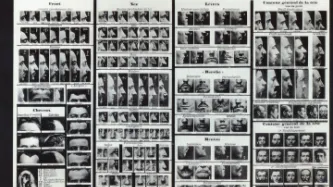
In the late eighteenth century in Germany, ‘anthropologist’ Johann Blumenbach published a degenerative hypothesis that linked cranium and facial profiles to supposed character traits and accordingly divided human beings into five different races: the Caucasian, Mongolian, Malayan, Ethiopian, and American.1
In the 1870s, Alphonse Bertillon, a police officer in France, started a trend to identify criminals based on facial characteristics, alongside subsequent use of the camera to…

Content type: News & Analysis
Facing intense scrutiny from a Swiss government inquiry into the human rights impact of the commercial surveillance trade, companies have packed up and are no longer attempting to export their spying technology from Switzerland.
Speaking with St. Galler Tagblatt, one of Switzerland’s largest German-language daily newspapers, government spokeswoman Marie Avet confirmed that the companies have cancelled export applications for surveillance technology - including all applications for…

Content type: News & Analysis
Only a few days after it was reported that intrusive surveillance technology developed and sold by Italian surveillance company Hacking Team was found in some of the most repressive countries in the world, Privacy International has uncovered evidence which suggests the company has received over €1 million in public financing.
It has come to Privacy International’s attention that Hacking Team appears to have received €1.5 million from two venture capital funds originating from the Region of…

Content type: News & Analysis
The 'GSOC saga' began a number of weeks ago with the revelation that the oversight body of the Irish police force, the Garda Siochana Ombudsman Commission (GSOC), may have been the target of sophisticated electronic surveillance. A security company, Verrimus, found that there was evidence that an IMSI Catcher device may have been deployed in the vicinity of GSOC's offices which could have intercepted all mobile phone communications of its officers and anyone visiting the offices. Following the…

Content type: News & Analysis
In Geneva this week, an expert seminar will be held at the Human Rights Council on the right to privacy. To inform these discussions and debates, Privacy International is releasing our report, The State of Privacy 2014, which identifies recent accomplishments from around the world, and highlights significant challenges ahead for this right.
To read the full report, go here.
Promoting and defending the right to privacy in national and international policy discourses is always an interesting…

Content type: News & Analysis
“Open government” – the push for greater transparency, accountability and innovation from governments – is an idea that has gained increasing traction in recent years, as the potential for new technologies to enhance democracy is being realised.
But making government more open and responsive should not mean compromising on privacy and data protection. The Open Government Guide outlines steps governments can take towards more open government and Privacy International has written a draft chapter…
Content type: Press release
In response to the ruling against David Miranda over his detention at Heathrow, Privacy International Executive Director Dr. Gus Hosein said:
Schedule 7 of the Terrorism Act of 2000 is a law intended to fight terrorism, and was not drafted to target people like David Miranda. In this instance however the government used it to seize the devices of journalists to intimidate and obstruct the reporting of mass and unlawful surveillance practices of the British government. To equate journalism…

Content type: News & Analysis
In the ongoing story about the possible surveillance of the Garda Siochana Ombudsman Commission in Ireland, a number of new details have emerged from Verrimus, the security consultancy agency tasked with investigating the spying. A recent Irish Independent report levelled a number of criticisms at Verrimus, saying that Verrimus in fact detected their own UK phones during their sweep and that they erroneously claimed this to be evidence of a UK IMSI Catcher.
In response to the Independent’s…

Content type: News & Analysis
Bulk metadata collection. The tapping of undersea fibre optic cables. Sabotaging internet security standards. Cyber Attacks. Hacking.
In almost every week since last summer, a new Snowden document has been released which details the growing surveillance powers and practices of intelligence agencies, each one astonishing in its own right. The documents have exposed the illegal activities and intrusive capabilities of the UK’s intelligence agency, GCHQ, which has secretly sought to exploit and…
Content type: Press release
After challenging HMRC's blanket refusal to release information about the potentially unlawful export of Gamma International's FinFisher surveillance technology, the court has said that the case should proceed to trial and the grounds of Privacy International's challenge are of public importance.
Privacy International in February filed for judicial review of a decision of HMRC, the body responsible for enforcing export regulations, claiming the department is acting unlawfully in its refusal to…

Content type: News & Analysis
The current legal framework governing intelligence activities in the UK is unfit for purpose in the modern digital era, and reform is urgently needed.
With this in mind, today Privacy International responded to the Intelligence and Security Committee’s call for evidence, addressing the question, “Whether the legal framework which governs the security and intelligence agencies’ access to the content of private communications is ‘fit for purpose’, given the developments in information technology…

Content type: News & Analysis
Over the past half year, Privacy International has been investigating the sale of surveillance technology made by South African company VASTech to Libya and what role the government had in promoting and developing the system. Unfortunately, the government has been slow to respond to our questions and has offered only vague answers. This has done little to ease our concerns about the part they played in the development and export of mass surveillance technology to a military regime with a…
Content type: News & Analysis
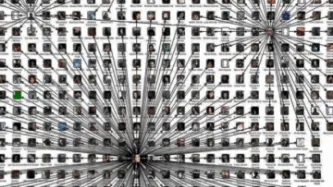
The latest Snowden document revelation, which shows how GCHQ and the NSA are conducting broad, real-time monitoring of YouTube, Facebook, and Blogger using a program called "Squeaky Dolphin," is the most recent demonstration of the immense interception capabilities of intelligence services.
Despite the program's cute name, "Squeaky Dolphin" is shocking in its ability to intercept raw data, which includes sensitive personal and location information, and keep tabs on people across the world who…

Content type: News & Analysis
The reforms announced today, while positive in some respects, are completely inadequate to address the heart of the problem. Privacy International welcomes steps to minimise the data collected and retained on non-Americans, and the call to increase transparency around requests made to communications service providers. However, in the face of mass surveillance, unaccountable intelligence sharing, arbitrary expansions of the definition of ’national security’, and debased encryption standards…

Content type: News & Analysis
Privacy International's partner organisation, Bytes for All, has filed a complaint against the Government, decrying the human rights violations inherent in such extensive surveillance and demonstrating how the UK's mass surveillance operations and its policies have a disproportionate impact on those who live outside the country.
Bytes for All, a Pakistan-based human rights organization, filed its complaint in the UK Investigatory Powers Tribunal (IPT), the same venue in which Privacy…

Content type: News & Analysis
UK parliamentary select committees are charged with overseeing the work of government in relation to particular topical issues or the work of particular departments. When it comes to UK Government policy on arms, it’s the Committees on Arms Export Controls (CAEC) that's responsible: a conglomeration of four select committees made up of serving Members of Parliament that collects evidence and conducts an inquiry into developments in export control policy and the preceding years’ exports of…
Content type: Press release
A complaint filed with the Organisation for Economic Cooperation and Development (OECD) against Trovicor GmbH, a German company accused of selling surveillance technology to Bahrain, has been rejected on almost every count, the German National Contact Point (NCP) for the OECD announced.
In February 2013, Reporters Without Borders (RSF), the European Center for Constitutional and Human Rights (ECCHR), Privacy International, the Bahrain Center for Human Rights and Bahrain Watch filed a…

Content type: News & Analysis
Privacy International is currently engaged in a joint project on export controls with the Open Technology Institute and Digitale Gesellschaft. The blog post below was co-written by Edin Omanovic and Tim Maurer and is also available on the OTI blog.
Export controls have something of a bad reputation in technology circles, and not without good reason.
The crypto wars that imposed draconian polices regulating how people could buy, sell and use cryptography stifled the free…

Content type: News & Analysis
In the same week that the Advocate General of the European Court of Justice labelled the retention of electronic communications data throughout Europe as a “serious interference with the right to privacy”, the French National Assembly has codified into law a suite of invasive and unrestrained surveillance powers, allowing an expanded range of government bodies invasive access to citizens electronic communications data and content and threatening the privacy rights of the French people.…