During its 98th session, from 23 April to 10 May 2019, the UN Committee on the Elimination of Racial Discrimination (CERD) initiated the drafting process of general recommendation n° 36 on preventing and combatting racial profiling. As part of this process, CERD invited stakeholders, including
Faced with the transnational dimension of terrorist-related activities, United Nations Security Council resolutions have emphasized the need for international cooperation in information-sharing, both for the purposes of collecting intelligence and judicial assistance . Privacy International
Photo By: Cpl. Joel Abshier ‘Biometrics’ describes the physiological and behavioural characteristics of individuals. This could be fingerprints, voice, face, retina and iris patterns, hand geometry, gait or DNA profiles. Because biometric data is particularly sensitive and revealing of individual’s
Identification system across the world increasingly rely on biometric data. In the context of border management, security and law enforcement, biometric data can play an important role in supporting the investigation and prevention of acts of terrorism. This is clearly reflected in UN Security
In July 2019, the UK House of Commons' Science and Technology Committee published a report on Digital Government. Lying not so subtlely amongst it's recommendations is this: " The Government should facilitate a national debate on single unique identifiers for citizens to use for accessing public
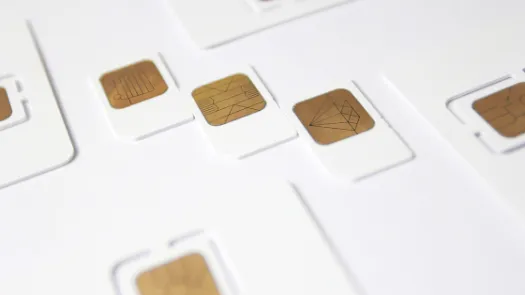
IMAGE SOURCE: "My Phone Bought This" by oliver t is licensed under CC BY-NC-ND 4.0. LAST UPDATE: 16th May 2022. Mandatory SIM card registration laws require people to provide personal information, including a valid ID or even their biometrics, as a condition for purchasing or activating a SIM card
Refugees are among the most vulnerable people in the world. From the moment they flee their homes, as they pass through 'temporary' places such as refugee camps and detention centres to their 'final' destinations, they are continuously exposed to threats. In the digital age, these threats are
In February 2019, an anonymous tip-off to Computer Sweden revealed that a database containing recordings of 170,000 hours of calls made to the Vårdguiden 1177 non-emergency healthcare advice line was left without encryption or password protection on an open web server provided by Voice Integrate
Private companies are not the only actors pushing for increased control of benefit claimants. The World Bank has also instrumental in funding programmes aiming at assisting government in administrating welfare programmes which has led to futher surveillance of benefits claimants, in December 2016
The State is not always the only actor involved in the surveillance of benefits claimants. Often those practices are encouraged, facilitated or conducted by private companies. South Africa for instance mandated MasterCard to help distribute benefits through biometric debit cards. https://www
In Bangladesh, as part of the USAID and Bill and Melinda Gates Foundation supported programme “a2i” (Access to Information), the government has built a system to allow citizens to receive their welfare payment on a pre-paid debit card given to them at the Bangladesh Post Office after having been
In Ireland benefits claimants are expected to register for a Public Services Card (PSC) in order to access benefits. PSC users are expected to have their photographs taken in department offices, which is then digitally captured along with their signature. While this card was originally created to
Cases of people being denied healthcare as they fail to provide an Aadhaar number have already started emerging. A 28-year old domestic worker, for instance, had to be hospitalised for a blood transfusion after she had an abortion with an unqualified local physician. She had been denied an abortion
While not currently mandatory to access healthcare services, Aadhaar is however increasingly used in the health sector as well. In 2018, the health ministry had to issue a statement to clarify that Aadhaar was “desirable” but not a must to access a 5 rupee insurance cover for hospitalisation under
In India, one of the reasons the Aadhaar ID system has been increasingly widely used is that it is mandatory for much India’s benefits system. Government subsidies are now processed through under the Direct Benefit Transfer scheme, which requires citizens to have a bank account and to insure that
In this review of Virginia Eubanks's book Automating Inequality, the author of the review looks at the three main case studies Eubanks explores in her book: the attempt to automate and privatise the welfare system elligibility management in the state of Indiana in 2006, the use of a coordinated