
Search
Content type: Examples
New workplace technologies are generating mountains of data on workers despite a lack of clarity over how the data is used and who owns it. In offices, smart badges track interactions and sensors track fitness and health; in trucks sensors monitor drivers' performance in the name of safety. In the US state of Illinois, between July and October 2017 26 lawsuits were filed by employees alleging that their employers had violated the state's Biometric Information Privacy Act, which requires a…
Content type: Examples
In November 2018, 112 civil liberties, immigrant rights groups, child welfare advocates, and privacy activists wrote a letter to the heads of the US Department of Health and Human Services and the Department of Homeland Security demanding an immediate halt to the HHS Office for Refugee Resettlement's practice of using information given them by detained migrant children to arrest and deport their US-based relatives and other sponsors. The policy began in April 2018, and the result has been that…

Content type: News & Analysis
Picture Credit: US AID
US President Trump has been cutting aid to Central America, including a surprise cut of approximately $500m in aid to the “Northern Triangle” countries of El Salvador, Guatemala, and Honduras, apparently as punishment for “doing absolutely nothing” to prevent emigration to the US.
What remains of the funds is largely and deliberately being repurposed for spending on the US’s own security interests: indeed, one area which his…
Content type: News & Analysis
Foto: US AID
El presidente estadounidense Trump ha estado recortando la ayuda a Centroamérica, incluyendo un recorte sorpresivo de aproximadamente 500 millones de dólares a los países del “Triángulo del Norte” (El Salvador, Guatemala y Honduras), al parecer como castigo por “no haber hecho absolutamente nada” para impedir la emigración hacia los Estados Unidos.
Los fondos restantes están siendo reorientados,en su gran mayoría y deliberadamente, al gasto para…

Content type: Long Read
By Valentina Pavel, PI Mozilla-Ford Fellow, 2018-2019
Our digital environment is changing, fast. Nobody knows exactly what it’ll look like in five to ten years’ time, but we know that how we produce and share our data will change where we end up. We have to decide how to protect, enhance, and preserve our rights in a world where technology is everywhere and data is generated by every action. Key battles will be fought over who can access our data and how they may use it. It’s time to take…
Content type: Long Read
Photo By: Cpl. Joel Abshier
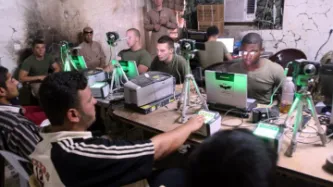
‘Biometrics’ describes the physiological and behavioural characteristics of individuals. This could be fingerprints, voice, face, retina and iris patterns, hand geometry, gait or DNA profiles. Because biometric data is particularly sensitive and revealing of individual’s characteristics and identity, it can be applied in a massive number of ways – and has the potential to be gravely abused.
Identification systems across the world increasingly rely on…

Content type: News & Analysis
Taylor Swift may be tracking you, particularly if you were at her Rose Bowl show in May.
According to an article published by Vanity Fair, at Swift’s concert at the California stadium, fans were drawn to a kiosk where they could watch rehearsal clips. At the same time – and without their knowledge - facial-recognition cameras were scanning them, and the scans were then reportedly sent to a “command post” in Nashville, where they were compared to photos of people who are known…

Content type: Impact Case Study
What is the problem
For over two decades we have been documenting an alarming use and spread of surveillance. It is no longer just the wars on terror or drugs or migration that is driving this trend. The management of health crises and distribution of welfare regularly are among others being used to justify this turn to increasingly invasive forms of surveillance. From country to country we see the same ideas and the same profiteers expanding their reach.
When we first released our report on…

Content type: Examples
A US House of Representatives oversight committee was told in March 2017 that photographs of about half of the adult US population are stored in facial recognition databases that can be accessed by the FBI without their knowledge or consent. In addition, about 80% of the photos in the FBI's network are of non-criminals and come from sources such as passports. Eighteen states supply driver's licences under arrangement with the FBI. In response, privacy advocates and politicians called for…
Content type: News & Analysis
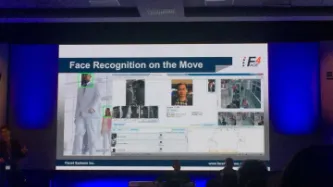
From unlocking a smartphone or getting through an airport, the use of an iris, fingerprint, or your face for identity verification is already widespread, and the market for it is set to rocket. While the technology is not new, its capability and uses are. As people, biometrics offers us much, but risks ultimately only serve data-hungry industries and government agencies: in the name of efficiency and security, it has the potential to bring chaos and vulnerability.
Obtaining reliable…
Content type: News & Analysis
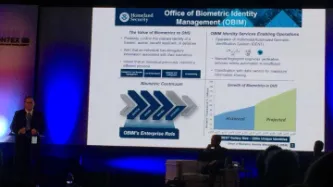
The United States Department of Homeland Security (DHS) has contracted one of the world’s largest arms companies to manage a huge expansion of its biometric surveillance programme.
According to a presentation seen by Privacy International, the new system, known as Homeland Advanced Recognition Technology (HART), will scoop up a whopping 180 million new biometric transactions per year by 2022.
It will replace the Automated Biometric Identification System (IDENT), which currently stores…
Content type: News & Analysis
This guest piece was written by Leandro Ucciferri of the Association for Civil Rights (Asociación por los Derechos Civiles). It does not necessarily reflect the views or position of Privacy International.
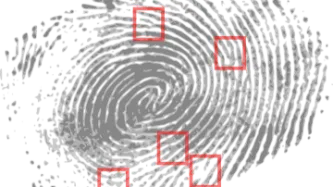
We look at our smartphone first thing in the morning to check the weather, and our to-do list for the day. During breakfast, we read the news and learn about what is going on in the rest of the world. In our commute to work or college, we scroll through our social media feeds…
Content type: News & Analysis
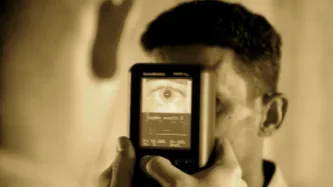
New technologies may hold great benefits for the developing world, but without strong legal frameworks ensuring that rights are adequately protected, they pose serious threats to populations they are supposed to empower.
This is never more evident than with the rapid and widespread implementation of biometric technology. Whilst concerns and challenges are seen in both developed and developing countries when it comes to biometrics, for the latter they are more acute due the absence of laws or…

Content type: News & Analysis
Humanitarian agencies are collecting personal information for Syrians caught in the crossfire of a drawn-out and bloody civil war. Indeed, refugees fleeing persecution and conflict, need to access services and protection offered by the world’s humanitarian community. But in the rush to provide necessary aid to those afflicted by the crisis in Syria, humanitarian organisations are overlooking a human right that also needs protecting: the right to privacy.
Humanitarian and aid agencies are…
Content type: News & Analysis
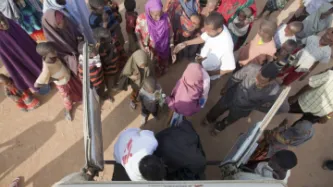
Privacy International today is proud to announce our new project, Aiding Privacy, which aims to promote the right to privacy and data protection in the development and humanitarian fields. Below is an outline of the issues addressed in our new report released today, Aiding Surveillance.
New technologies hold great potential for the developing world. The problem, however, is that there has been a systematic failure to critically contemplate the potential ill effects of deploying technologies in…

Content type: News & Analysis
Since mid-2012 the Hebrew University International Human Rights Clinic has been collaborating with Privacy International to produce research about the state of privacy laws and protections in Israel and worldwide.
Last week marked the launch of a long-anticipated pilot of a controversial Israeli biometric database, a project that has been the target of civil society protest and the subject of a challenge in the Israeli Supreme Court.
While there is no shortage of institutions maintaining…
Content type: News & Analysis
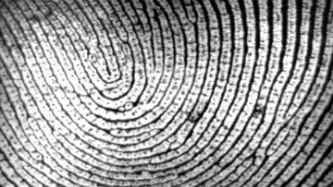
Next week, the European Parliament will make an important decision affecting one of the world’s most vulnerable and stigmatised groups of people: asylum seekers. This decision is part of a larger debate about privacy and function creep, about authorities breaking promises that were made when personal information was collected and using it for new purposes.
EURODAC, a transnational database containing the personal and biometric information of all asylum seekers and illegal immigrants found…
Content type: News & Analysis
On the 2nd of August 2011 the Hamburg Commissioner for Data Protection and Freedom of Information has called on Facebook to delete the feature on the social networking site that automatically recognizes facial features and "tags" users when others upload photos of them. According to the local German data protection authority the feature is a violation of local and European data protection laws, and Facebook should adapt the feature to European data protection law or suspend the use of the…

Content type: News & Analysis
Few understand why we focus on refugee privacy. Funders don’t understand it so don’t fund it; the public see the plight of refugees as seen on TV, not as a privacy issue; and often times the international community does everything it can to increase scrutiny of refugees. In this blog, I highlight the privacy issues facing refugees and how these issues can jeopardize refugees’ safety as much as any of the environmental, social, or political risks refugees encounter.
Refugees are amongst…

Content type: News & Analysis
PI just received a response from Secretary General Thorbjørn Jagland of the Council of Europe (CoE) stating that the CoE is refusing to start an investigation on the collection and storage of citizens biometric data by member states. On 31 March an international alliance of organisations and individuals lodged a petition calling on him to start such an indepth survey under Article 52 of the European Convention on Human Rights (ECHR).
In his answer, received this week, Secretary…

Content type: News & Analysis
An international alliance of organisations and individuals from 27 countries has lodged a petition calling on the Council of Europe to start an indepth survey on the collection and storage of biometric data by member states.
European governments are increasingly demanding storage of biometric data (fingerprints and facial scans) from individuals. These include storage on contactless 'RFID' chips in passports and/or ID cards. Some are going even further by implementing…
Content type: News & Analysis
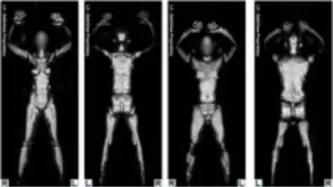
The Active Millimeter Wave body scanners that airport security officials plan to use in greater numbers after a failed attempt to explode a bomb in a plane over Detroit raise troubling questions about passenger privacy, and ultimately the technology’s utility as a security measure.
While Privacy International supports the adoption of measures that will genuinely protect the security of passengers, we are deeply concerned that airport and security authorities increasingly deploy fashionable and…
Content type: News & Analysis
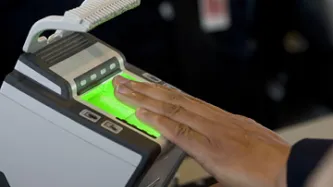
Privacy International's recent complaint to the UK Information Commissioner has threatened to bring to a halt an imminent plan to fingerprint all domestic and international passengers departing from Heathrow's Terminal 1 and Terminal 5, due to begin on March 27th. The British media is reporting that in response to PI's complaint, the Information Commissioner has advised that passengers should only accept fingerprinting "under protest" until our complaint is resolved.
The prospect of…
Content type: News & Analysis
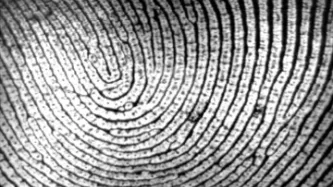
The European Commission is about to announce the compulsory fingerprinting of all visitors to the EU, both visa holders and non-visa holders, along with automated border checks of EU nationals through the analysis of fingerprints and facial scans.
The Communication from December 2007, available here on the PI site, outlines the plans. Below we summarise the plans. Also see PI's commentary in the Guardian CommentisFree section from February 11, 2008.
Critical Analysis
The Communication does…

Content type: News & Analysis
Together with a coalition with 18 Japanese rights groups, Privacy International today delivered a letter to the Japanese Minister of Justice to protest against the implementation of a fingerprinting system and face-scanning system at its borders. All visitors and many foreign residents to Japan will be fingerprinted under this plan. Our letter to the Minister is endorsed by 68 organisations from 30 countries. In our letter, we show that there are numerous problems with the government's plans.…
Content type: News & Analysis
The French government is considering the implementation of a new project, Project INES (Identite National Electronique Securisee), which will involve a system very similar to the one proposed in the UK. The French are even using similar statements, such as 'international obligations', 'terrorism', and concern regarding 'identity theft'. The Forum for Civil Liberties on the Internet ("Le Forum des droits sur l'internet) was asked by then Minister of the Interior Dominique de Villepin to conduct…
Content type: News & Analysis
We the undersigned are calling on you to reject the 'Draft Council Regulation on standards for security features and biometrics in passports and travel documents issued by Member States'. This is an unnecessary and rushed policy that will have hazardous effects on Europeans' right to privacy. This policy process requires additional oversight, and the eventual systems established will require significant controls and a strong legal framework to ensure that this is a proportionate response to the…
Content type: News & Analysis
For the attention of Members and staff of the European Parliament,
I am writing to you on behalf of Privacy International, a London-based human rights group, to call on you to stop the implementation of biometric travel documents.
We at PI have been monitoring the biometric passport developments for three years. Most recently we organized an open letter to the International Civil Aviation Organization (ICAO) calling for clarification and modification to the plans for the biometric passport…
Content type: News & Analysis
To the participants of the International Civil Aviation Organization 12th Session of the Facilitation Division,
We are writing to you on behalf of a wide range of human rights and civil liberties organizations to express our concerns regarding a number of decisions emerging from your conferences and their likely effects on privacy and civil liberties. We are particularly worried about your plans requiring passports and other travel documents to contain biometrics and remotely readable ‘contact…
Content type: News & Analysis
In 1994, in an attempt to discover the problems caused by ID cards, Privacy International compiled a survey containing reports from correspondents in forty countries. Amongst the gravest of problems reported to Privacy International was the over zealous use or misuse of ID cards by police - even where the cards were supposed to be voluntary. One respondent wrote:
On one occasion I was stopped in Switzerland when walking at night near Lake Geneva. I was living in Switzerland at the time and had…