
Search

Content type: Long Read
1. What is the issue?Governments and international organisations are developing and accessing databases to pursue a range of vague and ever-expanding aims, from countering terrorism and investigating crimes to border management and migration control.These databases hold personal, including biometric, data of millions if not billions of people, and such data is processed by technologies, including Artificial Intelligence (AI), to surveil, profile, predict future behaviour, and ultimately make…
Content type: Report
Over the past years, data retention regulation imposing generalised and indiscriminate data retention obligations to telecommunication companies and Internet service provides has been introduced in various jurisdictions across the world. As the data retention practices across the world have evolved this new report is an attempt to shed some light on the current state of affairs in data retention regulation across ten key jurisdictions. Privacy International has consulted with human…
Content type: Advocacy
Privacy International had suggested the Human Rights Committee consider the following recommendations for the UK government:Review and reform the IPA 2016 to ensure its compliance with Article 17 of the ICCPR, including by removing the powers of bulk surveillance;Abandon efforts to undermine the limited safeguards of the IPA 2016 through the proposed Investigatory Powers Amendment Bill;Refrain from taking any measures that undermine or limit the availability of encrypted communications or other…

Content type: Advocacy
BackgroundThe Snowden revelations and subsequent litigation have repeatedly identified unlawful state surveillance by UK agencies. In response, the UK Parliament passed the highly controversial Investigatory Powers Act 2016 (IPA), which authorised massive, suspicionless surveillance on a scale never seen before, with insufficient safeguards or independent oversight.Privacy International led legal challenges to this mass surveillance regime both before and after the Act became law. The Act…

Content type: Advocacy
Privacy International joined civil society efforts to call the South African Parliament not to approve the draft General Intelligence Laws Amendment Bill 2023 (GILAB), which was approved by the Cabinet and introduced in Parliament.
The Bill was proposed by the South African government, after the Constitutional Court found the Regulation of Interception of Communications Act of 2002 (RICA) unconstitutional on multiple grounds.
The draft Bill fails to meet the human rights standards on many…
Content type: Advocacy
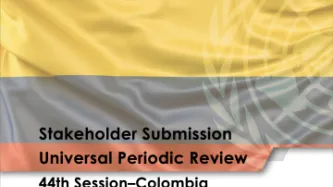
Dejusticia, Fundación Karisma, and Privacy International submitted a joint stakeholder report on Colombia to the 44th session of the Universal Periodic Review at the UN Human Rights Council.Our submission raised concerns regarding the protection of the rights to freedom of expression and opinion, to privacy, and to personal data protection; the shutdown of civil society spaces; protection of the right to protest; and protection of the rights of the Venezuelan migrant and refugee population.…

Content type: Long Read
We won our case against the UK’s Security Service (MI5) and the Secretary of State for the Home Department (SSHD). The Investigatory Powers Tribunal (IPT) – the judicial body responsible for monitoring UK’s intelligence and security agencies – held that MI5 acted unlawfully by knowingly holding people’s personal data in systems that were in breach of core legal requirements. MI5 unlawfully retained huge amounts of personal data between 2014 and 2019. During that period, and as a result of these…

Content type: Report
End-to-end encryption (E2EE) contributes significantly to security and privacy. For that reason, PI has long been in favour of the deployment of robust E2EE.Encryption is a way of securing digital communications using mathematical algorithms that protect the content of a communication while in transmission or storage. It has become essential to our modern digital communications, from personal emails to bank transactions. End-to-end encryption is a form of encryption that is even more private.…

Content type: News & Analysis
After almost 20 years of presence of the Allied Forces in Afghanistan, the United States and the Taliban signed an agreement in February 2020 on the withdrawal of international forces from Afghanistan by May 2021. A few weeks before the final US troops were due to leave Afghanistan, the Taliban had already taken control of various main cities. They took over the capital, Kabul, on 15 August 2021, and on the same day the President of Afghanistan left the country.As seen before with regime…

Content type: News & Analysis
As Amnesty International and Forbidden Stories continue to publish crucial information about the potential targets of NSO Group’s spyware, we know this much already: something needs to be done.
But what exactly needs to be done is less obvious. Even though this is not the first time that the world has learned about major abuses by the surveillance industry (indeed, it’s not even the first time this month), it’s difficult to know what needs to change.
So how can the proliferation and use of…

Content type: Long Read
Additionally, in January 2020 Privacy International and UK-based NGO Liberty filed a new claim against MI5 and the Secretary of State for the Home Department in the Investigatory Powers Tribunal (the “Ungoverned Spaces Case”, this time, the case sought to hold MI5 and the SSHD accountable for systemic, long-term failures in the way they handle and retain millions of people’s personal data. As part of this claim, PI requested that the IPT re-opens parts of the original BPD/BCD. This aspect of…

Content type: Long Read
The Grand Chamber of the European Court of Human Rights ruled that the UK government’s historical mass interception program violates the rights to privacy and freedom of expression. The Court held that the program “did not contain sufficient “end-to-end” safeguards to provide adequate and effective guarantees against arbitrariness and the risk of abuse.” As a result the Court ruled that UK law "did not meet the “quality of law” requirement and was therefore incapable of keeping the “…

Content type: Press release
The Grand Chamber of the European Court of Human Rights has today ruled that UK mass surveillance laws violate the rights to privacy and freedom of expression.It found that:The UK’s historical bulk interception regime violated the right to privacy protected by Article 8 of the European Convention on Human Rights and freedom of expression, protected by Article 10. Particularly it found that:the absence of independent authorisation,the failure to include the categories of selectors in the…

Content type: Long Read
What’s the ruling all about?The Constitutional Court of South Africa in a historic judgment declared that bulk interception by the South African National Communications Centre is unlawful and invalid. Furthermore, the Constitutional Court found that the Regulation of Interception of Communications and Provision of Communication-Related Information Act (RICA) 1) was deficient in failing to provide at least a post-notification procedure for subjects of interception; 2) failed to ensure the…

Content type: News & Analysis
On 29 May, Niger’s Congress voted on a law allowing for broad interception powers of certain electronic communications by the government. The bill makes it lawful for the government to approve the interception of communications without appropriate safeguards or oversight mechanisms.
The law passed with 104 votes – the Nigerien parliament has 171 members – without the participation of the opposition that boycotted the law. The opposition claimed that
the law will allow those, for…

Content type: News & Analysis
In mid-2019, MI5 admitted, during a case brought by Liberty, that personal data was being held in “ungoverned spaces”. Much about these ‘ungoverned spaces’, and how they would effectively be “governed” in the future, remained unclear. At the moment, they are understood to be a ‘technical environment’ where personal data of unknown numbers of individuals was being ‘handled’. The use of ‘technical environment’ suggests something more than simply a compilation of a few datasets or databases.
The…

Content type: News & Analysis
Today Advocate General (AG) Campos Sánchez-Bordona of the Court of Justice of the European Union (CJEU), issued his opinions (C-623/17, C-511/18 and C-512/18 and C-520/18) on how he believes the Court should rule on vital questions relating to the conditions under which security and intelligence agencies in the UK, France and Belgium could have access to communications data retained by telecommunications providers.
The AG addressed two major questions:
(1) When states seek to impose…
Content type: News & Analysis
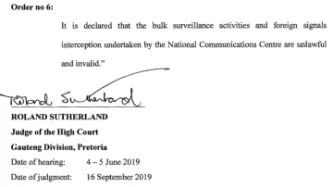
Today, the High Court of South Africa in Pretoria in a historic decision declared that bulk interception by the South African National Communications Centre is unlawful and invalid.
The judgment is a powerful rejection of years of secret and unchecked surveillance by South African authorities against millions of people - irrespective of whether they reside in South Africa.
The case was brought by two applicants, the amaBhungane Centre for Investigative Journalism and journalist Stephen…
Content type: Long Read
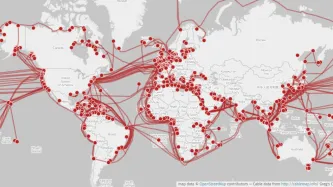
Six years after NSA contractor Edward Snowden leaked documents providing details about how states' mass surveillance programmes function, two states – the UK and South Africa – publicly admit using bulk interception capabilities.Both governments have been conducting bulk interception of internet traffic by tapping undersea fibre optic cables landing in the UK and South Africa respectively in secret for years.Both admissions came during and as a result of legal proceedings brought by Privacy…

Content type: Long Read
Imagine that every time you want to attend a march, religious event, political meeting, protest, or public rally, you must share deeply personal information with police and intelligence agencies, even when they have no reason to suspect you of wrongdoing.
First, you need to go to the police to register; have your photo taken for a biometric database; share the contacts of your family, friends, and colleagues; disclose your finances, health records, lifestyle choices, relationship status, and…

Content type: News & Analysis
This post was written by William Marks, a former volunteer at Privacy International.
The right to privacy is central to the protection of human dignity, and supports and reinforces other rights, such as the right to freedom of expression and association. Privacy International, supported by the International Human Rights Clinic at Harvard Law School, recently submitted a joint stakeholder report to the United Nations Human Rights Council regarding New Zealand’s protection of the right to…

Content type: News & Analysis
Our intervention comes on the back of mounting evidence that the South African state’s surveillance powers have been abused, and so-called “checks & balances” in RICA have failed to protect citizens’ constitutional right to privacy.
Among our core arguments are:
That people have a right to be notified when their communications have been intercepted so that they can take action when they believe their privacy has been unlawfully breached. Currently RICA prevents such notification, unlike…

Content type: Impact Case Study
PI and our global partners have been at the forefront of challenging communications data retention for over a decade.
What is the problem
Communications data, also known as metadata, tells a story about your digital activity and answers the who, when, what, and how of a specific communication. While communications data doesn't include the contents of a message, all of the other information about the message can be very revealing about people, their habits, thoughts, health and personal…

Content type: Impact Case Study
What is the problem
For over two decades we have been documenting an alarming use and spread of surveillance. It is no longer just the wars on terror or drugs or migration that is driving this trend. The management of health crises and distribution of welfare regularly are among others being used to justify this turn to increasingly invasive forms of surveillance. From country to country we see the same ideas and the same profiteers expanding their reach.
When we first released our report on…

Content type: Advocacy
A new Privacy International report based on an international collaborative investigation carried out by 40 NGOs in 42 countries has found alarming weaknesses in the oversight arrangements that are supposed to govern the sharing of intelligence between state intelligence agencies, including in the UK. Privacy International urges governments to enact urgent reforms and improve public understanding about the scope of intelligence sharing and the safeguards and oversight currently in place.

Content type: Long Read
A major new report published today by Privacy International has identified alarming weaknesses in the oversight arrangements that are supposed to govern the sharing of intelligence between state intelligence agencies.
'Secret Global Surveillance Networks: Intelligence Sharing Between Governments and the Need for Safeguards' is based on an international collaborative investigation carried out by 40 NGOs in 42 countries.
Previously undisclosed documents obtained by PI via litigation in the…
Content type: Press release
Below is a joint statement from Privacy International and Bytes for All.
This Friday, 27 September, marks the conclusion of the 24th session of the UN Human Rights Council, a session which has, for the first time, seen issues of internet surveillance in the spotlight. Privacy International and Bytes for All welcome the attention given at the Human Rights Council to this issue. However, we are concerned about developments which took place that threaten privacy rights and freedom of…
Content type: Long Read
Privacy International is celebrating Data Privacy Week, where we’ll be talking about privacy and issues related to control, data protection, surveillance and identity. Join the conversation on Twitter using #dataprivacyweek.
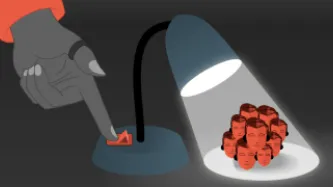
Exercising the right to privacy extends to the ability of accessing and controlling our data and information, the way it is being handled, by whom, and for what purpose. This right is particularly important when it comes to control of how States perform these activities.…

Content type: Long Read
This piece was written by Ashley Gorski, who is an attorney at the American Civil Liberties Union, and PI legal officer Scarlet Kim and originally appeared in The Guardian here.
In recent weeks, the Hollywood film about Edward Snowden and the movement to pardon the NSA whistleblower have renewed worldwide attention on the scope and substance of government surveillance programs. In the United States, however, the debate has often been a narrow one, focused on the…

Content type: Long Read
This week, Privacy International, together with nine other international human rights NGOs, filed submissions with the European Court of Human Rights. Our case challenges the UK government’s bulk interception of internet traffic transiting fiber optic cables landing in the UK and its access to information similarly intercepted in bulk by the US government, which were revealed by the Snowden disclosures. To accompany our filing, we have produced two infographics to illustrate the…