
Search

Content type: Advocacy
Privacy International responded to the consultation on the proposed data protection bill (the "Bill") to reform the current law 25.326
We welcome the continued efforts by Argentina to provide protections for the right to privacy, already enshrined in the Constitution of Argentina. PI welcomes the main objective of the Bill, namely to regulate the processing of personal data in order to guarantee fully the exercise of data subjects’ rights in accordance with Article 43 of the Constitution (…

Content type: Advocacy
In September 2018, the National Executive sent the proposed Data Protection Bill to the National Congress. The proposed law was directed to the Senate and it will be considered by two commissions: the Commission of Constitutional Affairs (Comision de Asuntos Constitucionales) and the Commission of Rights and Guarantees (Comision de Derechos y Garantías).
Privacy International welcomes the continued efforts by Argentina to provide protections for the right to privacy, already enshrined in the…

Content type: Advocacy
Privacy International welcomes the effort by the Government of India to reaffirm its commitment to upholding and respecting the right to privacy, and for noting the need to regulate the processing of personal data as essential for the protection of privacy through the adoption of a data protection law.
The urgent need for this legislation has been validated in the Supreme Court decision regarding the Aadhaar Act, which stipulates the need for a robust data protection regime. …

Content type: News & Analysis
Image attribution: By Blue Diamond Gallery CC BY-SA 3.0.
In March 2017, when the UN Human Rights Council requested the High Commissioner for Human Rights to prepare a report on the right to privacy in the digital age, including the responsibility of business enterprises, Cambridge Analytica was an obscure company among others. A year later the data exploitation scandal erupted, leading to plenty of soul searching by politicians in US, UK, Europe and elsewhere, pledges of…

Content type: Advocacy
India has been leading at developing some of the most complex and intense data-intensive systems in the world as exemplified with their mass biometric identification system, known as Aadhaar, as well as in the development and design of new technologies. To find out more about the main privacy issues in India, check out the State of Privacy in India.
And yet, India does not have a comprehensive privacy legislation and only limited data protection standards can be found under section 43A and…

Content type: Long Read
To celebrate International Data Privacy Day (28 January), PI and its International Network have shared a full week of stories and research, exploring how countries are addressing data governance in light of innovations in technology and policy, and implications for the security and privacy of individuals.
At the core of data protection debates, there is a power play between empowering individuals to control their data and empowering those who use (or want to) use their data.
By…

Content type: Report
Financial services are changing, with technology being a key driver. It is affecting the nature of financial services, from credit and lending through to insurance, and even the future of money itself.
The field of fintech is where the attention and investment is flowing. Within it, new sources of data are being used by existing institutions and new entrants. They are using new forms of data analysis.
These changes are significant to this sector and the lives of people it serves. This…

Content type: News & Analysis
Este artículo fue co-escrita con Valeria Milanes de la Asociación por los Derechos Civiles (ADC). Una versión en ingles está disponible aquí.
En Enero de 2015, el sistema de inteligencia de Argentina fue objeto de atención pública luego de la muerte del fiscal Alberto Nisman, debido a la presunta participación de los servicios de inteligencia en dicho suceso. Este escándalo impulsó la reforma del sistema de inteligencia del país.
En Febrero del mismo…
Content type: News & Analysis
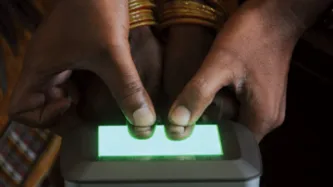
Below is an excerpt of an article that recently appeared on Slate, written by our partner Kevin Donovon, a researcher at the University of Cape Town, and Carly Nyst, Head of International Advocacy at Privacy International:
"Move over, mobile phones. There’s a new technological fix for poverty: biometric identification. Speaking at the World Bank on April 24, Nandan Nilekani, director of India’s universal identification scheme, promised that the project will be “transformational.” It “uses…

Content type: News & Analysis
Last evening (in India, that is) we got some very good news. Earlier, an online news item in a major newsmagazine described a forthcoming report from the Parliamentary Standing Committee on Finance, a cross-party body created to study Bills being presented for consideration in Parliament, as having expressed its reservations about the NIAI Bill, that they would recommend recasting it. The NIAI Bill seeks to set up a National Information Authority, whose job is to take over the functioning of…