
Search
Content type: Long Read
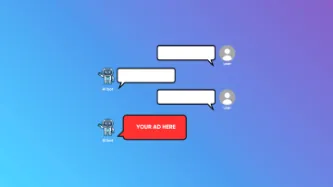
IntroductionIn early October this year, Google announced its AI Overviews would now have ads. AI companies have been exploring ways to monetise their AI tools to compensate for their eye watering costs, and advertising seems to be a part of many of these plans. Microsoft have even rolled out an entire Advertising API for its AI chat tools.As AI becomes a focal point of consumer tech, the next host of the AdTech expansion regime could well be the most popular of these AI tools: AI chatbots.…

Content type: Advocacy
In our submission we outline our concerns with the industry as a result of extensive technical research and complaints taken to data protection authorities in Europe as a result.
Data brokers must specifically be included in "actors in scope."
We recommend that "data brokers" are specifically included in the list of "actors in scope". A data broker is a company that collects, buys and sells personal data and this is often how they earn their primary revenue. It is a term that is entering…

Content type: News & Analysis
The notorious Clearview AI first rose to prominence in January 2020, following a New York Times report. Put simply, Clearview AI is a facial recognition company that uses an “automated image scraper”, a tool that searches the web and collects any images that it detects as containing human faces. All these faces are then run through its proprietary facial recognition software, to build a gigantic biometrics database.
What this means is that without your knowledge, your face could be stored…

Content type: Press release
Privacy International (PI), together with Hermes Center for Transparency and Digital Human Rights, Homo Digitalis and noyb - the European Center for Digital Rights, has today filed a series of legal complaints against Clearview AI, Inc. The facial recognition company claims to have “the largest known database of 3+ billion facial images”. The complaints were submitted to data protection regulators in France, Austria, Italy, Greece and the United Kingdom.
As our complaints detail, Clearview AI…

Content type: Long Read
Political parties depend on data to drive their campaigns, from deciding where to hold rallies, which campaign messages to focus on in which area, and how to target supporters, undecided voters and non-supporters, including with ads on social media. Political parties increasingly hire private companies to do the bulk of this work, and our primary concern is how these companies use personal data to “profile” people and drive election campaigning.
As part of PI’s programme of work on Defending…

Content type: News & Analysis
Banning TikTok? It's time to fix the out-of-control data exploitation industry - not a symptom of it
Chinese apps and tech companies have been at the forefront of the news recently. Following India's ban of 59 chinese apps in July, President Trump announced his desire to ban TikTok, shortly followed by his backing of Microsoft's intention to buy the US branch of its parent company ByteDance. Other than others lip syncing his public declaration, what does President Trump fear from this app, run by a firm, based in China?
It's all about that data
One clear answer emerges: the exploitation of…

Content type: News & Analysis
GDPR was hard won. PI, together with other civil society actors, fought from the beginning for a version of the law that offers the strongest rights and protections in the face of intense industry lobbying.
Holding the hidden data ecosystem to account
Two years ago, we committed to using GDPR to seek to hold to account the hidden data ecosystem - those companies that amass and exploit large amounts of our data for profit.
Here’s some of the action we’ve taken:
In Nov 2018,…
Content type: Long Read
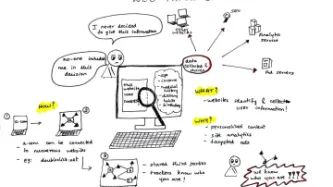
Like millions of other people, you use messaging apps, social media, share, read and watch content on your phone or computer. If that’s the case then hundreds of AdTech companies collect and exchange your data every single day. AdTech, a short form of advertisement technology, is a catch-all term that describes tools and services that connect advertisers with target audiences and publishers. It’s also a multi-billion-dollar industry that is facing investigations by Data Protection Authorities…
Content type: Press release
The Irish Data Protection Commission has today launched an inquiry into the data practices of ad-tech company Quantcast, a major player in the online tracking industry. PI's 2018 investigation and subsequent submission to the Irish DPC showed how the company is systematically collecting and exploiting people's data in ways people are unaware of. PI also investigated and complained about Acxiom, Criteo, Experian, Equifax, Oracle, and Tapad.
PI welcomes this announcement and its focus on…

Content type: Long Read
Image Source: "Voting Key" by CreditDebitPro is licensed under CC BY 2.0
Democratic society is under threat from a range of players exploiting our data in ways which are often hidden and unaccountable. These actors are manifold: traditional political parties (from the whole political spectrum), organisations or individuals pushing particular political agendas, foreign actors aiming at interfering with national democratic processes, and the industries that provide products that …

Content type: News & Analysis
The first half of 2018 saw two major privacy moments: in March, the Facebook/ Cambridge Analytica scandal broke, followed in May by the EU General Data Protection Regulation ("GDPR") taking effect. The Cambridge Analytica scandal, as it has become known, grabbed the attention and outrage of the media, the public, parliamentarians and regulators around the world - demonstrating that yes, people do care about violations of their privacy and abuse of power. This scandal has been one of…

Content type: Long Read
This image was found here.
Spain is holding a national general election on April 28 (its third in four years). Four weeks later Spaniards will again go to the polls to vote in the European Parliament elections. At Privacy International we are working to investigate and challenge the exploitation of people’s data in the electoral cycle including in political campaigns. This includes looking at the legal frameworks governing the use of data by political parties and their…

Content type: Long Read
During the last World Economic Forum in Davos, the CEO of Microsoft joined the chorus of voices calling for new global privacy rules, saying the following in regard to the new European General Data Protection Regulation (GDPR):
“My own point of view is that it's a fantastic start in treating privacy as a human right. I hope that in the United States we do something similar, and that the world converges on a common standard."
We have come a long way. From tech companies fighting and…

Content type: News & Analysis
We found this image here.
In order for GDPR to be effective at protecting people's data, it must be implemented and enforced. Therefore, we are pleased to see that CNIL has taken action and issued Google a fine of €50 million based on complaints by NOYB and La Quadrature Du Net in May 2018. Despite numerous statements by Google that it takes the protection of people's data seriously, the decision demonstrates that they have a long way to go and that regulators will take action to hold…
Content type: News & Analysis
Email addresses
Acxiom: [email protected]
Criteo: [email protected]
Equifax: [email protected]
Experian: [email protected]
Oracle: https://oracle.ethicspointvp.com/custom/oracle/dp/en/form_data.asp
Quantcast: [email protected] cc: [email protected]
Tapad: [email protected]
Letter for Acxiom and Oracle
subject line: Right to Erasure Request
I am concerned your company exploits my data.
In accordance with my right[s] under the General Data…
Content type: News & Analysis
Our team wanted to see how data companies that are not used to being in the public spotlight would respond to people exercising their data rights. You have the right under the EU General Data Protection Regulation ("GDPR") to demand that companies operating in the European Union (either because they are based here or target their products or services to individuals in the EU) delete your data within one month. We wrote to seven companies and requested that they delete our data, and we've made…
Content type: Press release
Today, Privacy International has filed complaints against seven data brokers (Acxiom, Oracle), ad-tech companies (Criteo, Quantcast, Tapad), and credit referencing agencies (Equifax, Experian) with data protection authorities in France, Ireland, and the UK. Privacy International urges the data protection authorities to investigate these companies and to protect individuals from the mass exploitation of their data.
Our complaints target companies that, despite exploiting the data of millions of…

Content type: Advocacy
Today, Privacy International has filed complaints against seven data brokers (Acxiom, Oracle), ad-tech companies (Criteo, Quantcast, Tapad), and credit referencing agencies (Equifax, Experian) with data protection authorities in France, Ireland, and the UK.
It’s been more than five months since the EU’s General Data Protection Regulation (GDPR) came into effect. Fundamentally, the GDPR strengthens rights of individuals with regard to the protection of their data, imposes more…

Content type: Advocacy
Today, Privacy International has filed complaints against seven data brokers (Acxiom, Oracle), ad-tech companies (Criteo, Quantcast, Tapad), and credit referencing agencies (Equifax, Experian) with data protection authorities in France, Ireland, and the UK.
It’s been more than five months since the EU’s General Data Protection Regulation (GDPR) came into effect. Fundamentally, the GDPR strengthens rights of individuals with regard to the protection of their data, imposes more…

Content type: Long Read
It’s 15:10 pm on April 18, 2018. I’m in the Privacy International office, reading a news story on the use of facial recognition in Thailand. On April 20, at 21:10, I clicked on a CNN Money Exclusive on my phone. At 11:45 on May 11, 2018, I read a story on USA Today about Facebook knowing when teen users are feeling insecure.
How do I know all of this? Because I asked an advertising company called Quantcast for all of the data they have about me.
Most people will have never heard of…
Content type: Report
This report sheds light on the current state of affairs in data retention regulation across the EU post the Tele-2/Watson judgment. Privacy International has consulted with digital rights NGOs and industry from across the European Union to survey 21 national jurisdictions (Austria, Belgium, Bulgaria, Croatia, Cyprus, Czech Republic, France, Germany, Hungary, Ireland, Italy, Luxembourg, the Netherlands, Poland, Portugal, Romania, Slovakia, Slovenia, Spain, Sweden, and the United Kingdom).…
Content type: Press release
Key points
Privacy International surveyed 21 EU member states' legislation on data retention and examined their compliance with fundamental human rights standards
0 out of the 21 States examined by PI are currently in compliance with these standards (as interpreted in two landmark judgements by the Court of Justice of the European Union: Tele-2/Watson and Digital Rights Ireland)
Privacy International is calling for:
EU member states to review their legislation on data retention…


Content type: News & Analysis
What do Honduras, Pakistan, and Switzerland have in common? They are all bound to respect and protect the right to privacy under Article 17 of the International Covenant on Civil and Political Rights. And in July 2017, they all also happened to be under the scrutiny of the UN Human Rights Committee, which found the countries’ human rights record wanting in many respects, including the scope of their surveillance legislation.
Intelligence sharing
Reviewing Pakistan, the Committee…
Content type: News & Analysis
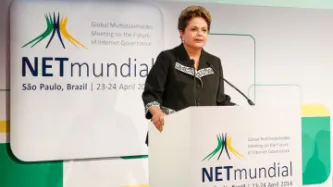
NETMundial – a global conference initiated by the Brazilian government – has produced ‘The Multi-stakeholder Statement of São Paulo’, a Roadmap and Principles on internet governance that could herald new respect for the right to privacy online. However, the outcome document fails to adequately recognise the relationship between internet governance and mass surveillance, reflecting a larger problem that was present throughout the two-day meeting.
By the end of the conference, both the…
Content type: Press release
Google's latest Transparency Report, released at 3pm GMT this afternoon, shows that requests by European governments for the browsing history, email communications, documents and IP addresses of Google's users have skyrocketed since the Transparency Report was launched three years ago. Countries in the European Union made 7,254 requests about 9,240 users or accounts between July and December 2012, averaging over 1,200 requests a month. This represents over a third of all requests made by…

Content type: News & Analysis
Together with a coalition with 18 Japanese rights groups, Privacy International today delivered a letter to the Japanese Minister of Justice to protest against the implementation of a fingerprinting system and face-scanning system at its borders. All visitors and many foreign residents to Japan will be fingerprinted under this plan. Our letter to the Minister is endorsed by 68 organisations from 30 countries. In our letter, we show that there are numerous problems with the government's plans.…

Content type: News & Analysis
Privacy International and the American Civil Liberties Union have appealed to the Council of the European Union, the European Commission, the European Parliament, and privacy commissioners in 31 countries across Europe to repeal the agreement between the EU and the US on passenger data transfers. We argue that, with the recent disclosure of the 'Automated Targeting System' being used by the US Department of Homeland Security, the US has violated both American law and the agreement with the EU…
Content type: News & Analysis
The UK currently maintains the largest DNA Database in the world and is encouraging other governments to implement similar systems in their respective countries. Using international organisations such as Interpol, participant governments will be able to share and exchange the DNA profiles of their citizens subject to vague legislative provisions, such as 'the interests of crime detection and prevention'.
Background
The successful prosecution of a serial sex offender in 2004 led to…

Content type: News & Analysis
The French government is considering the implementation of a new project, Project INES (Identite National Electronique Securisee), which will involve a system very similar to the one proposed in the UK. The French are even using similar statements, such as 'international obligations', 'terrorism', and concern regarding 'identity theft'. The Forum for Civil Liberties on the Internet ("Le Forum des droits sur l'internet) was asked by then Minister of the Interior Dominique de Villepin to conduct…