
Search

Content type: News & Analysis
This is a guest post by Jasna Koteska. Read Privacy International's full report documenting stories of mass surveillance in Macedonia here.
What are the main similarities and differences between modern surveillance methods in Macedonia and those of the socialist period?
In all 46 years of communist Macedonia, the total official number of personal communist surveillance files is 14,572. Unofficial sources report more than 50,000 files. The number of direct 'snitches' in communist…

Content type: Advocacy
In his first report to the UN Human Rights Council (the main UN human rights political body composed of 47 states from around the world), the UN Special Rapporteur on the Right to Privacy has offered a scathing critique on the UK Investigatory Powers Bill. In particular the Rapporteur noted how bulk surveillance powers, including bulk hacking, are disproportionate and violate the right to privacy as established by human rights courts. The Rapporteur noted that the powers proposed in the…
Content type: News & Analysis
The Investigatory Powers Bill introduced on Tuesday 1 March contains the same range of ‘bulk powers’ envisaged in the earlier draft: bulk interception warrants; bulk acquisition warrants; bulk equipment interference warrants; and bulk personal dataset warrants.
These powers, if adopted as currently envisaged in the Bill, would codify a practice of mass, untargeted surveillance by the UK intelligence services.
In the last couple of years, some of the mass surveillance powers used by…

Content type: News & Analysis
The problems with thematic warrants and why they should be removed from the UK Government’s Investigatory Powers Bill
We currently have the rare opportunity to scrutinise and debate the powers that law enforcement, the security and intelligence agencies and public bodies should have to interfere with our private communications, our devices and our digital lives. These powers are being enshrined and expanded upon in the draft Investigatory Powers Bill (IP Bill), currently under scrutiny by the…
Content type: Press release
Gus Hosein, Executive Director, Privacy International said:
“Parliament's Intelligence and Security Committee (ISC) has today slammed the Government’s draft Investigatory Powers Bill for its lack of transparency, lack of clarity and lack of privacy protections. We urge the Home Office to take on board the wide ranging criticisms that the tech sector, civil society, and now even the Parliamentary committee that oversees the surveillance capabilities of the intelligence agencies, have made of…
Content type: News & Analysis
Internet Connection Records are a new form of communications data created by the Investigatory Powers Bill at Parts 3 and 4. They constitute an unlawful interference with privacy with the ability to provide a highly detailed record of the activities of individuals, profiling their internet habits.
Clause 62 of the Investigatory Powers Bill (“IP Bill”) permits a wide range of public authorities to collect Internet Connection Records, however throughout debates on this highly controversial new…
Content type: Press release
Privacy International is deeply disturbed by the Moroccan government’s crackdown on media, human rights defenders, and civi society. Our friend Hisham Almiraat will be appearing in court on Thursday November 19th, 2015 along with six other journalists and human rights defenders members, and is facing the charges of “receiving foreign funding without notifying the General Secretariat of the government” and charges of “threatening the internal security of the State”, an offense that can lead…
Content type: News & Analysis
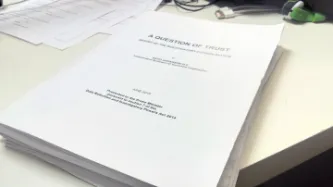
On legal reform
"RIPA, obscure since its inception, has been patched up so many times as to make it incomprehensible to all but a tiny band of initiates. A multitude of alternative powers, some of them without statutory safeguards, confuse the picture further. This state of affairs is undemocratic, unnecessary and – in the long run – intolerable." [E.S. 35]
This report is confirmation of the pressing need for wholesale reform of Britain's surveillance laws. Mr Anderson is…

Content type: News & Analysis
With powers to snoop on our communications that are unprecedented anywhere in the world, it is essential the Investigatory Powers Bill doesn't let politicians decide who is spied on.
The bill, if it is passed, aims to give the police and intelligence agencies sweeping powers to scoop up our emails, phone calls and text messages; and access details about when, where and with whom we communicate; and even hack into our computers and smartphones. At Privacy International, we have many concerns…

Content type: News & Analysis
Despite Wednesday's publication of the Investigatory Powers Bill being trailed as world leading legislation that would balance security and privacy, what the Government is actually seeking is a mandate for mass surveillance. This is a new Snoopers' Charter and we must oppose many of its most virulent elements.
The true debate on surveillance can now begin. After years of downplaying, obscuring, and denying the Snowden revelations, the Government has finally joined the conversation about the…
Content type: Report
Privacy International's new report, For God and My President: State Surveillance in Uganda, exposes the secret surveillance operation and the government's attempts to buy further powerful surveillance tools, including a national communications monitoring centre and intrusion malware, in the absence of a rigorous legal framework governing communications surveillance
Content type: News & Analysis
Today Privacy International together with other international human rights organisations call on the French parliament [PDF] to reject a bill on international surveillance, which, as it is currently worded, fails to protect and respect the right to privacy of individuals worldwide.
In June this year, the French parliament passed a law regulating the work of the intelligence services that will greatly undermine the privacy of French residents. Soon after, the French…

Content type: News & Analysis
Over a dozen international companies are supplying powerful communications surveillance technology in Colombia, according to a Privacy International investigation released today featuring original documentation. Over the past few decades, companies primarily from Israel, the US, and the UK have worked with Colombian partners to expand the Government's surveillance capacities. This is despite evidence that the Government is undertaking unlawful surveillance of Colombians.
The…

Content type: Report
For nearly two decades, the Colombian government has been expanding its capacity to spy on the private communications of its citizens. Privacy International's investigation reveals the state of Colombia's overlapping, unchecked systems of surveillance, including mass surveillance, that are vulnerable to abuse.
See the report in English and Spanish.

Content type: News & Analysis
“We always assume we are being watched. It is part of our understanding,” explained Father Alberto. The clergyman knows what it's like to live under surveillance. Father Alberto is Executive Secretary of the Inter-ecclesiastical Commission for Justice and Peace in Colombia, which supports displaced and conflict-affected communities in their struggle for justice. The CIJP also works in the restive Urabá region, where they document and litigate on the links between neo-paramilitary groups,…
Content type: Press release
In yet another blow to the UK’s surveillance proponents, the UN Human Rights Committee has criticised the British legal regime governing the interception of communications, observing that it allows for mass surveillance and lacks sufficient safeguards.
The latest in a series of calls for wholesale reform of surveillance laws and practices in Britain, and following on the footsteps of reports by the Independent Reviewer of Terrorism Legislation David Anderson QC and Royal United Services…
Content type: Press release
A new report released today by the Royal United Services Institute (RUSI) highlights key technical blind spots in current GCHQ oversight and calls for a new, comprehensive and clear legal framework governing British intelligence agencies' surveillance capability.
The report panel, which included three former British intelligence chiefs, sets out clear deficiencies in the existing technical oversight regime, explaining current oversight "does not check the code [that underlies GCHQ’s…
Content type: Press release
Governments must accept they have lost the debate over the legitimacy of mass surveillance and reform their oversight of intelligence gathering, Privacy International and Amnesty International said today in a briefing published two years after Edward Snowden blew the lid on US and UK intelligence agencies’ international spying network.
“The balance of power is beginning to shift,” said Edward Snowden in an article published today in newspapers around the world. “With each court victory,…
Content type: Press release
Privacy International and several other human rights organisations are taking the UK Government to the European Court of Human Rights over its mass surveillance practices, after a judgement last year found that collecting all internet traffic flowing in and out of the UK and bulk intelligence sharing with the United States was legal.
The appeal, filed last week by Privacy International, Bytes for All, Amnesty International, Liberty, and other partners, comes in response to a…
Content type: Press release
Privacy International, Amnesty International, FIDH, the French League for Human Rights and Reporters Without Borders are alarmed by the expansive surveillance powers to be granted to surveillance agencies contained in a Bill transferred to the French parliament on Friday. Under the new law, French intelligence agencies would be empowered to hack into computers and devices and spy on the communications of anyone who makes contact with a person under suspicion, even incidentally. The new law will…
Content type: Press release
Privacy International today has launched a platform and campaign to allow anyone in the world to request whether Britain’s intelligence agency GCHQ has illegally spied on them.
The platform and campaign has been developed in response to a recent court ruling that GCHQ unlawfully obtained millions of private communications from the NSA up until December 2014. This decision allows not only British citizens, but anyone in the world, to ask GCHQ if the individual’s records…
Content type: Press release
British intelligence services acted unlawfully in accessing millions of people’s personal communications collected by the NSA, the Investigatory Powers Tribunal ruled today. The decision marks the first time that the Tribunal, the only UK court empowered to oversee GHCQ, MI5 and MI6, has ever ruled against the intelligence and security services in its 15 year history.
The Tribunal declared that intelligence sharing between the United States and the…

Content type: News & Analysis
A year after the Eyes Wide Open program was launched here at Privacy International, we are just beginning to scratch the surface of the processes and justifications that agencies like GCHQ use to make their spying legally compliant. Tocqueville, a great philosopher of law stated:
“If they prize freedom much, they generally value legality still more. They are less afraid of tyranny than of arbitrary power, and provided the legislature undertakes of itself to deprive men of their independence,…

Content type: Long Read
Modern day government surveillance is based on the simple concept of “more is more” and “bigger is better”. More emails, more text messages, more phone calls, more screenshots from Skype calls. The bigger the haystack, the more needles we can find.
Thanks to Edward Snowden, we know that this fundamental idea drives intelligence agencies like the NSA and GCHQ - the desire to collect it all, to generate gigantic haystacks through which to trawl. In the almost two years since the first of Snowden…
Content type: Press release
The Investigatory Powers Tribunal (IPT) today followed its previous judgments in finding that UK security services may in principle carry out mass surveillance of all fibre optic cables entering or leaving the UK under RIPA, the 2000 law that pre-dates the modern internet.
In summary, the Tribunal in today's decision said the system of mass surveillance disclosed by Edward Snowden could in principle be lawful. But the Tribunal has asked for more submissions about whether…

Content type: News & Analysis
After remaining in the shadows for decades, the right to privacy is finally having its day in the sun at the United Nations.
And rightfully so, given how seriously the right has been uniquely threatened in the past few years. Technology continues to rapidly evolve in the digital age, Western intelligence agencies are undertaking mass and indiscriminate surveillance of the world's communications, and countries around the world are continually adopting heavy-handed policies that imperil privacy…

Content type: Long Read
Many people imagine intelligence sharing to be a practice whereby men in trench coats silently slide manilla envelopes containing anonymous tip-offs or intelligence reports marked TOP SECRET across tables in smoke-filled rooms.
While such practices certainly exist, they represent only a tiny slice of intelligence sharing activities, and are vastly overshadowed by the massive exchange of bulk unanlysed (raw) intelligence data that takes place between the UK and its Five Eyes allies.…

Content type: News & Analysis
In the last two days multiple security vendors, newspapers and experts have weighed in on the existence of the “Regin" malware, among the most sophisticated ever discovered, and its possible origins at GCHQ and the NSA. The Intercept has now confirmed Regin was the malware found on infected internal computer systems and email servers at Belgacom, the Belgian telecommunications company. Last year, documents leaked by Edward Snowden established that it was GCHQ that had committed the attack on…
Content type: Press release
Governments across Central Asia have deployed advanced surveillance systems, including monitoring centres capable of spying on an entire country's communications, according to a new investigative report published today by Privacy International.
The comprehensive report, “Private Interests: Monitoring Central Asia”, contains personal accounts taken by Privacy International detailing how Central Asian governments use electronic surveillance technology to spy on activists and…

Content type: News & Analysis
Governments across Latin America are struggling to put in place effective intelligence and surveillance oversight regimes that guarantee the rights of citizens, according to a new report released by Privacy International's partner in Argentina, Asociación por los Derechos Civiles.
The report, "Who's watching the watchers? A comparative study of intelligence organisations oversight mechanisms", provides analysis of intelligence agency oversight frameworks in Argentina, Brazil, Chile, Colombia,…