
Search
Content type: Examples
In October 2018, the Singapore-based startup LenddoEFL was one of a group of microfinance startups aimed at the developing world that used non-traditional types of data such as behavioural traits and smartphone habits for credit scoring. Lenddo's algorithm uses numerous data points, including the number of words a person uses in email subject lines, the percentage of photos in a smartphone's library that were taken with a front-facing camera, and whether they regularly use financial apps on…

Content type: State of Privacy
Table of contents
Introduction
Right to Privacy
Communication Surveillance
Data Protection
Identification Schemes
Policies and Sectoral Initiatives
Introduction
Acknowledgement
The State of Privacy in Paraguay is the result of an ongoing collaboration by Privacy International and TEDIC in Paraguay.
Key privacy facts
1. Constitutional privacy protection: The constitution does not mention the word privacy but protects private life under the "right to intimacy."
2. Data protection…

Content type: State of Privacy
Table of contents
Introduction
Right to Privacy
Communication Surveillance
Data Protection
Identification Schemes
Policies and Sectoral Initiatives
Introduction
Acknowledgment
The State of Privacy in Lebanon is the result of an ongoing collaboration between Privacy International and SMEX.
Key privacy facts
1. Constitutional privacy protection: The Lebanon constitution does not explicitly mention the right to privacy.
2. Data protection law: The Electronic Transactions and…

Content type: State of Privacy
Table of contents
Introduction
Right to Privacy
Communication Surveillance
Data Protection
Identification Schemes
Policies and Sectoral Initiatives
Introduction
Acknowledgement
The State of Privacy in Colombia is the result of an ongoing collaboration by Privacy International and Fundación Karisma and Dejusticia.
Key Privacy Facts
1. Constitutional privacy protection: The constitution contains an explicit protection of the right to privacy (Article 15 of the 1991 constitution).
2…

Content type: State of Privacy
Table of contents
Introduction
Right to Privacy
Communication Surveillance
Data Protection
Identification Schemes
Policies and Sectoral Initiatives
Introduction
Acknowledgment
The State of Surveillance in Egypt is the result of an ongoing collaboration by Privacy International and its partners.
Key privacy facts
1. Constitutional privacy protection: The constitution contains an explicit protection of the right to privacy.
2. Data protection law: In August 2018, the Cabinet…
Content type: State of Privacy
Table of contents
Introduction
Right to Privacy
Communication Surveillance
Data Protection
Identification Schemes
Policies and Sectoral Initiatives
Introduction
Acknowledgement
The State of Privacy in Brazil is the result of an ongoing collaboration by Privacy International and Coding Rights.
Between 2014-2017, Privacy LatAm contributed to previous versions of this briefing.
Key privacy facts
1. Constitutional privacy protection: The constitution contains an explicit…

Content type: State of Privacy
Introduction
Acknowledgement
The State of Surveillance in Chile is the result of an ongoing collaboration between Privacy International and its Chilean partners Derechos Digitales and Fundación Datos Protegidos.
Key Privacy Facts
1. Constitutional privacy protections: Article 19 of Chile's constitution protects the right to a private life. It was reformed in 2018 to add a specific right to the protection of personal data.
2. Data protection laws: In 1999 Chile became the…

Content type: State of Privacy
Table of contents
Introduction
Right to Privacy
Communication Surveillance
Data Protection
Identification Schemes
Policies and Sectoral Initiatives
Introduction
Acknowledgement
The State of Privacy in Argentina is the result of an ongoing collaboration by Privacy International and Asociación por los Derechos Civiles (ADC).
Key Privacy Facts
1. Constitutional privacy protections: While Argentina's constitution does not mention the word 'privacy', Section 19 has been taken by the…
Content type: Report
In December 2018, the National Coalition of Human Rights Defenders-Kenya published a report analysing the needs and concerns of human rights defenders (HRD) in relation to privacy, data protection and communications surveillance.
A summary of their findings is below. Access the full report on their website.
Content type: Long Read
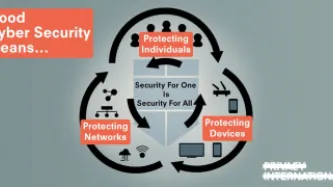
Since 2004, October has been designated National Cyber Security Awareness Month in the United States. Many other countries have followed suit, as part of the effort to raise awareness about the importance of cybersecurity, and how we can all work together to improve it.
However, cyber security (or sometimes, just ‘cyber’) has not only become a term with multiple and sometimes contradictory meanings - that go from digital security or digital diplomacy to criminal activities with a digital…

Content type: News & Analysis
Our intervention comes on the back of mounting evidence that the South African state’s surveillance powers have been abused, and so-called “checks & balances” in RICA have failed to protect citizens’ constitutional right to privacy.
Among our core arguments are:
That people have a right to be notified when their communications have been intercepted so that they can take action when they believe their privacy has been unlawfully breached. Currently RICA prevents such notification, unlike…

Content type: Advocacy
This photo originally appeared here.
For years, Privacy International and our partners in Kenya have been promoting the right to privacy in Kenya through research and investigations into government and private sector policies and practices and advocating for the adoption and enforcement of the strongest data protection and privacy safeguards.
The need for Kenya to adopt a comprehensive data protection framework (in addition to strengthening privacy protections in other legislation) has always…
Content type: News & Analysis
As the international cyber security debate searches for new direction, little attention is paid to what is going on in Africa. Stepping over the remains of the UN Group of Governmental Experts, and passing by the boardrooms of Microsoft struggling to deliver their Digital Geneva Convention, African nations are following their own individual paths.
Unfortunately, these paths increasingly prioritise intrusive state surveillance and criminalisation of legitimate expression online as…
Content type: Advocacy
Tanto la privacidad como la seguridad son esenciales para proteger a los individuos, su autonomía y su dignidad. El detrimento de la privacidad implica el detrimento de la seguridad de los individuos, sus dispositivos y la infraestructura de la que forman parte. La gente necesita privacidad para sentirse libremente segura y proteger su información, así como para gozar plenamente de otros derechos.
Una cantidad cada vez mayor de Gobiernos en el mundo está recurriendo también al hackeo para…
Content type: Advocacy
Privacy and security are both essential to protecting individuals, including their autonomy and dignity. Undermining privacy undermines the security of individuals, their devices and the broader infrastructure. People need privacy to freely secure themselves, their information, and fully enjoy other rights.
A growing number of governments around the world are embracing hacking to facilitate their surveillance activities. When governments hack for surveillance purposes, they seek to…
Content type: News & Analysis
En el 2011 se liquidó el DAS. Las violaciones, excesos y abusos de la inteligencia estatal que comenzaban por la intimidad y terminaban con la vida de los ciudadanos habían producido condenas judiciales a varios exdirectores: claro indicador de que se necesitaba un cambio. Siete años ha tenido el Estado colombiano para ordenar la casa y esta semana someterá sus récords de derechos humanos al examen de los miembros de Naciones Unidas. La evaluación analizará, entre otros…

Content type: News & Analysis
Los frecuentes escándalos sobre el abuso de la vigilancia estatal en actividades de inteligencia, la exagerada obligación legal que tienen las empresas de telefonía de retener los datos de las comunicaciones de sus usuarios por cinco años o la manera como se diluye el concepto de privacidad en el Código de Policía serán parte del examen que se haga en el seno de la ONU sobre la forma como Colombia cumple sus compromisos de derechos humanos.
Dirigido por los Estados y con el auspicio del…
Content type: News & Analysis
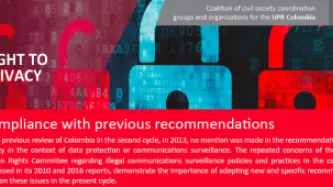
In the lead-up to the 30th session of the Universal Periodic Review which took place on 10 May 2018, Fundación Karisma, a partner organisation in the Privacy International Network, joined a coalition of civil society groups in Colombia to raise more awareness about the country's human rights record.
As part of the joint effort, the coalition produced factsheets on various human rights in the Colombian context, including the right to privacy. It is available in both English and Spanish.
Content type: Report
The use of biometric technology in political processes, i.e. the use of peoples’ physical and behavioural characteristics to authenticate claimed identity, has swept across the African region, with 75% of African countries adopting one form or other of biometric technology in their electoral processes. Despite high costs, the adoption of biometrics has not restored the public’s trust in the electoral process, as illustrated by post-election violence and legal challenges to the results of…

Content type: Long Read
As we said before, Facebook and Cambridge Analytica scandals are a wake-up call for policy makers. And also a global issue. People around the world are concerned by the exploitation of their data. The current lack of transparency into how companies are using people’s data is unacceptable and needs to be addressed.
There is an entire hidden ecosystem of companies harvesting and sharing personal data. From credit scoring and insurance quotations to targeted political communication, this…

Content type: News & Analysis
Written by Datos Protegidos
04:16: Carolina can´t sleep. She grabs her mobile from the nightstand next to her bed to check her WhatsApp notifications and read some tweets. She decides to disconnect to and tries to go back to sleep.
07:00: Carolina is woken by her mobile phone alarm. She picks it up and checks her social networks and messages again. To her astonishment, she finds a message in a WhatsApp group from her former college classmate Pablo at 5:25 asking if anyone was still…

Content type: Long Read
To celebrate International Data Privacy Day (28 January), PI and its International Network have shared a full week of stories and research, exploring how countries are addressing data governance in light of innovations in technology and policy, and implications for the security and privacy of individuals.

Content type: News & Analysis
What we can achieve. What we are doing.
A week to discuss global privacy
Throughout these last days, in the context of the #dataprivacyweek, we have been talking about privacy from a global perspective, while showcasing the research done by Privacy International and the organisations who are part of its International Network.
The right to privacy is a particularly multifaceted human right, which manifests in diverse and nuanced ways. As we said when we set the tone for this week, privacy is…
Content type: Long Read
To celebrate Data Privacy Week, we spent the week discussing privacy and issues related to control, data protection, surveillance, and identity. Join the conversation on Twitter using #dataprivacyweek.
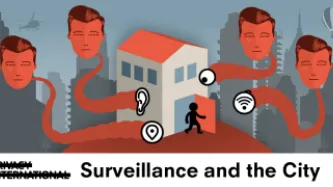
Do you live in a “smart city”? Chances are, you probably do (or at least your city claims to be). But do you know what exactly makes your city “smart”, beyond the marketing term? And what does this have to do with privacy?
Companies and governments will tell you that the more cameras, sensors…
Content type: News & Analysis
Privacy International is celebrating Data Privacy Week, where we’ll be talking about privacy and issues related to control, data protection, surveillance and identity. Join the conversation on Twitter using #dataprivacyweek.
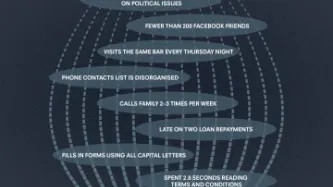
If you were looking for a loan, what kind of information would you be happy with the lender using to make the decision? You might expect data about your earnings, or whether you’ve repaid a loan before. But, in the changing financial sector, we are seeing more and more…
Content type: Long Read
Privacy International is celebrating Data Privacy Week, where we’ll be talking about privacy and issues related to control, data protection, surveillance and identity. Join the conversation on Twitter using #dataprivacyweek.
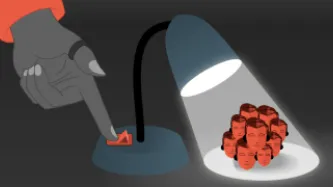
Exercising the right to privacy extends to the ability of accessing and controlling our data and information, the way it is being handled, by whom, and for what purpose. This right is particularly important when it comes to control of how States perform these activities.…

Content type: News & Analysis
It has been almost 40 years since the Council of Europe’s Convention 108 for the Protection of Individuals with regard to Automatic Processing of Personal Data was signed. The Convention was the first binding treaty dealing with privacy and data protection that recognised the necessity to “reconcile the fundamental values of the respect for privacy and the free flow of information between peoples” and is the reason why we celebrate Data Protection Day annually on 28 January.
It has since been…
Content type: Advocacy
In this submission, Privacy International provides the Committee with their observations to the written replies of the Pakistani government and with additional, up to date information to that contained in the brieing submitted to the Committee in advance of the adoption of the list of issues in 2016.
Content type: News & Analysis
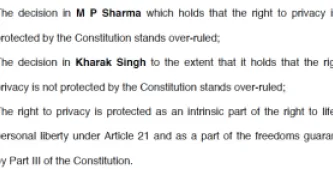
The Supreme Court has ruled that there is a fundamental right to privacy under the Indian constitution, establishing that “The right to privacy is protected as an intrinsic part of the right to life and personal liberty”. This was a unanimous ruling by a bench of nine supreme court justices, who heard the case following a decision in 2015 over whether the controversial Aadhaar biometric identity scheme was constitutional.
The judgment is clear: privacy and human dignity are intrinsically…

Content type: News & Analysis
Surveillance in digital spaces is the policing and monitoring of activity of those occupying these spaces. Surveillance affects free speech, privacy and behaviour of digital users. Feminism and a feminist approach to surveillance puts marginalised communities, those that are victims of class discrimination, racial and patriarchal structures, at the centre of discourse around privacy and surveillance.
Surveillance in Pakistan is often seen as an issue of national security. With the National…