
Search

Content type: News & Analysis
The recent acquisition of Skype by Microsoft, coupled with a series of infrastructural changes, has resulted in a flurry of responses, concerns and analysis of exactly what kind of assistance Skype can provide to law enforcement agencies. Under this heightened scrutiny, Skype released a statement on their blog on 26th July, purporting to re-affirm their commitment to the privacy of their users.
Privacy International are delighted to read that Skype believes that…

Content type: News & Analysis
Bloomberg reported today that security researchers have identified FinFisher spyware - "one of the world’s best-known and elusive cyber weapons" - in malicious emails sent to Bahraini pro-democracy activists, including a naturalized U.S. citizen who owns gas stations in Alabama, a London-based human rights activist and a British-born economist in Bahrain.
Analysis of the emails by CitizenLab (a project based within the University of Toronto Munk School of Global Affairs) revealed that…

Content type: News & Analysis
Privacy is internationally recognized as a fundamental right. Yet the confines of the right to privacy are subject to never-ending games of tug-of-war between individuals, governments and corporations. These games are rarely fair – individuals are often under-informed and lack the capacity to assert and protect their privacy, while those who seek to erode it are increasingly overbearing and secretive. This is particularly the case in developing countries, where the absence of adequate legal and…
Content type: News & Analysis
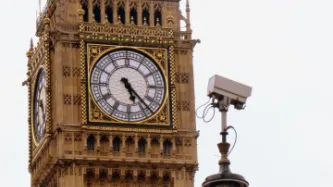
The Home Office has been planning a grab for new communications surveillance powers since 2006; today, the Draft Communications Data Bill established in legislative language their ambitions.
Yes, as they will point out, it isn't their the full scope of their ambitions. In 2008, under Labour, they proposed the idea of a vast centralised database of the nation's communications data. In 2009 they abandoned the idea of a central database. Since then, a new government has been elected,…
Content type: Press release
The government today published a draft version of a bill that, if signed into law in its current form, would force Internet Service Providers (ISPs) and mobile phone network providers in Britain to install 'black boxes' in order to collect and store information on everyone's internet and phone activity, and give the police the ability to self-authorise access to this information. However, the Home Office failed to explain whether or not companies like Facebook, Google and Twitter will be…

Content type: News & Analysis
The APEC Data Privacy Subgroup (DPS) commenced a new five year work programme at a meeting in Moscow in February 2012. This follows the commitment by APEC Leaders in late 2011 to the Cross Border Privacy Rules (CBPR) system as one way implementing the APEC Data Privacy Framework.
The Joint Oversight Panel was formed at the DPS meeting in Moscow and comprises members from the US (chair), Chinese Taipei and Mexico, with the chair of the DPS (from Canada) as alternate – who will…

Content type: News & Analysis
On Thursday 19th April, Privacy International - in partnership with the LSE, the Foundation for Information Policy Research, Open Rights Group and Big Brother Watch - hosted Scrambling for Safety 2012, a discussion of the Home Office's new plans for mass interception in the UK. Around 200 people turned up (despite the sporadic but torrential rain!), and the number of insightful, well-informed questions from the audience proved to us that the Home Office is not going to…
Content type: Press release
An internal Liberal Democrat briefing on Home Office plans to massively expand government surveillance was today passed to Privacy International. The document contains significant evasions and distortions about the proposed 'Communications Capabilities Development Programme' (CCDP), and is clearly intended to persuade unconvinced Lib Dem MPs to vote in favour of the proposal.
The document contains a section entitled 'Remember, under Labour' consisting of a list of the previous government's…
Content type: Report
The US does not have a general overarching privacy law like European Data Directive or the sweeping privacy protections contained in the European declarations of rights. The EU-US accord cites several laws, which it claims, give privacy rights to non-US persons. None of the cited laws offer any real substantive or procedural protections for Europeans. As explained below, the one law – the Privacy Act 5 U.S.C 552a – that could offer some modest protections is tellingly not even mentioned.
But…
Content type: Report
This is a memo prepared by Barry Steinhardt of Friends of Privacy USA for Members of the European Parliament regarding the proposed EU-US Agreement PNR.
The proposed agreement regarding Passenger Name Records (PNR) between the United States and the European Union is riddled with faulty assertions and assumptions about US law and the actual operations of the US government.
These faulty assertions and assumptions go to the heart of the agreement and undercut the claims of protections for…
Content type: Press release
PI, Genewatch and the Council for Responsible Genetics launch the Forensic Genetic Policy Initiative
Today, 60 countries worldwide operate national DNA databases, and at least 34 more are considering putting them in place. The use of DNA evidence in criminal investigations can bring great benefits to society, helping to solve crimes, convict the guilty and exonerate the innocent. However, the mass storage of DNA samples and computerized profiles in databases raises important human rights concerns. Your DNA profile can be used to track you or your relatives. Your DNA sample has the…

Content type: News & Analysis
Last month, within thirty seconds of the BBC publishing a quotation from me on the latest round of the nymwars and Google+, my phone rang. Caller ID indicated that it was someone I know who works at Google. "Had I said something wrong?" was my first thought. I quickly retraced in my mind what it was that I had said to the journalist; I had responded in the article that Google's recent announcement could be seen as positive but really it was a sidestepping of the larger challenge of identity…
Content type: Press release
The Council of the European Union today reinforced restrictive measures on EU exports to Iran, banning "exports of equipment and software intended for use in the monitoring or interception of internet and telephone communications by the Iranian authorities".
The Council also added 17 people responsible for grave human rights violations to the list of those subject to a travel ban and asset freeze. An existing ban on equipment for use in internal repression was transferred from the sanctions…
Content type: Press release
In an advertisement placed in national newspapers yesterday (23rd February), the National ICT R&D Fund of Pakistan (which operates under the auspices of the Ministry of Information Technology) requested proposals for "the development, deployment and operation of a national level URL Filtering and Blocking System". Further information provided on the Fund's website stated:
"Internet access in Pakistan is mostly unrestricted and unfiltered...Many countries have deployed web…

Content type: News & Analysis
An astonishing 13-page investigation by Osman Kibar at Dagens Næringsliv has revealed that Norway has invested over $2 billion in 15 companies that manufacture and sell surveillance technologies - and that the government has no plans to divest investments in companies that are complicit in human rights abuses abroad.
The Norwegian national pension fund (commonly referred to as the "oil fund") is the world's largest sovereign wealth fund. The author of the Dagens Næringsliv…
Content type: Press release
In collaboration with the Wall Street Journal and the Guardian, Privacy International today published a database of all attendees at six ISS World surveillance trade shows, held in Washington DC, Dubai and Prague between 2006 and 2009. ISS World is the biggest of the surveillance industry conferences, and attendance costs up to $1,295 per guest. Hundreds of attendees are listed, ranging from the Tucson Police Department, to the government of Pakistan, to the International…