
Search

Content type: Long Read
The European Union (EU) is the world’s largest donor of development aid, an instrumental supporter of democracies and peace around the world, and a powerful global force for reigning-in big tech and other exploitative industries. But since the 2015 migration crisis and with populist anti-immigration parties in power across the Union, it has focused this immensely powerful influence abroad squarely on managing flows of migration: using its economic, diplomatic, and security might to…

Content type: News & Analysis
A new report by the UN Working Group on mercenaries analyses the impact of the use of private military and security services in immigration and border management on the rights of migrants, and highlights the responsibilities of private actors in human rights abuses as well as lack of oversight and, ultimately, of accountability of the system.
Governments worldwide have prioritised an approach to immigration that criminalises the act of migration and focuses on security.
Today, borders are not…

Content type: Explainer
In the name of reinforcing migration control and increasing security, the EU is introducing a host of new surveillance measures aimed at short-term visitors to the Schengen area. New tools and technologies being introduced as part of the visa application process and the incoming “travel authorisation” requirement include automated profiling systems, a ‘pre-crime’ watchlist, and the automated cross-checking of numerous national, European and international databases. There are significant risks…

Content type: Long Read
Over the last two decades we have seen an array of digital technologies being deployed in the context of border controls and immigration enforcement, with surveillance practices and data-driven immigration policies routinely leading to discriminatory treatment of people and undermining peoples’ dignity.And yet this is happening with little public scrutiny, often in a regulatory or legal void and without understanding and consideration to the impact on migrant communities at the border and…

Content type: Advocacy
Last week, Privacy International joined more than 30 UK charities in a letter addressed to the British Prime Minister Boris Johnson, following his recent declaration, asking him to lift No Recourse to Public Funds (NRPF) restrictions.
Since 2012, a ‘NRPF condition’ has been imposed on all migrants granted the legal right to live and work in the UK. They are required to pay taxes, but they are not permitted to access the public safety net funded by those taxes.
This is not a topic we are known…

Content type: Long Read
It is common for families with no recourse to public funds who attempt to access support from local authorities to have their social media monitored as part of a ‘Child in Need’ assessment.
This practice appears to be part of a proactive strategy on the part of local authorities to discredit vulnerable families in order to refuse support. In our experience, information on social media accounts is often wildly misinterpreted by local authorities who make serious and unfounded allegations…

Content type: Report
It is common for families with no recourse to public funds who attempt to access support from local authorities to have their social media monitored as part of a 'Child in Need' assessment. This practice appears to be part of a proactive strategy on the part of local authorities to discredit vulnerable families in order to refuse support. In our experience, information on social media accounts is often wildly misinterpreted by local authorities who make serious and unfounded allegations…

Content type: Long Read
Dear Sir/Madam,
Freedom of information act request
RE: Social media monitoring / social media intelligence
FOIA REQUEST
For definition of social media intelligence please see background explanation below. We further note the comments of the Office of Surveillance Commissioners Annual Report 2016 cited below.
1. In 2016 the Rt Hon Lord Judge, then Chief Surveillance Commissioner, wrote to all Local Authorities regarding use of social media in investigations. Please confirm whether you are…

Content type: Long Read
The Chief Surveillance Commissioner, The Rt Hon Sir Christopher Rose’s Annual Report 2011 - 12 did not refer to social networks but to overt investigations using the internet as a surveillance tool, stating that:
“5.17 A frequent response to my Inspectors’ enquiries regarding a reduction in directed surveillance is that ‘overt’ investigations using the Internet suffice. My Commissioners have expressed concern that some research using the Internet may meet the criteria of directed…
Content type: Advocacy
To the Members of the European Parliament and to the Committee on Budgets of the European Parliament
The EU urgently needs to step up and provide assistance to protect the health and safety of people trapped in camps on the Greek islands - not just to protect their welfare, but to contain the virus itself as a matter of global public health.
However, as we detail in the briefing below, the current European Commission proposal for funds allocation is insufficient to ensure the safety of…

Content type: News & Analysis
On 24 October 2019, the Swedish government submitted a new draft proposal to give its law enforcement broad hacking powers. On 18 November 2019, the Legal Council (“Lagråd”), an advisory body assessing the constitutionality of laws, approved the draft proposal.
Privacy International believes that even where governments conduct hacking in connection with legitimate activities, such as gathering evidence in a criminal investigation, they may struggle to demonstrate that hacking as…

Content type: Long Read
This research is the result of a collaboration between Grace Tillyard, a doctoral researcher in the Media, Communications and Cultural Studies department at Goldsmiths College, London, and Privacy International.
Social Protection Systems in the Digital Age
In the digital age, governments across the world are building technologically integrated programmes to allow citizens to access welfare payments. While smart and digital technologies hold the potential to streamline administrative…
Content type: News & Analysis
Photo: The European Union
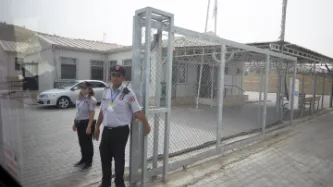
“Border Externalisation”, the transfer of border controls to foreign countries, has in the last few years become the main instrument through which the European Union seeks to stop migratory flows to Europe. Similar to the strategy being implemented under Trump’s administration, it relies on utilising modern technology, training, and equipping authorities in third countries to export the border far beyond its shores.
It is enabled by the adoption…

Content type: News & Analysis
Photo by Francesco Bellina
The wars on terror and migration have seen international funders sponsoring numerous border control missions across the Sahel region of Africa. Many of these rely on funds supposed to be reserved for development aid and lack vital transparency safeguards. In the first of a series, freelance journalist Giacomo Zandonini sets the scene from Niger.
Surrounded by a straw-yellow stretch of sand, the immense base of the border control mobile company of Maradi, in southern…

Content type: News & Analysis
Photo by Sharon McCutcheon on Unsplash
In May, the United Nations Special Rapporteur on extreme poverty and human rights, Philip Alston invited all interested governments, civil society organisations, academics, international organisations, activists, corporations and others, to provide written input for his thematic report on the human rights impacts, especially on those living in poverty, of the introduction of digital technologies in the implementation of national social protection…
Content type: Examples
In November 2018, 112 civil liberties, immigrant rights groups, child welfare advocates, and privacy activists wrote a letter to the heads of the US Department of Health and Human Services and the Department of Homeland Security demanding an immediate halt to the HHS Office for Refugee Resettlement's practice of using information given them by detained migrant children to arrest and deport their US-based relatives and other sponsors. The policy began in April 2018, and the result has been that…

Content type: News & Analysis
Privacy International has joined over 30 organisations working with migrants and refugees to write to the newly appointed British Home Secretary to raise a number of pressing issues, which require action if the immigration and asylum system is to regain the trust of the public.
The letter below was sent to the Home Secretary on Wednesday, 30 July 2019.
Find out more about PI’s work to demand a more humane approach to immigration based on the principles of fairness, accessibility, and respect…

Content type: News & Analysis
US Immigration and Customs Enforcement (ICE), the agency at the centre of carrying out President Trump’s “zero tolerance” approach to immigration enforcement and family separation, has for years been contracting a US surveillance company to intercept peoples’ communications across the United States. The wide potential scope for the use of the powers raises concerns about their use for the real-time surveillance of people, families, and communities caught up in Trump’s immigration crackdown…
Content type: Advocacy
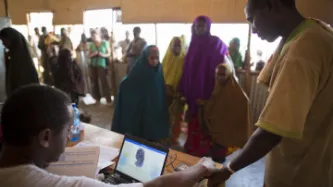
Refugees are among the most vulnerable people in the world. From the moment they flee their homes, as they pass through 'temporary' places such as refugee camps and detention centres to their 'final' destinations, they are continuously exposed to threats. In the digital age, these threats are increasingly being driven by the processing of vast amounts of highly sensitive personal data: from enrollment and registration processes needed for them to access services, to their identification and…

Content type: News & Analysis
According to the International Organization for Migration, an estimated 258 million people are international migrants – that is, someone who changes their country of usual residence, That’s one in every 30 people on earth.
These unprecedented movements levels show no sign of slowing down. It is predicted that by 2050, there will be 450 million migrants across the world.
Nowadays, it is politically acceptable to demonise migrants, and countless leaders have spewed divisive and xenophobic…

Content type: Long Read
Update 28 June 2018
Last week Privacy International wrote to Thomson Reuters Corporation asking the company to commit to ensuring the vast amounts of data they provide to US immigration agencies isn’t used to identify families for indefinite detention or separation, or for other human rights abuses.
Thomson Reuters has unfortunately ignored our specific questions and made no such commitment.
Instead, the CEO Thomson Reuters Special Services (TRSS) a subsidiary, makes clear that instead of…

Content type: Explainer
What is SOCMINT?
Social media intelligence (SOCMINT) refers to the techniques and technologies that allow companies or governments to monitor social media networking sites (SNSs), such as Facebook or Twitter.
SOCMINT includes monitoring of content, such as messages or images posted, and other data, which is generated when someone uses a social media networking site. This information involves person-to-person, person-to-group, group-to-group, and includes interactions that are private and…