
Search

Content type: News & Analysis
Creative Commons Photo Credit: Source
Just about everyone in Washington has found something to dislike about the tech industry: Democrats especially, are worried about foreign interference in the 2016 election — meanwhile some Republicans are more concerned about bias against conservatives of platforms and on top of it all President Trump has been tweeting about antitrust and competition.
Privacy International is a vocal critic of data exploitation more generally, and the systemic…

Content type: News & Analysis
Around the world, from North America to Europe and Asia, governments are starting to roll out smart meters. While the technology promises increased energy efficiency through greater consumer control over energy consumption, smart meters also raise serious privacy concerns. Smart meters collect energy usage data at high frequencies - typically every five, fifteen or 30 minutes. That level of granularity reveals how much electricity is being used in a home and when, which in turn can paint an…
Content type: News & Analysis
This piece originally appeared here.
Creative Commons Photo Credit: Source
Tech competition is being used to push a dangerous corporate agenda.
High-tech industries have become the new battlefield as the United States and China clash over tariffs and trade deficits. It’s a new truism that the two countries are locked in a race for dominance in artificial intelligence and that data could drive the outcome.
In this purported race for technological high ground, the argument often goes, China…

Content type: Long Read
Creative Commons Photo Credit: Source
In the midst of continued widespread public outrage at the US government’s brutal ‘zero-tolerance’ policy around immigration – multiple data and analytics companies have quietly avoided answering questions about their role in feeding the US Immigration and Customs Enforcement (ICE) agency’s data backbone. These companies are bidding to work with an agency that has time and time again shown itself to be a brutal and problematic.
Privacy International…
Content type: Report
Privacy International welcomes the opportunity to file these comments in advance of the Federal Trade Commission’s public hearings on competition and consumer protection in the 21st century.
Content type: Report
Countries with powerful security agencies are spending literally billions to equip, finance and train security and surveillance agencies around the world — including authoritarian regimes. This is resulting in entrenched authoritarianism, further facilitation of abuse against people, and diversion of resources from long-term development programmes.
Privacy International's report 'Teach 'em to Phish: State Sponsors of Surveillance' examines this problem closely, providng examples from US, China…

Content type: Long Read
Privacy International (PI) has today released a new report, 'Teach 'em to Phish: State Sponsors of Surveillance', showing how countries with powerful security agencies are training, equipping, and directly financing foreign surveillance agencies.
Spurred by advances in technology, increased surveillance is both powered by and empowering rising authoritarianism globally, as well as attacks on democracy, rights, and the rule of law.
As well as providing a background to the issue, the report…
Content type: Press release
Privacy International has today released a report that looks at how powerful governments are financing, training and equipping countries — including authoritarian regimes — with surveillance capabilities. The report warns that rather than increasing security, this is entrenching authoritarianism.Countries with powerful security agencies are spending literally billions to equip, finance, and train security and surveillance agencies around the world — including authoritarian regimes. This is…
Content type: Press release
Gus Hosein, Executive Director of Privacy International:
The US federal government's cruel zero tolerance immigration policy has received widespread and international condemnation. In addition to the policy's clear moral failure it is also in violation of the government's legal obligations under the International Covenant on Civil and Political Rights (ICCPR), which includes protecting families from unnecessary interference by the government.
The US government needs to understand that…
Content type: Press release
On the five year anniversary of NSA whistleblower Edward Snowden leaking a massive trove of classified information that has since transformed our understanding of government mass surveillance, Dr Gus Hosein, Executive Director of Privacy International said:
“Is it enough for your government to tell you ‘we’re keeping you safe, but we’re not going to tell you how’? Edward Snowden asked himself this profoundly important question five years ago. We’re thankful he did.
His decision to expose the…
Content type: Advocacy
Today Privacy International, with TACD, published a document detailing 10 things that US companies need to know about the forthcoming General Data Protection Regulation (GDPR).
People’s data should be treated with the highest privacy protections no matter where they are based. Privacy is a fundamental human right and data protection is intrinsically linked to it. While GDPR is not perfect, it does provide enforceable rights and obligations. If US companies want to demonstrate true commitment…

Content type: Examples
In 2016, the American Civil Liberties Union of Northern California published a report revealing that the social media monitoring service Geofeedia had suggested it could help police track protesters. The report's publication led Twitter and Facebook to restrict Geofeedia's access to their bulk data. ACLUNC argued that even though the data is public, using it for police surveillance is an invasion of privacy. Police are not legally required to get a warrant before searching public data; however…

Content type: Long Read
This piece was originally published in Lawfare in April 2018
The United States is party to a number of international intelligence sharing arrangements—one of the most prominent being the so-called “Five Eyes” alliance. Born from spying arrangements forged during World War II, the Five Eyes alliance facilitates the sharing of signals intelligence among the U.S., the U.K., Australia, Canada and New Zealand. The Five Eyes countries agree to exchange by default all signals intelligence…

Content type: News & Analysis
This post was written by PI Policy Officer Lucy Purdon.
In 1956, US Presidential hopeful Adlai Stevenson remarked that the hardest part of any political campaign is how to win without proving you are unworthy of winning. Political campaigning has always been a messy affair and now the online space is where elections are truly won and lost. Highly targeted campaign messages and adverts flood online searches and social media feeds. Click, share, repeat; this is what political engagement looks…

Content type: News & Analysis
7 July 2016
It has been said is that we pay for free services with our personal data. Now, the Privacy Shield exponentially expands this truth and we are paying for the cost of U.S. political dysfunction combined with EU complacency with our privacy. More than four months after the first EU-US Privacy Shield was published on 29 February 2016, a new version has been leaked. Remarkably, it is expected to be adopted.
Four months, two opinions by group of EU data protection…
Content type: News & Analysis
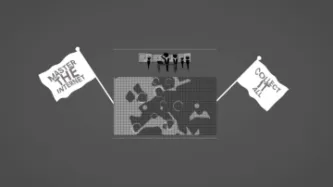
The elections in our midst here, there, and everywhere are increasingly resulting in governments who introduce policies that result in leaps backwards for dignity, equality, civil liberties, and the rule of law. Whether it is Poland or the Philippines, governments are overriding essential safeguards.
This week Britain’s proposed surveillance legislation took another step toward normalising mass surveillance. The United States of America has long promoted mass surveillance and maintains its…
Content type: Long Read
This piece was originally published in Just Security in November 2017.
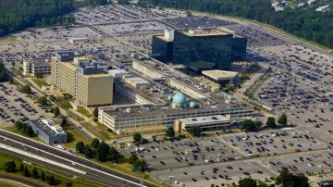
The upcoming expiration of Section 702 of the Foreign Intelligence Surveillance Act (FISA) has launched a fresh wave of debate on how the statute’s “backdoor search loophole” allows the U.S. government to access Americans’ communications by searching information gathered on foreign intelligence grounds without a warrant. But while discussion about domestic information sharing is important, a critical…

Content type: News & Analysis
For further information on timeline and case history, read this briefing.
Arguments
The argument were based on the written submissions of the parties. The oral statements summarised key points in these submissions.
The submissions can be found on PI’s website under Legal Action. In terms of today’s proceedings (these are now available through webcast)
Counsel for the UK Government, James Eadie QC started off proceedings, his opening arguments were: 1) The issues are of…
Content type: Press release
The European Court of Human Rights will hear a landmark case on surveillance tomorrow (7 November) as part of a challenge to the lawfulness of the UK’s surveillance laws and its intelligence agencies’ mass surveillance practices.
See the attached briefing for case background and historical information.
The case, described by campaigners as a “watershed moment for people’s privacy and freedom of expression across the world”, is being brought by Amnesty International, Liberty, Privacy…
Content type: Press release
Privacy International has filed a federal lawsuit seeking to compel disclosure of records relating to a 1946 surveillance agreement between the US, UK, Australia, Canada and New Zealand, known as the “Five Eyes alliance”.* We are represented by Yale Law School’s Media Freedom and Information Access Clinic (MFIA). The most recent publicly available version of the Five Eyes surveillance agreement dates from 1955. Our complaint was filed before the U.S. District Court for the District of Columbia…
Content type: News & Analysis
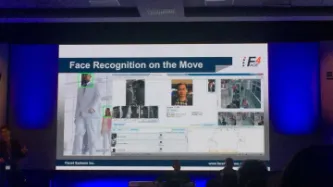
From unlocking a smartphone or getting through an airport, the use of an iris, fingerprint, or your face for identity verification is already widespread, and the market for it is set to rocket. While the technology is not new, its capability and uses are. As people, biometrics offers us much, but risks ultimately only serve data-hungry industries and government agencies: in the name of efficiency and security, it has the potential to bring chaos and vulnerability.
Obtaining reliable…
Content type: News & Analysis
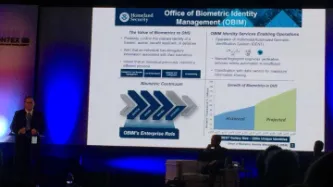
The United States Department of Homeland Security (DHS) has contracted one of the world’s largest arms companies to manage a huge expansion of its biometric surveillance programme.
According to a presentation seen by Privacy International, the new system, known as Homeland Advanced Recognition Technology (HART), will scoop up a whopping 180 million new biometric transactions per year by 2022.
It will replace the Automated Biometric Identification System (IDENT), which currently stores…
Content type: Advocacy
Privacy International wishes to raise serious concerns regarding the proposal to expand immigration records to include social media handles, associated identifiable information and search results. Specifically, in relation to the current request for comments Docket Number DHS 2017 0038, we object to the Department for Homeland Security proposal to update record source categories to include “publicly available information obtained from the internet”, “commercial data providers” and from “…
Content type: Press release
Privacy International, in partnership with 30+ national human rights organisations, has today written to national intelligence oversight bodies in over 40 countries seeking information on the intelligence sharing activities of their governments.
Countries may use secret intelligence sharing arrangements to circumvent international and domestic rules on direct surveillance. These arrangements can also lead to the exchange of information that can facilitate human rights abuses,…

Content type: Advocacy
Privacy International has today submitted comments to a U.S. government consultation on whether the US Department of Homeland Security (DHS) should keep the social media details of individuals travelling to the US in so-called “Alien Files” documenting all immigrants.
We’ve urged that they don’t, and that they review and stop all similar social media surveillance by the DHS.
The systematic surveillance of social media is an increasingly dangerous trend …

Content type: Long Read
This piece was originally published in Just Security in August 2017
We recently published an analysis in Lawfare of the United Kingdom’s surveillance framework as it relates to the proposed U.S.-U.K. agreement for cross-border law enforcement data requests. Implementing the U.S.-U.K. agreement is subject to passage of draft legislation proposed by the Justice Department to Congress in July 2016 (“U.S. DOJ legislation”), which will set standards that approved partners like the U.K.…

Content type: Long Read
This piece was originally published in Lawfare in July 2017.
The United Kingdom has been a key partner in the United States’ efforts to reform the process that law enforcement officials use to make cross-border requests for data. These efforts address both foreign governments’ requests for data stored in the U.S. and reciprocal requests by the U.S. government for data stored abroad. As part of these efforts, the U.S. and the U.K. have negotiated a draft bilateral agreement (“U…
Content type: Long Read
This piece was originally published in Lawfare in May 2017.
This post is part of a series written by participants of a conference at Georgia Tech in Surveillance, Privacy, and Data Across Borders: Trans-Atlantic Perspectives.
Cross-border law enforcement demands have become increasingly important to law enforcement in the digital age. Digital evidence in one jurisdiction—such as the United States—is often necessary to investigate a crime that has effects in another jurisdiction…

Content type: Long Read
Disclaimer: This piece was written in April 2017. Since publishing, further information has come out about Cambridge Analytica and the company's involvement in elections.
Recently, the data mining firm Cambridge Analytica has been the centre of tons of debate around the use of profiling and micro-targeting in political elections. We’ve written this analysis to explain what it all means, and the consequences of becoming predictable to companies and political campaigns.
What does…
Content type: News & Analysis
This week the United States Congress voted to strip away one of the country’s few safeguards of the right to privacy by repealing rules which would have limited internet service provider’s ability to use or share customers’ data without customers’ approval.
Meanwhile, last week, 6,500 kilometers away in Geneva, the United Nations Human Rights Council called on states to strengthen customers’ control over their data and develop legislation to address harm from the sale or corporate sharing of…